
Objektívkereső

Tippek:
Írjon legalább 2 karaktert
Próbálja meg így szűkíteni a keresést: pl. 70 300 is
Ha hasznosnak találja ezt az oldalt, akkor vásárolja meg objektívjeit és kiegészítőit partnereinktől. Köszönjük a támogatását.

Tamron SP AF28-75mm f/2.8 XR Di LD Aspherical
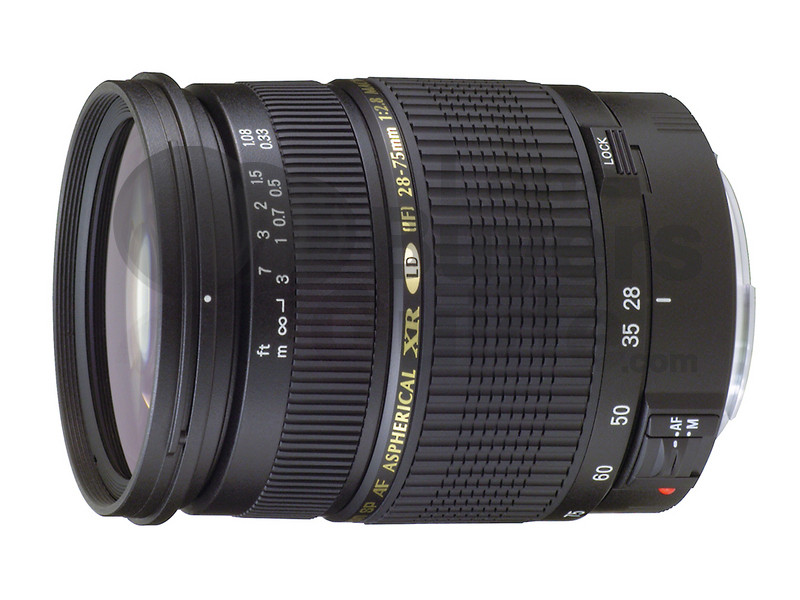
Tamron SP AF28-75mm f/2.8 XR Di LD Aspherical lens
 

Teljes méretű vetített kép

Az APS-C méretű képet vetítő objektíveket kimondottan a digitális fényképezőgépekhez fejlesztették, ezért nem használhatók filmes gépeken, vagy olyan digitális fényképezőgépeken, amelyekben az APS-C méretűnél nagyobb érzékelő található.


Nem ultrahangos AF-es

Az ultrahangos automatikus élességállítással szerelt objektívek általában halkabbak és gyorsabbak, mint a tradicionálisan működő objektívek.


Egy vagy több alacsony szórású lencsetag is van benne

Az alacsony szórású lencsetagok segítenek csökkenteni a kromatikus aberrációt.


Nem stabilizált

A képstabilizátor segít csökkenteni a kéz remegéséből adódó elmosódásokat. A stabilizátor hatása elsősorban nagy gyújtótávolságnál és gyenge megvilágításnál érezhető. A képstabilizátor 1-3 fényértéknyi előnyt biztosít a nem stabilizált objektívekhez képest.


Fém bajonett

Az olcsóbb objektívek általában műanyag, míg a drágábbak fém bajonettel készülnek. Általában a fém bajonettek tartósabbak, így gyakori objektívcserénék ez a szerencsésebb. Ha egy fényképezőgépet főleg egy objektívvel használunk, akkor a bajonett anyaga nem annyira lényeges.


Belső élességállítású

A belső élességállítású objektívek mérete az élességállítás során nem változik.


A front lencse fix

A fix frontlencse az élesség és/vagy a gyújtótávolság állításakor nem fordul el. Ez lehetővé teszi, hogy a fotós szirom alakú napellenzőt használjon. A fix frontlencse megjönnyíti a polarizációs szűrők használatát is.


Nincs becsúsztatható szűrő

A becsúsztatható szűrőket olyan objektíveknél alkalmazzák, amelyek frontlencséje túl nagy, illetve amelyek látószöge túl nagy ahhoz, hogy hagyományos szűrőket lehessen rájuk tenni. Általában a nagy fényerejű tele, illetve az ultra-nagy látószögű objektíveknél fordul elő ez a megoldás.

A legkisebb és legkönnyebb nagy fényerejű zoom objektív. A Tamron által a nagy teljesítményű zoom objektívek - pl. a 28-200mm és a 28-300mm - körében bevezetett forradalmi "XR" technológia révén drámai méretcsökkenés vált elérhetővé, ez az objektív pedig a világ legkisebb és legkönnyebb optikája lett. Külseje egy átlagos alapzoom objektívre emlékeztet, a nagy fényerejű fix blendéje által kínált változatosság azonban minden bizonnyal újraméretezi a fényképezési horizontokat.

Tamron SP AF28-75mm f/2.8 XR Di LD Aspherical Specifikáció

Elérhető bajonett(ek) Canon EF, Nikon F, Pentax K, Sony / Minolta A
Felhasználási terület(ek) Portré, Közeli, Tájkép, Épület
Kategóriák Standard zoom
Szorzó
Stabilizátor nem
Gyújtótávolság 28 - 75 mm (2,7× zoom)
Objektív felépítése 16 lencsetag 14 csoportban
Látószög 35mm: 75-32°
digitális: nincs adat
Lamellák száma 7
Legnagyobb blende nagy látószög: f/2,8 tele: f/2,8
Legkisebb blende nagy látószög: f/32 tele: nincs adat
Legkisebb tárgytávolság 33 cm
Nagyítás 0,26×
Szűrőmenet 67 mm
Méret ∅ 73 × 92 mm
Tömeg 510 g
Megjegyzések Az új változatok beépített AF motorral rendelkeznek a belépőszintű Nikon D-SLR-ekkel való együttműködés érdekében.
AF sebesség nincs adat
AF hang
Belső élességállítás igen
Belső zoom nincs adat
Fix frontlencse igen
Bajonett típusa fém
Időjárásálló nincs adat
Becsúsztatható szűrők nem
Ultrahangos AF nem
APS-C méretű vetített kép nem
Alacsony szórású lencsetag igen
Kemény tok nincs adat
Puha tok nincs adat
Napellenző tartozék
nyomtatható napellenző
Állvány adapter nincs adat
Tamron SP AF28-75mm f/2.8 XR Di LD Aspherical Specifikáció

Tamron SP AF28-75mm f/2.8 XR Di LD Aspherical Tesztek

Other reviews

Tamron SP AF28-75mm f/2.8 XR Di LD Aspherical Olvasói tesztek

Leghasznosabb olvasói vélemények az Amazonról

Absolutely Stunning Image Quality

2007. május 08.

This lens has impressed me to no end. It is incredibly sharp even wide open. The zoom range is extremely handy. The build quality is excellent. Now, to be fair, the first one I got I had to send back because it was "front focusing" but I had NO problems returning it and getting a new one which was perfect! This lens is an exceptional deal and with the Sony A100 you get the benefit of image stabilization added to this incredibly sharp fast lens!!!

It's my new best friend!

Problems with Chromatic Aberation

2009. január 05.

Overall this is a very good lens but I wouldn't say it merits a 5-star rating. I've found in a couple of situations (in bright light) where chromatic aberration was a real problem. For the money, it's a great lens. But to me a 5-star lens would be the Sony/Zeiss offerings and the clarity they provide. Of course, those are significantly more money. Just bear in mind if you're looking for a CA-free offering this is not the best lens - but if you are looking for overall good value (especially in lower light or natural lighting) then this will probably work very well for you.

Great lowlight lense

2008. november 24.

I bought this lense for my A100 because of it's lower light abilities. This has turned out to be a very good lense. It's focusing is very quick, very sharp wide open & feels well built. I do wish it was a little wider at times, but if really needed I have my kit lense. I've since picked up an A700 & keep this lense on one of my cameras at all times. The picture quality has been exceptional whether shooting flowers, people or my dog, indoors or outide. As a bonus, I also like the looks of it.

Legendary Pro-Level Bargain Performer

2008. február 17.

The Tamron 28-75 has become somewhat of a legend due to its phenomenal image performance for the price. Yet, when you take price out of the equation, this lens still holds its own surprisingly well against the top-dogs from Canon and Nikon costing anywhere from two to four times the price of the Tamron. So far, I've found this lens is consistent with what I've been hearing across the Internet: image quality is at a professional level.

The lens looks and feels like most Tamron lenses I've seen, plastic but reasonably well built. The zoom ring is at first a little snug in operation, but I suspect it will loosen a bit over time. The focus ring rotates during automatic focus operation, but that's really a non-issue in my view of things. However, everything still feels generally solid and of quality construction, in contrast to the loose and rattling lens barrels, zoom and focus rings of the Pentax "kit" lenses: the 18-55 and 50-200. Autofocus operation with the 28-75 is a bit on the noisy side, but I've found it to be fast enough so far. What's most important, it's been spot-on in typical shooting situations (a welcome relief to the Pentax DA* 50-135 f2.8 I had to return due to poor autofocus performance and resultant soft images). Some comparison shots between this lens and the Tamron 18-250 taken in the 28 to 75mm range show that the 28-75 is clearly a sharper lens and maintains that sharpness nicely boarder-to-boarder. The 18-250, my basic walkaround lens, is a strong performer in that lower range, but it is simply outclassed by the 28-75. Contrast and color saturation is also superior to the 18-250. Interestingly, color tone with the 28-75 looks to be ever so slightly warmer. I've found that CA (chromatic aberration - purple fringing) is present in some rare shots near the boarders such as with the edges of overhead florescent lighting in a gym where that lighting is overexposed in contrast to the rest of the picture, but I haven't seen it appear in many other situations where one would expect to find purple fringing. At f2.8, I've found that this lens still produces impressive images, especially at the long end, but not quite up to the sharpness at f4.0 and higher. So far, I haven't really noticed any issues with vignetting or distortion.

The 28-75 is also a full-frame lens, meaning that it is designed for cameras with a 35mm film frame-sized sensor, but it will also work on the smaller APS-C sensor of the Pentax D-SLRs (dedicated APS-C lenses such as the Tamron 18-250 will not work properly with a full-frame sensor). The positive of using a full-frame lens with the APS-C sensor is that the smaller sensor benefits from being more in the lens' "sweet-spot, " that is, the potentially softer/distorted boarders seen by a full-frame sensor for a particular lens are just outside the reach of the APS-C sensor. Kind of makes one wonder why all D-SLR lenses aren't full-frame.

Considering the limited lens options for Pentax D-SLR owners, especially higher-end products, this is certainly the lens to have. While the Pentax APS-C factor of 1.5x, and an effective focal length of 42 - 112.5mm is perhaps not quite wide enough for some shots, it does, however, work great for general use including portraits and low-light interior shots without flash. A nice surprise I found with this lens is that it has an aperture ring which means I should be able to use it on my old Pentax ME Super film SLR for a true 28-75mm focal range. As I continue to be impressed with the 28-75, I'm hoping that the new Tamron 70-200 f2.8 due out in a few weeks will be in the same league as this legendary lens bargain.

Best Buy for the Money

2007. január 15.

I got this lens one month ago. I use it with a K10D and as long as I can shoot in the 28-75 range I use it! Sharpness is excellent and being able to shoot at f2.8 is worth the extra-weight.
The autofocus is fast for the price range. AF noise is OK but it gets really noisy when it's not able to focus... But anyway you won't use a zoom with that range for wild-life pictures!
Even though this is not a macro lens you can still focus pretty close (about 1:3, 1:4 magnification).
I recommend this lens...

Tamron must make their design more manufacturable

2008. november 07.

Didn't buy this at Amazon, but ended up returning 3 bad copies in a row before giving up. The first had severe softness at 75mm. The 2nd had severe BF at 28mm. The 3rd had slight BF at 28mm and softness at 75mm.
While testing I saw flashes of super sharpness (75mm on 2nd lens and 50mm on 3rd lens). If Tamron could figure out what's wrong w/ their design so it can be more consistently manufactured, they'd have a real winner.
I did wish the range were 24-70 instead of 28-75 though...the Sigma 24-70 uses a ridiculous 82mm filter (they should stop at 77mm or the filter prices get ridiculous).

Great lens and great price

2008. június 06.

I just received my Tamron 28-75mm yesterday and fired off some test shots while walking around the house and yard.

Wow is all I have to say...This is definitely going to be my walk-around lens.

------

I did a ton of comparison shopping between various lenses in a similar focal range -- 16-50mm, 17-70mm, but I eventually ended up picking this lens because I need the 75mm more than the wide angles. I also compared lots of numbers at various web sites, although not on Pentax mounts.


GREAT picture quality wide open and only gets sharper if you stop it down. I'm cursed to be a pixel peeper, but I would not hesitate to use this lens at f/2.8 at any focal distance -- it's just that good. Vignetting is almost unheard of, which isn't surprising since it's a full frame lens and I'm shooting with a Pentax K200D.

Zoom feels good and snug -- I don't see myself using the zoom lock button any time soon.

Manually focusing feels okay, but a bit of a "geary" feeling as you turn the dial, and it's considerably smaller grip than the zoom grip. Still, it's fairly snug and doesn't have any play in the turn action, so it's decent.

Build quality seems pretty good for a composite lens body.

----------

I have no problems recommending this to anyone that would like normal to moderate telephoto action . Very crisp images and great color / contrast and a fast f/2.8 throughout.

Only one small complaint - Shadow visible in images when zoomed out using onboard flash, even after removing the lens hood. I guess I should stop being cheap and get a real flash :)

Tamron has an excellent lens here and the price is a steal.


Great lens for chasing my daughter

2009. március 29.

It has decent performance even at f/2.8 and sharpens and improves contrast immediately on stopping down. The build is solid with nothing loose or cheap looking. On APS-C cameras it might not be wide enough for some cases but it works for my intended purpose. Also works well indoors for parties (even without flash).

Best midrange zoom I've used

2007. február 21.

I was shocked to see this lens with a low average score. Obviously the initial reviewer either had a bad lens or doesn't know the best practices of his camera. Well, it's his loss, cause this lens is one of the best I've used and my all-time favorite of my current kit.

I decided to give this lens a try after having good luck with other Tamron lenses and checking out the quality images my friend got with the same lens on a Canon camera. It was on my short-list for awhile, and I was thrilled when I finally had a chance to buy it.

Pros:

* size and weight - this lens is great if you want to travel and don't want to sacrifice quality. it is light, as are most Tamron lenses I've tried, but well built and easy to work with.

* color and sharpness - no problems with sharpness here, and color is superb. I find this lens provides better quality than the Tamron 18-200 that I started out with, and far above the Nikon 18-70.

* bokeh (out-of-focus background rendering) - beautiful, which can be said for every Tamron lens I've used so far. they handle the bokeh perfectly and produce some of the best results when shooting shallow depth of field.

* price - this lens falls at a nice price compared to similar Nikon models, and it covers more range than some of the 2.8 Nikon lenses.

* zoom lock - I love this feature on the Tamron lenses. I always lock it when I'm not shooting or before it goes back in the bag. I hated pulling the Nikon 18-70 out and having it fully extend every time because the sides of the bag just barely held onto the lens hood.

* will work with non APS-C size cameras. Nikon doesn't have a full-frame digital available yet, but who knows what will happen in the future. If they do release one, it's nice knowing you can use this lens on it as well. Same if you want to shoot film now and then, since the "digital only" lenses cannot be used on those cameras.

Cons:

* 28mm is not at all wide on a APS-C size sensor, which all Nikon models currently use. I would prefer 18, 20, or at least 24mm. My wide angle is a Sigma 10-20, so that leaves quite a gap in the wide range, unfortunately. It does go up to 75 rather than 70, but I've found that if 70 isn't enough, 75 isn't enough either, in most cases. I'd prefer that extra range on the wide end instead.

* auto-focus can hunt in low-contrast situations. again, this is a trait I've found with all my Tamron lenses, and it is easily overcome by switching to manual when needed.

That's the long and short of it. I don't think I will ever need to replace this lens, and for now it is the default lens on my camera whenever I go somewhere. Great performance all-around, nice bright image in the view-finder, and a nice price from Amazon. I would recommend this lens to anyone looking for a higher quality over their original kit lens.

actually, it's quite sharp

2007. február 20.

I got the tamron 28-75 specifically for low-light indoor shots at concerts and such, situations where you need a 2.8 aperture to shoot "wide open" to get the fastest possible shutter speed--sports and action. i shoot with the d80 and also have the nikkor 18-70dx, the nikkor 50mm 1.8 prime, and the tokina 24-200 in this focal range.

have to say, i've definitely been impressed so far with the tamron -- just shot a concert at the fillmore auditorium and boy, did it come through with flying colors. the real test of sharpness in real-world conditions is when you can crop 40-50% without losing detail. yup, the tamron does that fine. it's great at 2.8 throughout the entire range (but obviously even sharper stopped down to 3.5 or 4), has minimal chromatic aberration and pincushion distortion (no zoom will ever be completely free of these), freezes motion even at the relatively slow shutter setting of 1/60, is lightweight, and has a decent build quality (it's not tank-like like the tokina, but not cheap either), focuses fast in all but pitch darkness (especially with a sb-600 speedlight and the d80's burst setting), and has a nice zoom lock feature to prevent lens creep. it also has a semi-macro feature that focuses to 1:3; not a dedicated macro but a nice thing to have nonetheless. unlike the tokina, the aperture dial is ergonomically situated and doesn't get in the way.

the 28-75 is considered a "pro" lens (look for the "SP" designation), and the price (under $400) is right, unless you want to pay 3x as much for the nikkor 2.8 equivalent. while optimized for digital (Di series) it can also be used for film, and if nikon ever makes a full-frame dslr, it can be used on that too -- unlike the nikon dx, tokina dx, sigma dc, or tamron Dii lenses.

the only downside is that sometimes i wish it was a little wider, say 24mm, but then it does go to 75mm. ultimately, that's why i chose it over the tamron 17-55 which is very similar and has been extremely well-received by the nikon crowd. wish there was a 16-70 or 16-80 f/2.8 out there, but there isn't yet and if there was, it would probably be pretty expensive. anyway, this tamron has proven to be a versatile performer that has met my needs thusfar--great for indoor concerts but also sufficient for portraits -- i'd rate it as a hair sharper than the 18-70 and almost as sharp as the 50mm nikkor, which is saying something. i wasn't sure about tamron before purchasing, but i'm glad i chose this over the sigma 24-70 EX, which is also a 2.8 but has a weird filter size (82mm). a bonus was that the tamron uses the same filters as the 18-70 dx, so i didn't have to invest in yet another set of filters.

perhaps the previous reviewer got a bad copy or just needs to review the camera manual again (particularly A and S modes and ISO and WB settings if intended for low-light shots), because this is anything but a one-star lens.

Disappointing Sharpness

2007. február 15.

I got into digital SLR photography about 6 months ago with a Nikon D80. This was the first lens I purchased about a month later. My intended use was indoor available light shots. At first I was quite pleased with its capabilities. But after a while I was finding I need to do a lot of sharpening in Photoshop to get reasonable results on many but not all of my pictures with this lens. Being a beginner, I was not sure if it was me or my equipment.

Recently I came across a lens sharpness test in `Digital SLR Pro Secrets' by David D. Busch. I ran it on all my lenses wide open, 1 stop, and 2 stops down at various focal lengths. My Nikon 18-135mm kit lens, 50mm prime lens, and 70-200mm tested very sharp at all these points. The Tamron 28-75 did not. At 28mm it was fine. At 50mm I needed 1 stop down (f:4) to get acceptable (compared to the Nikon glass) sharpness. At 75mm I needed 2 stops (f5.6). I'm afraid its going to e-bay.

I seriously doubt I will ever by another lens from anyone but Nikon. And the first thing I will do with any new lens is run the sharpness test.

The Perfect Midrange Zoom!

2007. július 10.

This is my first non-Nikon lens, and for the price you can't do any better for a walkaround lens. I wanted to wait to write my review after a substantial test of this lens, which I did at a friend's wedding. I took along all of my usual gear just in case, including a 50mm f/1.8 Nikkor prime and a 70-300mm Nikkor zoom--neither of which I ever touched the whole evening. I managed to get every single picture using just this lens, including shots taken in full sunlight, shade, sunset, and indoors with minor assistance from a fill-in flash (SB-800). Over 90% of my pictures came out tack-sharp and exactly as I hoped they would, with the other 10% just being the result of poor planning or user-error. In my opinion, I never got anywhere close to this kind of quality with my kit 18-55mm Nikkor (which is what I intended to replace with this lens). I did a lot of research between this lens and a similar model by Sigma, but this lens had much higher praise--and I can certainly see why.

Will Not Disappoint

2008. november 29.

This lens is fantastic for the budget shooter and even the serious amateur.

I did a lot of research before buying this lens and the positive reviews were generally spot on. The lens is well built, sharp, and quick.

There are some cons to weigh before purchasing the lens, however. The first and most annoying of these being the focal range. As much as I like having 75mm on the long end, 28mm is in no way wide enough for everyday use. I shoot mainly travel images, and the 28mm (42mm on DX sensor) is not acceptable for landscapes. Thus, I carried an 18-55mm that was given to me. Not an awful tragedy, but enough to be an inconvenience.

Second, the lens creep can be plaguing on certain copies of the lens. Sure there is a lock, but this only works on 28mm.

Overall, as with any lens purchase, it's important to decide what kind of lens you need based on the type of images you are shooting for. I need a good range and it's not always handy to switch lenses, so I'm buying the 18-105mm from Nikon.

Note: the manual focus is very smooth, as is the zoom.

Outstanding lens!

2004. november 02.

I have never bought a non-Canon lens because I just love the look, feel, and optical quality of the Canon line particularly the L series lenses. But I kept reading glowing reviews about this lens. On multiple websites. So, I went out and took a look.

First impression: the build quality is not as good as a Canon L series lens. Duh! It costs about 1/4 as much for goodness sake. This is a plastic lens - not metal. But I must admit that the build quality was pretty darn good. Better, I think, than the Sigma lenses I've seen. Fit and finish was very nice and tight. I'd give the build quality a 4/5. Not bad. I figured I could live with it.

Next, I put the lens on my camera. I'd read reviews complaining about the speed of the focusing. It may not be quite as quick as my 200 f2.8 L series lens but it was pretty darn good and for my purposes, plenty fast. A 4.5/5

I'd read reviews complaining about the noise and the fact that the AF was not USM. I thought the AF worked very quietly. Not at all distracting and barely discernable. Noise - not an issue.

Then, I took pictures with the lens and I was absolutely floored! How in the world did Tamron manage to produce a lens that performed so well optically for such a reasonable price?! Beautiful contrast, excellent resolution, gorgeous colors, and extremely sharp, particularly above f2.8. But, f2.8 is very good as well.

Obviously the first comparison that comes to mind is between this lens and the Canon 24-70 f2.8 L. I would say, I kid you not, that this lens is in every respect optically the equal of the Canon or better than the Canon. I could not believe it.

I tested this lens directly against a brand new copy of the Canon 24-70 f2.8L. Method: I tested both lenses on a tripod @ F 2.8 and 8.0 @ 28mm 50mm and 70mm. Target limestone wall 9.5 feet parallel to the sensor plane. Remote release employed. No mirror lockup. Center and all four corners were evaluated to my naked eye on a monitor using 100% crops. Both lenses were new copies received within the last 7 days.

The limestone wall lent itself perfectly to evaluating sharpness and subtle contrast and color rendition. There was enormous detail present in the wall with subtle colorations present.

Findings:

28MM F8: Tamron definitely sharper in the center and corners

28MM F2.8: Tamron definitely sharper in the center and corners


50MM F8: Tamron slightly sharper in the center and very slightly sharper in corners

50MM F2.8: Tamron slightly sharper in center and equal in corners.

70MM F2.8: Canon sharper in center and at corners. Incidentally noted was inability of Tamron to focus as sharply as I was able to achieve with manual focusing.

70MM F8: Tamron sharper in center with Canon slightly sharper in corners.

Some have said that there is less flare with the Canon, but if you use the lens hood that should not be a problem. I didn't notice excessive flare in my copy.

Admittedly there is significant copy to copy variation in both the Canon and the Tamron, but my findings convinced me that at 1/4 the price, and with the Tamron weighing 1 pound less than the Canon that the Tamron was the lens for me. Optically 5/5!!

I cannot recommend this lens highly enough. It is the first non-Canon lens I have owned and I am thrilled.


Looking for a Good Walk Around Lens? Look no further

2006. május 17.

I was a fool to have believed that the kit lens(18-55mm f/3.5-5) from the 350D was enough, but I was more than a fool when I thought the "nifty-fifty"(50mm f/1.8) was the only lens I needed. The kit lens was only a "so-so" lens at best. And the nifty-fifty was hard to take pictures when I must be standing at least 5 feet back to capture my subject. The 1.8 of the nifty-fifty was brilliant but having almost everything except one small spot in focus is not worth my "Kodak moments." I needed something more versatile, something efficient and cater to the budget photographer like myself.

I scoured the internet for a lens that could be titled as the "King of the Walk around Lenses." Many lenses were nominated by photographers across the net. Lenses such as the Canon 17-40 f/4L, the Canon 17-85 IS USM, Sigma 18-50 f/2.8, the Canon 50mm f/1.8(Nifty Fifty), Canon 24-70 f/2.8L, Canon's 28-135mm IS USM, and much more. A good walk around lens must have versatility, which for me meant a decent zoom range. Something that a prime lens like the "oh so perfect" 50mm f/1.8 nifty fifty cannot satisfy.

Here I shall digress a little and talk about the nifty fifty. It's definitely a great lens, a lens that is extremely affordable, approx 80USD. It is outstanding in low light and again, it is CHEAP. Many people love this lens for its value per price, myself included. That is why that the 50mm f/1.8 was my very first lens besides the kit lens. I began using it all the time but always found myself stepping back, way back, in order to achieve a good composition of the subject at hand. This annoyed me a little and I decided to continue my search for the best walk around lens.

Back on topic now, versatility is important, zoom range is important. Something like the 17-85 IS USM, 28-135mm IS USM definitely interested me. These are definitely not as expensive as the other lenses out there, especially the L-line. I was holding back because the prices on the mentioned Canon lenses were still quite steep; they were as expensive as the camera body! I could not come to grip with a lens that costs as much as the body, here I would like to mention I'm new to SLR photography. Price was a major factor for me and the zoom range was important as well.

Along with zoom range, another aspect of versatility included the lens' ability to be useful for indoor or night photography. This is the reason why I bought the nifty fifty in the first place. I took more interest in the lenses that had a larger aperture; something about f/2.8 just screams sexiness to me. Well with these criteria in mind, I started to really look at the Canon 24-70 f/2.8L. This lens has received epic reviews from every photographer. Its built quality and its pictures are perplexingly amazing. My versatility requirement has been met at every angle. When I look at the price, my jaws dropped and suddenly this lens just became a lens beyond my reach.

As price is a huge factor in buying anything these days, the price of the Canon 24-70 f/2.8L scared me away. But through my meticulously investigation into the 24-70L lens, I came across a small group of people who had found an alternative.

That alternative is what I am really reviewing here: the Tamron 28-75 f/2.8.

Advantages of this lens are the best part. This lens is incredibly versatile, good zoom range, great for low lighting shots. It was the perfect alternative to the beloved Canon 24-70L. The major factor that really pushed me into buying this Tamron was the price. It was a HUGE bargain. The Canon sells for more than a thousand dollars while this Tamron is in the very reachable range of 350USD.

Now there are only a few sample images by fellow amazonites so I was hesitant in believing what others were saying about the quality of the pictures. And there weren't many in depth review on this lens either. I also heard this lens has to seek focus for an image in low lighting areas. I took the plunge and bought this lens anyways.

To my surprise, this lens is tremendously useful. The 28mm is decent enough for landscape. The other end at 75mm is quite good for portraits or just typical zoom images. My pictures were very sharp comparing to the kit lens and the nifty fifty. I have taken pictures indoor during a cloudy morning, indoor night time with halogen lights in the room, outdoor nature, and outdoor people. This lens produces exceedingly sharp pictures.

The constant f/2.8 was the best part. I can shoot rather well in low light. For some ridiculous reason, I walked into a national park as the sun was setting, so when I was a mile in, it was already dark. My Tamron was able to still take pictures at ISO speeds of 800 and I thought, "Wow, I couldn't do this with my other lenses." With that said, there is one minor annoyance. This is not a USM obviously, so it does take a little bit of time searching for that focus. In extreme low lighting, like that of a hike after the sun has set, it was impossible for me to obtain autofocus. I guess this is true for all lenses so it is not that big of a problem here.

The Tamron's build quality is quite sturdy. This lens was very strong from when I was playing with it. The 28-75mm is much heavier than the kit lens I received with the 350D so I was still getting used to it. When this lens sits in my 350D body, I couldn't really hold the camera if my hands were only on the camera. I needed to place my left hand on the barrel of the lens in order for a good feel. Mounting this combination onto a light weight tripod gave me moments of fear. The top of the tripod would start tipping forward. When I tilted my camera vertically on the tripod, the tripod tipped to the left. Of course adding weights to the tripod solved the problem but be warned that this is a real lens that has a good weight to it.

Comparing to the Canon 24-70L lens, which weighs twice as much and cost three times as much, this Tamron is a steal! Even though this lens is not that well known, I love its ability to compete with the 24-70L. I especially love the price of this incredible lens. For those that are hesitant to buy this lens, please don't be. It's an excellent lens with good quality.


To sum it all up, the price, the zoom range, the large aperture, the built quality, and again the price make this lens the best "bang for the buck" lens for a Canon SLR. I love the ability to just take photos in any situation while producing sharp pictures. This lens claims the title "King of the Walk Around Lenses" in my book. And last but not least, a good walk around lens will definitely encounter battle scars so the low cost of this lens would not take a week's worth of pay to buy another one. Two thumbs up, five stars, top 10 rating from me.

I am sorry if this review was too long, I just love this lens.


Update(2006-07-12):
Just came back from a 40 day backpacking trip through Europe. I brought this lens with me along with Canon 50mm f/1.8. The whole time, I only used the Tamron. It was heavy to be strapping the 350D around my neck walking around in 85F heat but i managed.

The lens performed commendably! It was truly a great walk around lens because when you're out, you're going to be out all day. So from morning to night, my lens was able to capture every moment I wanted to remember. Though I did find myself saying "I wish I had a wide angle lens" almost everytime I visited a museum or a church, I still recommend this Tamron whole heartedly.

After my long trip, I have learned that no single lens can truly claim to be everything you need, but with this Tamron, you'd have a blast with its sharp pictures! When I was in museums and churches, people were flashing about with their cameras while I took all my photos with my amazing 2.8 aperture so no flash was neccessary, capturing the true lighting on the subjects. People were just amazed and asked "Wow, you don't need a flash?"

Hope I can update every one out there with my experience on the Tamron 28-75mm f/2.8


Update 12/13/07: 1 year later......
The lens is great, I did a lot of portrait shots over the year and with the 2.8, it made the subject stand out from the background. But I guess I'm still a beginner at photography. I looked back at some photos and realized my portrait style cannot be applied to taking photos of objects. Extending the focal range, I had tried to capture a car from a distance but my shaky hands and the f/2.8 made everything blurry! I have to review my basics and use a smaller aperture.
Still a great lens, for its price, it's definitely unbeatable.

I have now added a Canon 10-22mm to my collection, which is extremely fun to play with.

Just what my 20D needed...

2005. április 24.

I've been shopping for a new lens for quite some time now. I got my 20D a few months ago and I finally settled on this lens. I did my research on this lens. I have heard nothing but good about it. I've only tested the lens for a couple of days now and I am totally amazed with the quality of this lens. And the price is right too. The lens is fast and sharp. The build of this lens is excellent... it fits well in my hand and the weight is not too light [junky] and it's not too heavy... it's perfect for keeping on the camera at all times. The images captured by this lens are just "wow". I don't think I could have found a better zoom lens for my 20D. This is the lens that I am going to always leave on my camera. I couldn't suggest a better one.

An Unbelievable Value

2007. augusztus 02.

Let me start by saying I didn't want to like this lens. I've been a Canon lens purist since my first camera. I've always considered second party lenses to be inferior and not worth my time. Recently, however, I acquired another body (EOS 1). I wanted a dedicated walk around lens for it, since I'd been alternating my 24-70L between my digital and this new body. Unfortunately, my funds are a bit limited at them moment, so I wasn't able to purchase another 24-70L as I would have liked. So I began an extensive search for a lens that would fit my needs AND budget.

After a while, I started leaning toward the 28-105 f/3.5-4.5. However, although I got close to purchasing one several times, I just couldn't pull the trigger. It seemed good enough, but I just wasn't convinced. Then just by accident, I read a review of the Tamron. The review went on and on about the performance and sharpness of the lens. I thought it was all just hot air. Then I saw a second review that stated the same thing. I became intrigued. I started my research. I went to several different sources and a clear picture began to emerge: this is a lens that a lot of people really like. This is a lens that consistently gets compared to my beloved 24-70L, and consistently holds its own--or even out performs it. At first I thought it unfair to compare it to the 24-70L, but then I saw sample images. I saw sharpness tests. I was impressed.

So I took the plunge, and I'm so glad I did. As soon as it arrived, the first thing I noticed was that it did not feel like a cheap lens. I had expected it to be feather-light and almost flimsy. Instead, it feel substantial. It also came with a lens hood.

I threw it on my 400D and fired off some shots and took a look. I was very happy with the results. The color reproduction was great. And so was the sharpness. Just for my own edification, I set up my tripod and made some test shots with the Tamron and then the same shots with the 24-70L. The first go 'round was done at f/5.6. I made exposures at 28mm, 35mm, 50mm, and 70mm with each camera. I had a friend rename the files so I wouldn't know which shots came from which camera, so I couldn't claim bias either way. I then examined the shots. It didn't take nit-picky scrutiny to see the differences. After I selected the photos I found to be sharper in each group, my friend gave me the exif data on each one.

Here is what I found:

First Impression--At 25% magnification on my screen, all the photos looked fantastic. This puzzled me because I figured I'd be able to spot the 24-70L right away. I really couldn't tell the difference.

Then I zoomed in to 100% and the fun really began.

28mm--The difference in sharpness was very pronounced at this focal length. One photo was the clear winner, and that was the Tamron, particularly in center sharpness.

35mm--Again, one of the photos was a clear winner, and again it was the Tamron.

50mm--For the third time, the Tamron's sharpness outperformed the Canon. I was beginning to really develop an affinity for this little baby.

70mm--At this length, the photos were pretty comparable. I picked one, however, and, to my surprise, it was the Tamron once again.

-----

After these tests I felt like a heretic. I had preferred the Tamron lens over the Canon in each trial. Granted, there are more I need to do, from wide open to fully stopped down. But this initial test has made me very happy.

I have seen no evidence of CA so far, and given Tamron's claims, I would have been surprised if I had.

The AF is a touch on the loud side (no USM), but it works well and is accurate. A bit of noise from the AF is nothing to complain about when one sees the results in the photos.

It's not weather sealed like the 24-70L, but that is not as important to me as to someone who is out in extreme weather with some regularity.

Finally, given the fact that this lens is just a third of the price of the 24-70L, and given that I am so impressed with the results, I'd have to say this is one of the better purchases I've made in a long, long time.

I know all Tamron lenses do not perform this admirably, just like all Canons are not "L" class. However, I will certainly add them to my research when I have a new need for a lens.

Great Leave-On-The-Camera Lens for D-RebelXT!

2005. március 21.

Got my Digital Rebel XT (350D) about a week and a half ago and was deciding between this Tamron (28-75 f/2.8), the Canon 24-85, and the canon 28-135IS, and for my money, this became the hands down choice. I researched this decision for a good month and a half (the digital rebel XT was not yet released in the US so i had some time to decide) and my goal was to buy a lens to start out the XT with that was able to bring out the true power of the new 8MP XT. The lens is faster and better quality than the Canon 24-85, and although it isn't as long-range as the Canon 28-135IS, it is smaller, lighter, cheaper, and "feels better" on the rebel than the 28-135 for everyday use.

If you are looking for a solid lens to cover most of your subjects (from telephoto to portraits to some strikingly sharp up-close Macro shots), and be able to leave it on the camera without much hassle, this is the lens for you. As far as image quality goes, this lens is comparable to the much much pricier Canon 24-70L series, and furthermore, it is smaller and lighter than the L-Series.

I was skeptical at first about buying any third party lens, and i still am, but this specific lens speaks for itself. The lens speed was the final straw in my decision... at f/2.8 this lens is quite a bit faster than the Canon 24-85 (f/3.5-4.5); and it comes with the Tamron 6-Year warranty. I bought this lens for $399 and it was worth every penny.

If you are looking in the long range for setting yourself up with a multi-lens system, this lens fits quite well without much overlap with other high quality lens. I plan on getting a Canon 50mm (f/1.4) for fast portraits, a Canon 50mm Macro for super close shots, and the Canon 70-200L for longer range shots to round out my ability to shoot a variety of subjects. The only overlap with the Tamron 28-75 is the 70-75 range which is nonconsequential to me. Hope this was helpful.

Tamron SP AF28-75mm f/2.8 XR Di LD Aspherical Minta fotók

Tamron SP AF28-75mm f/2.8 XR Di LD Aspherical Kiegészítők

Napellenzők a Tamron SP AF28-75mm f/2.8 XR Di LD Aspherical objektívre

67 mm Szűrők

67 mm Polár szűrők

67 mm UV szűrők

67 mm Skylight szűrők

67 mm Objektívsapkák

Copyright 2006 - 2009 © Pixinfo Kft. | Weboldal dizájn | Logó dizájn | Szerver hoszting | Snapfish online fotókidolgozás