Teljes méretű vetített képAz APS-C méretű képet vetítő objektíveket kimondottan a digitális fényképezőgépekhez fejlesztették, ezért nem használhatók filmes gépeken, vagy olyan digitális fényképezőgépeken, amelyekben az APS-C méretűnél nagyobb érzékelő található. Ultrahangos AFAz ultrahangos automatikus élességállítással szerelt objektívek általában halkabbak és gyorsabbak, mint a tradicionálisan működő objektívek. Egy vagy több alacsony szórású lencsetag is van benneAz alacsony szórású lencsetagok segítenek csökkenteni a kromatikus aberrációt. Nem stabilizáltA képstabilizátor segít csökkenteni a kéz remegéséből adódó elmosódásokat. A stabilizátor hatása elsősorban nagy gyújtótávolságnál és gyenge megvilágításnál érezhető. A képstabilizátor 1-3 fényértéknyi előnyt biztosít a nem stabilizált objektívekhez képest. Fém bajonettAz olcsóbb objektívek általában műanyag, míg a drágábbak fém bajonettel készülnek. Általában a fém bajonettek tartósabbak, így gyakori objektívcserénék ez a szerencsésebb. Ha egy fényképezőgépet főleg egy objektívvel használunk, akkor a bajonett anyaga nem annyira lényeges. Belső élességállításúA belső élességállítású objektívek mérete az élességállítás során nem változik. A front lencse fixA fix frontlencse az élesség és/vagy a gyújtótávolság állításakor nem fordul el. Ez lehetővé teszi, hogy a fotós szirom alakú napellenzőt használjon. A fix frontlencse megjönnyíti a polarizációs szűrők használatát is. Becsúsztatható szűrők támogatásaA becsúsztatható szűrőket olyan objektíveknél alkalmazzák, amelyek frontlencséje túl nagy, illetve amelyek látószöge túl nagy ahhoz, hogy hagyományos szűrőket lehessen rájuk tenni. Általában a nagy fényerejű tele, illetve az ultra-nagy látószögű objektíveknél fordul elő ez a megoldás. |
|
|
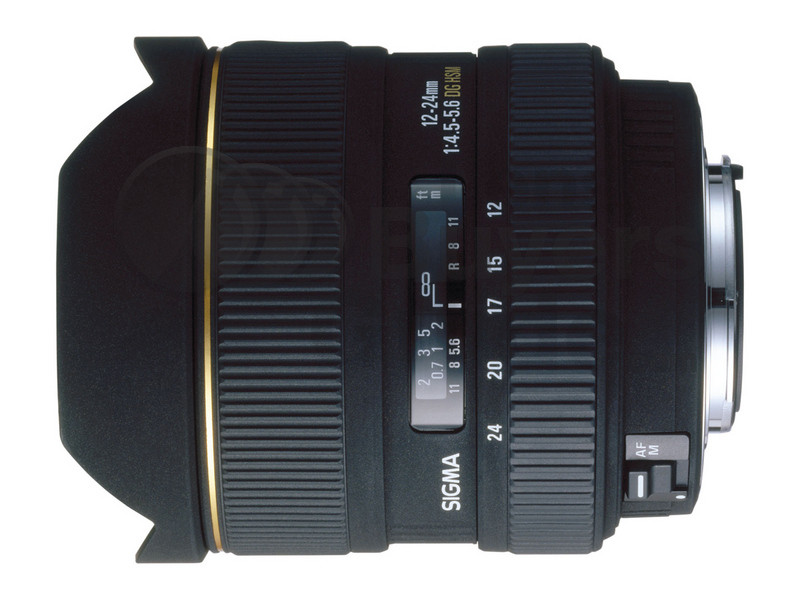
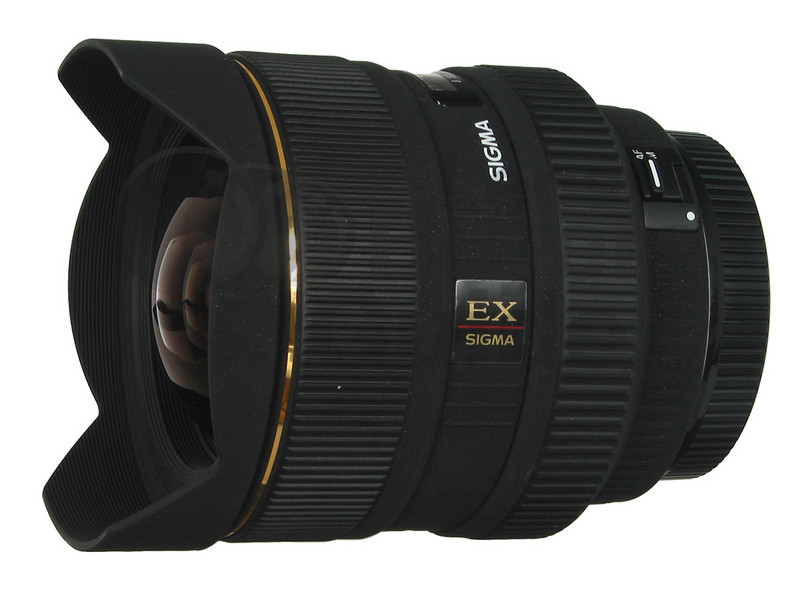
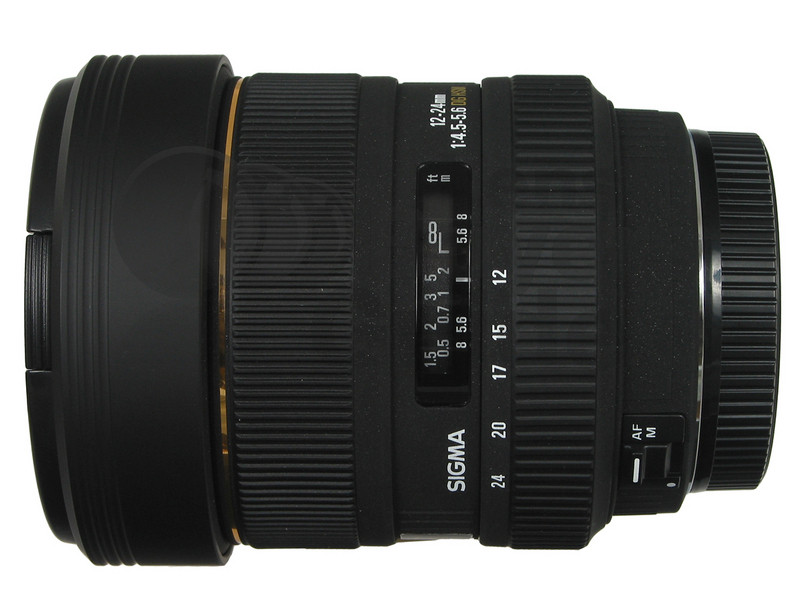
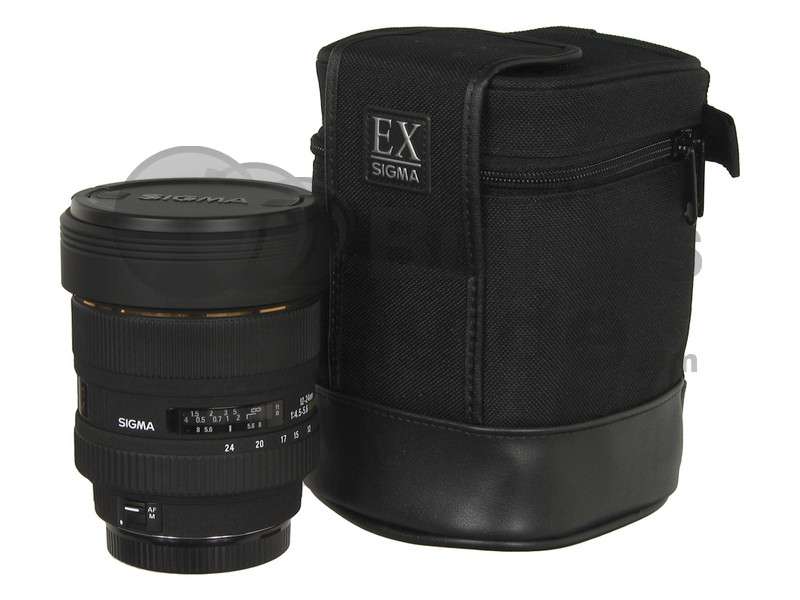
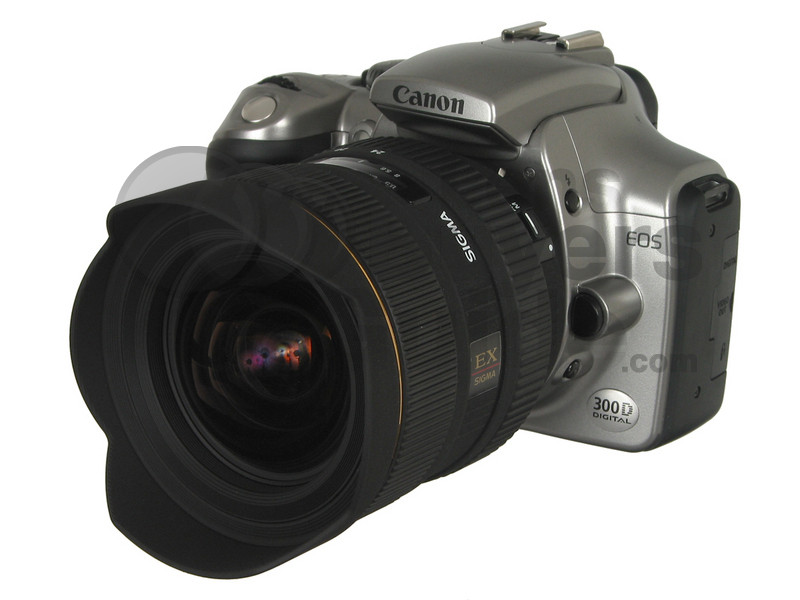
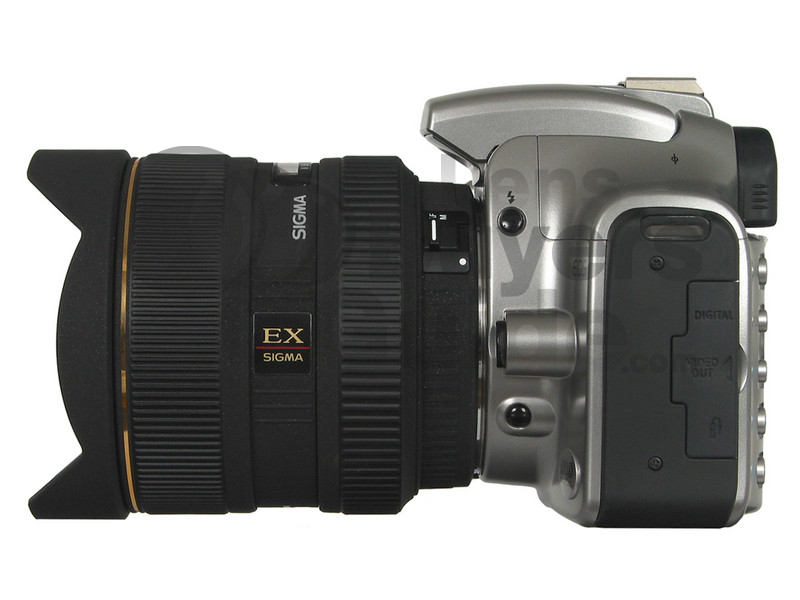
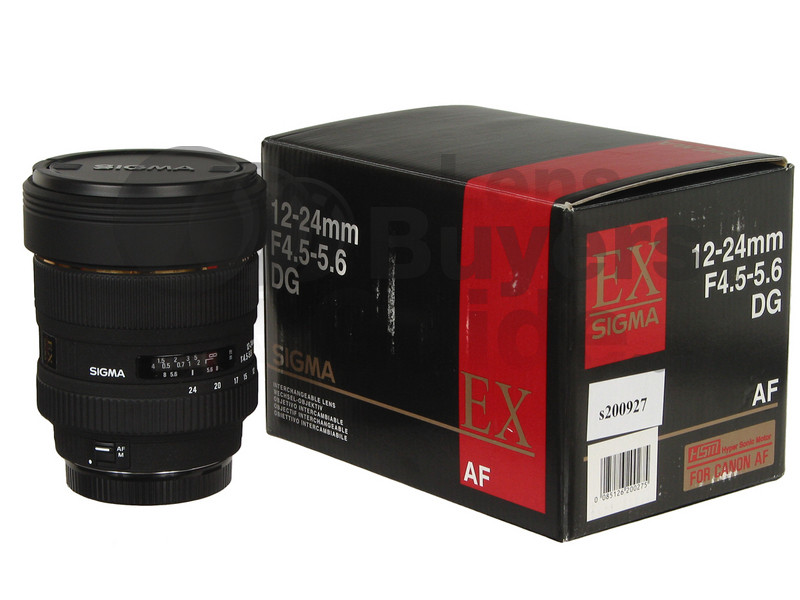
Ez a díjnyertes, ultra nagy látószögű, 12 mm-ről induló zoom objektív a 35 mm-es kisfilmes és a digitális tükörreflexes fényképezőgépekhez egyaránt ideális. Hihetetlen, 122°-os látószöge révén ez az optika teljesen új fotográfiai ablakot nyit a világra. A HSM motorral felszerelt modell villámgyors és zajtalan automatikus élességállítást tesz lehetővé. Az objektív bármikor kézi élességállításra kapcsolható. A négy SLD (Special Low Dispersion - Különleges alacsony szórású) lencsetag és a három aszférikus lencsetag (ebből két öntött lencseüveg) révén ez az objektív a lehető legjobban kiszűri a kromatikus és egyéb aberrációkat, ugyanakkor kiemelkedő képminőséget biztosít.
|
| Elérhető bajonett(ek) | Canon EF, Nikon F, Pentax K, Sony / Minolta A, Sigma |
| Felhasználási terület(ek) | Tájkép, Belső terek, Épület |
| Kategóriák | Nagy látószögű zoom |
| Szorzó | 1× |
| Stabilizátor | nem |
| Gyújtótávolság | 12 - 24 mm (2× zoom) |
| Objektív felépítése | 16 lencsetag 12 csoportban |
| Látószög |
35mm: 122-84.1° digitális: 93.1-54.8° |
| Lamellák száma | 6 |
| Legnagyobb blende | nagy látószög: f/4,5 tele: f/5,6 |
| Legkisebb blende | nagy látószög: f/22 tele: nincs adat |
| Legkisebb tárgytávolság | 28 cm |
| Nagyítás | 0,14× |
| Szűrőmenet | nincs adat |
| Méret | ∅ 87 × 102.5 mm |
| Tömeg | 600 g |
| Megjegyzések |
Sigma, Nikon és Canon bajonettek esetén HSM rendszer |
| AF sebesség | nincs adat |
| AF hang | |
| Belső élességállítás | igen |
| Belső zoom | nincs adat |
| Fix frontlencse | igen |
| Bajonett típusa | fém |
| Időjárásálló | nincs adat |
| Becsúsztatható szűrők | igen |
| Ultrahangos AF | igen |
| APS-C méretű vetített kép | nem |
| Alacsony szórású lencsetag | igen |
| Kemény tok | nincs adat |
| Puha tok | nincs adat |
| Napellenző | nincs adat |
| Állvány adapter | nincs adat |
2006. július 03.
There's nothing else this wide for use on a full-frame 35mm camera or digital such as the Canon 5D. It's so wide on a full-frame that you can almost see behind you (well not quite, but close to 180 degree field of view). It is not a fisheye, so straight lines stay straight. There is some minor vignetting at 12mm but less than the Canon 17-40 L-lens I had at 17mm. This lens is pushing the limits of physics so it is not as sharp as some lenses but it takes in so much more of the view and provides a crisp image all the way to the corners.
For use on a cropped sensor camera, such as the XT, 20D or 30D a better choice may be the Canon 10-22mm which is uber-sharp in the middle of the frame. The Canon, however, gives fuzzy images on the sides when wide open but sharpens up when stopped down to f8 or more. My third copy of the Sigma lens is less sharp than the Canon in the center of the frame but is sharper starting about halfway to the edge when both lenses are wide open. Near the edges of the frame the Canon gives a dark and mushy image when wide open at 12mm while the Sigma is only slightly less sharp than at the center - truly amazing!
Unfortunately, Sigma lenses are seemingly sold "as-is" with wide sample variations. The autofocus died on my first copy of the lens after less than 30 pictures. The second copy had poor optics with soft and fuzzy pictures even when manually focused. The third copy is sharp at 12mm, even wide open, all the way to the edges, but only if manually focused. At 12mm the lens autofocuses too far away when an object is close and too close for distant objects. At 24mm it autofocuses right on but is softer than at 12mm. I've decided to keep it since it is easy to manually focus. The depth of focus is large at 12mm. For objects further than a few meters away when using 12mm just set the lens to infinity and everything from a few feet to infinity is in focus even at the edges of the frame and in the corners. The lens has a 4-year warranty so I may send it in to Sigma for calibration later.
Pros: (1) Unique ultra-wide angle perspective on a full-frame camera. (2) A good copy will be optically sharp all the way across a full frame, even wide open. Further, there's virtually no purple chromatic aberation near the edges of dark objects with bright backgrounds. (3) Nice build quality with good finish and large smooth focus ring. (4) Straight lines stay straight so no defishing needed (defishing uses interpolation which lowers resolution away from the center). (5) Lens comes with a case and has a small built-in hood (serves mainly to protect the front element). (6) 4-year USA warranty if purchased from an authorized dealer like Amazon or B&H. Otherwise you get a 1-year International Warranty.
Cons: (1) Wide sample variation - getting a good copy takes luck or persistence while trying multiple copies. (2) The bulbous front element (this lens is nicknamed "Popeye") is exposed and no standard filter can be used for protection so be very careful. (3) Flares easily. The sun does not need to be in the picture just anywhere not behind you. This is a result of the ultra-wide design and not a fault of Sigma. (4) Photos sometimes come out too bright, giving the appearance of low contrast. Photoshop or other software easily fixes.
2006. január 22.
I use this lens primarily for architectural work. It's rugged, fast focusing, and most important, distortion free (i.e., straight lines stay straight). Dramatic design, built for full frame use if (when) you decide it's time to go that way. It's also performed extremely well for landscapes....even some shots at weddings. My most frequently used lens. (Hint: on the APS-C format digital SLRS, you can leave the accessory ring on the lens - it provides additional flare resistance, and there is no vignetting.)
2007. május 08.
The Sigma 12-24 is an excellent ultrawide. It is very sharp with very little barrel or pincushion distortion. It is a true 12-24 fullframe with a film SLR (love it with my Nikon N80) or full frame digital slr, and effectively an 18-36 with an APS-sized sensor digital SLR. Excelleent ultrawide for architecture, landscapes etc. At 12mm though, it is so wide that you must be careful of distortion introduced by shooting off-level. This is not to say this particular lens is faulty and distorts, but would be true of any ultrawide lens with this wide degree of coverage. While I have heard much talk of supposed poor Sigma quality control, I have no qualms at all about this lens - It is sturdy, tough, smooth and has performed flawlessly for me for years.
2007. december 23.
Sigma has been much maligned by the Nikon-brand lens snobs, and not without good reason. The build quality and optical clarity of the average Nikon lens easily trounces the average Sigma.
This particular Sigma lens has been in my bag since 2004 (three years now) and has performed flawlessly in dusty, humid, and rainy conditions. I can't say that about every Nikon lens I have owned.
Don't get me wrong-- this is not a flawless lens. It is weather sealed enough, but I doubt it would survive being dunked in water the way some (but not many) Nikon lenses would. It focuses faster than many Nikon lenses, but slower than competing Silent Wave Motor Nikons. It is quieter than any non-SWM Nikons, and almost as quiet as SWM. It focuses as well as any Nikon f/4.5-5.6 lens in similar lighting conditions.
Now for the flaws. It has more chromatic aberration than Nikon's 12-24mm DX and 14-24mm FX lenses. It isn't as sharp, especially near the edges. But if your maximum print size is 8x10 you'll likely never notice.
UPSIDES: Even though it works at full frame (important for those of us that still shoot film as well as digital) it is much cheaper than Nikons 12-24 f/4.5-5.6 DX lens-- a lens that is only good for DX-sized sensor digital Nikons. It is less than 1/3 the price of the recently released FX (full-frame) 14-24mm f/2.8 Nikon lens.
Granted, the professional Nikon 14-24mm lens is clearly the best of the bunch, but most of us can't afford that extravagance. When I bought this lens it was the only 12-24mm lens available, and given the offerings from Nikon and other third-party lens makers, I can't regret this purchase for one moment.
While I'd like to own the new professional Nikon 14-28mm f/2.8 lens, that won't be in my budget in the foreseeable future. My buying advice: take your camera to a good local camera shop and try this lens (and its competitors) for yourself. I'm confident many of you will agree that the Sigma, while it is not the best lens, is good enough and the best compromise-- given the price.
Cheers.
2008. július 21.
I bought this lens to service a new client that does virtual tours for hotels and resorts. Their lens requirements are 18mm for full frame digital cameras and 12mm for DX chip cameras, to shoot 360 degree VRs. I didn't want to invest the 1000.00 plus dollars for another Canon lens and Canon or anyone else for that matter doesn't make a lens with this range. The Sigma would allow me to use both my 1Ds Mk II and 20D to service this client and cost me half what anything Canon provides.
Having bought the lens mainly for Internet content, I wasn't going to be too critical about image quality from it, but I've been very surpised and pleased by it's performance. This lens has the least amount of barrel distortion of any wide angle zoom lens I've ever used. Even less than some primary lenses. To the point where it is essentally undetectable to the naked eye. It has less barrel distortion than my 1000.00+ 24-70mm f2.8L Canon lens! Operation is smooth, fast and constructions is first rate. I haven't done any critical sharpness comparisons yet, but I haven't noticed any problems from the images I've taken so far.
The lens has a very bulbous front element, so conventional filters and lens caps won't fit. But Sigma cleverly includes a high quality adapter ring with filter threads in one end that slides over the built in lens shade on the lens. A lens cap is also included that fits on the end of the ring to protect the front element while being stored. The ring vignettes at 12mm on a full frame camera, but does not on DX chip cameras. So on those cameras, conventional thread on filters can be used with by screwing them on to the end of the adapter ring. You could do also this on full frame cameras, at longer focal lengths. A gelatin filter holder is provided on the back of the lens, but I can only imagine this being useful with film cameras.
Overall, I'm very impressed and satisfied with this lens. I highly recommend it.
2006. július 03.
There's nothing else this wide for use on a full-frame 35mm camera or digital such as the Canon 5D. It's so wide on a full-frame that you can almost see behind you (well not quite, but close to 180 degree field of view). It is not a fisheye, so straight lines stay straight. There is some minor vignetting at 12mm but less than the Canon 17-40 L-lens I had at 17mm. This lens is pushing the limits of physics so it is not as sharp as some lenses but it takes in so much more of the view and provides a crisp image all the way to the corners.
For use on a cropped sensor camera, such as the XT, 20D or 30D a better choice may be the Canon 10-22mm which is uber-sharp in the middle of the frame. The Canon, however, gives fuzzy images on the sides when wide open but sharpens up when stopped down to f8 or more. My third copy of the Sigma lens is less sharp than the Canon in the center of the frame but is sharper starting about halfway to the edge when both lenses are wide open. Near the edges of the frame the Canon gives a dark and mushy image when wide open at 12mm while the Sigma is only slightly less sharp than at the center - truly amazing!
Unfortunately, Sigma lenses are seemingly sold "as-is" with wide sample variations. The autofocus died on my first copy of the lens after less than 30 pictures. The second copy had poor optics with soft and fuzzy pictures even when manually focused. The third copy is sharp at 12mm, even wide open, all the way to the edges, but only if manually focused. At 12mm the lens autofocuses too far away when an object is close and too close for distant objects. At 24mm it autofocuses right on but is softer than at 12mm. I've decided to keep it since it is easy to manually focus. The depth of focus is large at 12mm. For objects further than a few meters away when using 12mm just set the lens to infinity and everything from a few feet to infinity is in focus even at the edges of the frame and in the corners. The lens has a 4-year warranty so I may send it in to Sigma for calibration later.
Pros: (1) Unique ultra-wide angle perspective on a full-frame camera. (2) A good copy will be optically sharp all the way across a full frame, even wide open. Further, there's virtually no purple chromatic aberation near the edges of dark objects with bright backgrounds. (3) Nice build quality with good finish and large smooth focus ring. (4) Straight lines stay straight so no defishing needed (defishing uses interpolation which lowers resolution away from the center). (5) Lens comes with a case and has a small built-in hood (serves mainly to protect the front element). (6) 4-year USA warranty if purchased from an authorized dealer like Amazon or B&H. Otherwise you get a 1-year International Warranty.
Cons: (1) Wide sample variation - getting a good copy takes luck or persistence while trying multiple copies. (2) The bulbous front element (this lens is nicknamed "Popeye") is exposed and no standard filter can be used for protection so be very careful. (3) Flares easily. The sun does not need to be in the picture just anywhere not behind you. This is a result of the ultra-wide design and not a fault of Sigma. (4) Photos sometimes come out too bright, giving the appearance of low contrast. Photoshop or other software easily fixes.
2006. január 22.
I use this lens primarily for architectural work. It's rugged, fast focusing, and most important, distortion free (i.e., straight lines stay straight). Dramatic design, built for full frame use if (when) you decide it's time to go that way. It's also performed extremely well for landscapes....even some shots at weddings. My most frequently used lens. (Hint: on the APS-C format digital SLRS, you can leave the accessory ring on the lens - it provides additional flare resistance, and there is no vignetting.)
2007. május 08.
The Sigma 12-24 is an excellent ultrawide. It is very sharp with very little barrel or pincushion distortion. It is a true 12-24 fullframe with a film SLR (love it with my Nikon N80) or full frame digital slr, and effectively an 18-36 with an APS-sized sensor digital SLR. Excelleent ultrawide for architecture, landscapes etc. At 12mm though, it is so wide that you must be careful of distortion introduced by shooting off-level. This is not to say this particular lens is faulty and distorts, but would be true of any ultrawide lens with this wide degree of coverage. While I have heard much talk of supposed poor Sigma quality control, I have no qualms at all about this lens - It is sturdy, tough, smooth and has performed flawlessly for me for years.
2007. december 23.
Sigma has been much maligned by the Nikon-brand lens snobs, and not without good reason. The build quality and optical clarity of the average Nikon lens easily trounces the average Sigma.
This particular Sigma lens has been in my bag since 2004 (three years now) and has performed flawlessly in dusty, humid, and rainy conditions. I can't say that about every Nikon lens I have owned.
Don't get me wrong-- this is not a flawless lens. It is weather sealed enough, but I doubt it would survive being dunked in water the way some (but not many) Nikon lenses would. It focuses faster than many Nikon lenses, but slower than competing Silent Wave Motor Nikons. It is quieter than any non-SWM Nikons, and almost as quiet as SWM. It focuses as well as any Nikon f/4.5-5.6 lens in similar lighting conditions.
Now for the flaws. It has more chromatic aberration than Nikon's 12-24mm DX and 14-24mm FX lenses. It isn't as sharp, especially near the edges. But if your maximum print size is 8x10 you'll likely never notice.
UPSIDES: Even though it works at full frame (important for those of us that still shoot film as well as digital) it is much cheaper than Nikons 12-24 f/4.5-5.6 DX lens-- a lens that is only good for DX-sized sensor digital Nikons. It is less than 1/3 the price of the recently released FX (full-frame) 14-24mm f/2.8 Nikon lens.
Granted, the professional Nikon 14-24mm lens is clearly the best of the bunch, but most of us can't afford that extravagance. When I bought this lens it was the only 12-24mm lens available, and given the offerings from Nikon and other third-party lens makers, I can't regret this purchase for one moment.
While I'd like to own the new professional Nikon 14-28mm f/2.8 lens, that won't be in my budget in the foreseeable future. My buying advice: take your camera to a good local camera shop and try this lens (and its competitors) for yourself. I'm confident many of you will agree that the Sigma, while it is not the best lens, is good enough and the best compromise-- given the price.
Cheers.
2008. július 21.
I bought this lens to service a new client that does virtual tours for hotels and resorts. Their lens requirements are 18mm for full frame digital cameras and 12mm for DX chip cameras, to shoot 360 degree VRs. I didn't want to invest the 1000.00 plus dollars for another Canon lens and Canon or anyone else for that matter doesn't make a lens with this range. The Sigma would allow me to use both my 1Ds Mk II and 20D to service this client and cost me half what anything Canon provides.
Having bought the lens mainly for Internet content, I wasn't going to be too critical about image quality from it, but I've been very surpised and pleased by it's performance. This lens has the least amount of barrel distortion of any wide angle zoom lens I've ever used. Even less than some primary lenses. To the point where it is essentally undetectable to the naked eye. It has less barrel distortion than my 1000.00+ 24-70mm f2.8L Canon lens! Operation is smooth, fast and constructions is first rate. I haven't done any critical sharpness comparisons yet, but I haven't noticed any problems from the images I've taken so far.
The lens has a very bulbous front element, so conventional filters and lens caps won't fit. But Sigma cleverly includes a high quality adapter ring with filter threads in one end that slides over the built in lens shade on the lens. A lens cap is also included that fits on the end of the ring to protect the front element while being stored. The ring vignettes at 12mm on a full frame camera, but does not on DX chip cameras. So on those cameras, conventional thread on filters can be used with by screwing them on to the end of the adapter ring. You could do also this on full frame cameras, at longer focal lengths. A gelatin filter holder is provided on the back of the lens, but I can only imagine this being useful with film cameras.
Overall, I'm very impressed and satisfied with this lens. I highly recommend it.
2006. július 03.
There's nothing else this wide for use on a full-frame 35mm camera or digital such as the Canon 5D. It's so wide on a full-frame that you can almost see behind you (well not quite, but close to 180 degree field of view). It is not a fisheye, so straight lines stay straight. There is some minor vignetting at 12mm but less than the Canon 17-40 L-lens I had at 17mm. This lens is pushing the limits of physics so it is not as sharp as some lenses but it takes in so much more of the view and provides a crisp image all the way to the corners.
For use on a cropped sensor camera, such as the XT, 20D or 30D a better choice may be the Canon 10-22mm which is uber-sharp in the middle of the frame. The Canon, however, gives fuzzy images on the sides when wide open but sharpens up when stopped down to f8 or more. My third copy of the Sigma lens is less sharp than the Canon in the center of the frame but is sharper starting about halfway to the edge when both lenses are wide open. Near the edges of the frame the Canon gives a dark and mushy image when wide open at 12mm while the Sigma is only slightly less sharp than at the center - truly amazing!
Unfortunately, Sigma lenses are seemingly sold "as-is" with wide sample variations. The autofocus died on my first copy of the lens after less than 30 pictures. The second copy had poor optics with soft and fuzzy pictures even when manually focused. The third copy is sharp at 12mm, even wide open, all the way to the edges, but only if manually focused. At 12mm the lens autofocuses too far away when an object is close and too close for distant objects. At 24mm it autofocuses right on but is softer than at 12mm. I've decided to keep it since it is easy to manually focus. The depth of focus is large at 12mm. For objects further than a few meters away when using 12mm just set the lens to infinity and everything from a few feet to infinity is in focus even at the edges of the frame and in the corners. The lens has a 4-year warranty so I may send it in to Sigma for calibration later.
Pros: (1) Unique ultra-wide angle perspective on a full-frame camera. (2) A good copy will be optically sharp all the way across a full frame, even wide open. Further, there's virtually no purple chromatic aberation near the edges of dark objects with bright backgrounds. (3) Nice build quality with good finish and large smooth focus ring. (4) Straight lines stay straight so no defishing needed (defishing uses interpolation which lowers resolution away from the center). (5) Lens comes with a case and has a small built-in hood (serves mainly to protect the front element). (6) 4-year USA warranty if purchased from an authorized dealer like Amazon or B&H. Otherwise you get a 1-year International Warranty.
Cons: (1) Wide sample variation - getting a good copy takes luck or persistence while trying multiple copies. (2) The bulbous front element (this lens is nicknamed "Popeye") is exposed and no standard filter can be used for protection so be very careful. (3) Flares easily. The sun does not need to be in the picture just anywhere not behind you. This is a result of the ultra-wide design and not a fault of Sigma. (4) Photos sometimes come out too bright, giving the appearance of low contrast. Photoshop or other software easily fixes.
2006. január 22.
I use this lens primarily for architectural work. It's rugged, fast focusing, and most important, distortion free (i.e., straight lines stay straight). Dramatic design, built for full frame use if (when) you decide it's time to go that way. It's also performed extremely well for landscapes....even some shots at weddings. My most frequently used lens. (Hint: on the APS-C format digital SLRS, you can leave the accessory ring on the lens - it provides additional flare resistance, and there is no vignetting.)
2007. május 08.
The Sigma 12-24 is an excellent ultrawide. It is very sharp with very little barrel or pincushion distortion. It is a true 12-24 fullframe with a film SLR (love it with my Nikon N80) or full frame digital slr, and effectively an 18-36 with an APS-sized sensor digital SLR. Excelleent ultrawide for architecture, landscapes etc. At 12mm though, it is so wide that you must be careful of distortion introduced by shooting off-level. This is not to say this particular lens is faulty and distorts, but would be true of any ultrawide lens with this wide degree of coverage. While I have heard much talk of supposed poor Sigma quality control, I have no qualms at all about this lens - It is sturdy, tough, smooth and has performed flawlessly for me for years.
2007. december 23.
Sigma has been much maligned by the Nikon-brand lens snobs, and not without good reason. The build quality and optical clarity of the average Nikon lens easily trounces the average Sigma.
This particular Sigma lens has been in my bag since 2004 (three years now) and has performed flawlessly in dusty, humid, and rainy conditions. I can't say that about every Nikon lens I have owned.
Don't get me wrong-- this is not a flawless lens. It is weather sealed enough, but I doubt it would survive being dunked in water the way some (but not many) Nikon lenses would. It focuses faster than many Nikon lenses, but slower than competing Silent Wave Motor Nikons. It is quieter than any non-SWM Nikons, and almost as quiet as SWM. It focuses as well as any Nikon f/4.5-5.6 lens in similar lighting conditions.
Now for the flaws. It has more chromatic aberration than Nikon's 12-24mm DX and 14-24mm FX lenses. It isn't as sharp, especially near the edges. But if your maximum print size is 8x10 you'll likely never notice.
UPSIDES: Even though it works at full frame (important for those of us that still shoot film as well as digital) it is much cheaper than Nikons 12-24 f/4.5-5.6 DX lens-- a lens that is only good for DX-sized sensor digital Nikons. It is less than 1/3 the price of the recently released FX (full-frame) 14-24mm f/2.8 Nikon lens.
Granted, the professional Nikon 14-24mm lens is clearly the best of the bunch, but most of us can't afford that extravagance. When I bought this lens it was the only 12-24mm lens available, and given the offerings from Nikon and other third-party lens makers, I can't regret this purchase for one moment.
While I'd like to own the new professional Nikon 14-28mm f/2.8 lens, that won't be in my budget in the foreseeable future. My buying advice: take your camera to a good local camera shop and try this lens (and its competitors) for yourself. I'm confident many of you will agree that the Sigma, while it is not the best lens, is good enough and the best compromise-- given the price.
Cheers.
2008. július 21.
I bought this lens to service a new client that does virtual tours for hotels and resorts. Their lens requirements are 18mm for full frame digital cameras and 12mm for DX chip cameras, to shoot 360 degree VRs. I didn't want to invest the 1000.00 plus dollars for another Canon lens and Canon or anyone else for that matter doesn't make a lens with this range. The Sigma would allow me to use both my 1Ds Mk II and 20D to service this client and cost me half what anything Canon provides.
Having bought the lens mainly for Internet content, I wasn't going to be too critical about image quality from it, but I've been very surpised and pleased by it's performance. This lens has the least amount of barrel distortion of any wide angle zoom lens I've ever used. Even less than some primary lenses. To the point where it is essentally undetectable to the naked eye. It has less barrel distortion than my 1000.00+ 24-70mm f2.8L Canon lens! Operation is smooth, fast and constructions is first rate. I haven't done any critical sharpness comparisons yet, but I haven't noticed any problems from the images I've taken so far.
The lens has a very bulbous front element, so conventional filters and lens caps won't fit. But Sigma cleverly includes a high quality adapter ring with filter threads in one end that slides over the built in lens shade on the lens. A lens cap is also included that fits on the end of the ring to protect the front element while being stored. The ring vignettes at 12mm on a full frame camera, but does not on DX chip cameras. So on those cameras, conventional thread on filters can be used with by screwing them on to the end of the adapter ring. You could do also this on full frame cameras, at longer focal lengths. A gelatin filter holder is provided on the back of the lens, but I can only imagine this being useful with film cameras.
Overall, I'm very impressed and satisfied with this lens. I highly recommend it.
2006. július 03.
There's nothing else this wide for use on a full-frame 35mm camera or digital such as the Canon 5D. It's so wide on a full-frame that you can almost see behind you (well not quite, but close to 180 degree field of view). It is not a fisheye, so straight lines stay straight. There is some minor vignetting at 12mm but less than the Canon 17-40 L-lens I had at 17mm. This lens is pushing the limits of physics so it is not as sharp as some lenses but it takes in so much more of the view and provides a crisp image all the way to the corners.
For use on a cropped sensor camera, such as the XT, 20D or 30D a better choice may be the Canon 10-22mm which is uber-sharp in the middle of the frame. The Canon, however, gives fuzzy images on the sides when wide open but sharpens up when stopped down to f8 or more. My third copy of the Sigma lens is less sharp than the Canon in the center of the frame but is sharper starting about halfway to the edge when both lenses are wide open. Near the edges of the frame the Canon gives a dark and mushy image when wide open at 12mm while the Sigma is only slightly less sharp than at the center - truly amazing!
Unfortunately, Sigma lenses are seemingly sold "as-is" with wide sample variations. The autofocus died on my first copy of the lens after less than 30 pictures. The second copy had poor optics with soft and fuzzy pictures even when manually focused. The third copy is sharp at 12mm, even wide open, all the way to the edges, but only if manually focused. At 12mm the lens autofocuses too far away when an object is close and too close for distant objects. At 24mm it autofocuses right on but is softer than at 12mm. I've decided to keep it since it is easy to manually focus. The depth of focus is large at 12mm. For objects further than a few meters away when using 12mm just set the lens to infinity and everything from a few feet to infinity is in focus even at the edges of the frame and in the corners. The lens has a 4-year warranty so I may send it in to Sigma for calibration later.
Pros: (1) Unique ultra-wide angle perspective on a full-frame camera. (2) A good copy will be optically sharp all the way across a full frame, even wide open. Further, there's virtually no purple chromatic aberation near the edges of dark objects with bright backgrounds. (3) Nice build quality with good finish and large smooth focus ring. (4) Straight lines stay straight so no defishing needed (defishing uses interpolation which lowers resolution away from the center). (5) Lens comes with a case and has a small built-in hood (serves mainly to protect the front element). (6) 4-year USA warranty if purchased from an authorized dealer like Amazon or B&H. Otherwise you get a 1-year International Warranty.
Cons: (1) Wide sample variation - getting a good copy takes luck or persistence while trying multiple copies. (2) The bulbous front element (this lens is nicknamed "Popeye") is exposed and no standard filter can be used for protection so be very careful. (3) Flares easily. The sun does not need to be in the picture just anywhere not behind you. This is a result of the ultra-wide design and not a fault of Sigma. (4) Photos sometimes come out too bright, giving the appearance of low contrast. Photoshop or other software easily fixes.
2006. január 22.
I use this lens primarily for architectural work. It's rugged, fast focusing, and most important, distortion free (i.e., straight lines stay straight). Dramatic design, built for full frame use if (when) you decide it's time to go that way. It's also performed extremely well for landscapes....even some shots at weddings. My most frequently used lens. (Hint: on the APS-C format digital SLRS, you can leave the accessory ring on the lens - it provides additional flare resistance, and there is no vignetting.)
2007. május 08.
The Sigma 12-24 is an excellent ultrawide. It is very sharp with very little barrel or pincushion distortion. It is a true 12-24 fullframe with a film SLR (love it with my Nikon N80) or full frame digital slr, and effectively an 18-36 with an APS-sized sensor digital SLR. Excelleent ultrawide for architecture, landscapes etc. At 12mm though, it is so wide that you must be careful of distortion introduced by shooting off-level. This is not to say this particular lens is faulty and distorts, but would be true of any ultrawide lens with this wide degree of coverage. While I have heard much talk of supposed poor Sigma quality control, I have no qualms at all about this lens - It is sturdy, tough, smooth and has performed flawlessly for me for years.
2007. december 23.
Sigma has been much maligned by the Nikon-brand lens snobs, and not without good reason. The build quality and optical clarity of the average Nikon lens easily trounces the average Sigma.
This particular Sigma lens has been in my bag since 2004 (three years now) and has performed flawlessly in dusty, humid, and rainy conditions. I can't say that about every Nikon lens I have owned.
Don't get me wrong-- this is not a flawless lens. It is weather sealed enough, but I doubt it would survive being dunked in water the way some (but not many) Nikon lenses would. It focuses faster than many Nikon lenses, but slower than competing Silent Wave Motor Nikons. It is quieter than any non-SWM Nikons, and almost as quiet as SWM. It focuses as well as any Nikon f/4.5-5.6 lens in similar lighting conditions.
Now for the flaws. It has more chromatic aberration than Nikon's 12-24mm DX and 14-24mm FX lenses. It isn't as sharp, especially near the edges. But if your maximum print size is 8x10 you'll likely never notice.
UPSIDES: Even though it works at full frame (important for those of us that still shoot film as well as digital) it is much cheaper than Nikons 12-24 f/4.5-5.6 DX lens-- a lens that is only good for DX-sized sensor digital Nikons. It is less than 1/3 the price of the recently released FX (full-frame) 14-24mm f/2.8 Nikon lens.
Granted, the professional Nikon 14-24mm lens is clearly the best of the bunch, but most of us can't afford that extravagance. When I bought this lens it was the only 12-24mm lens available, and given the offerings from Nikon and other third-party lens makers, I can't regret this purchase for one moment.
While I'd like to own the new professional Nikon 14-28mm f/2.8 lens, that won't be in my budget in the foreseeable future. My buying advice: take your camera to a good local camera shop and try this lens (and its competitors) for yourself. I'm confident many of you will agree that the Sigma, while it is not the best lens, is good enough and the best compromise-- given the price.
Cheers.
2008. július 21.
I bought this lens to service a new client that does virtual tours for hotels and resorts. Their lens requirements are 18mm for full frame digital cameras and 12mm for DX chip cameras, to shoot 360 degree VRs. I didn't want to invest the 1000.00 plus dollars for another Canon lens and Canon or anyone else for that matter doesn't make a lens with this range. The Sigma would allow me to use both my 1Ds Mk II and 20D to service this client and cost me half what anything Canon provides.
Having bought the lens mainly for Internet content, I wasn't going to be too critical about image quality from it, but I've been very surpised and pleased by it's performance. This lens has the least amount of barrel distortion of any wide angle zoom lens I've ever used. Even less than some primary lenses. To the point where it is essentally undetectable to the naked eye. It has less barrel distortion than my 1000.00+ 24-70mm f2.8L Canon lens! Operation is smooth, fast and constructions is first rate. I haven't done any critical sharpness comparisons yet, but I haven't noticed any problems from the images I've taken so far.
The lens has a very bulbous front element, so conventional filters and lens caps won't fit. But Sigma cleverly includes a high quality adapter ring with filter threads in one end that slides over the built in lens shade on the lens. A lens cap is also included that fits on the end of the ring to protect the front element while being stored. The ring vignettes at 12mm on a full frame camera, but does not on DX chip cameras. So on those cameras, conventional thread on filters can be used with by screwing them on to the end of the adapter ring. You could do also this on full frame cameras, at longer focal lengths. A gelatin filter holder is provided on the back of the lens, but I can only imagine this being useful with film cameras.
Overall, I'm very impressed and satisfied with this lens. I highly recommend it.
2006. július 03.
There's nothing else this wide for use on a full-frame 35mm camera or digital such as the Canon 5D. It's so wide on a full-frame that you can almost see behind you (well not quite, but close to 180 degree field of view). It is not a fisheye, so straight lines stay straight. There is some minor vignetting at 12mm but less than the Canon 17-40 L-lens I had at 17mm. This lens is pushing the limits of physics so it is not as sharp as some lenses but it takes in so much more of the view and provides a crisp image all the way to the corners.
For use on a cropped sensor camera, such as the XT, 20D or 30D a better choice may be the Canon 10-22mm which is uber-sharp in the middle of the frame. The Canon, however, gives fuzzy images on the sides when wide open but sharpens up when stopped down to f8 or more. My third copy of the Sigma lens is less sharp than the Canon in the center of the frame but is sharper starting about halfway to the edge when both lenses are wide open. Near the edges of the frame the Canon gives a dark and mushy image when wide open at 12mm while the Sigma is only slightly less sharp than at the center - truly amazing!
Unfortunately, Sigma lenses are seemingly sold "as-is" with wide sample variations. The autofocus died on my first copy of the lens after less than 30 pictures. The second copy had poor optics with soft and fuzzy pictures even when manually focused. The third copy is sharp at 12mm, even wide open, all the way to the edges, but only if manually focused. At 12mm the lens autofocuses too far away when an object is close and too close for distant objects. At 24mm it autofocuses right on but is softer than at 12mm. I've decided to keep it since it is easy to manually focus. The depth of focus is large at 12mm. For objects further than a few meters away when using 12mm just set the lens to infinity and everything from a few feet to infinity is in focus even at the edges of the frame and in the corners. The lens has a 4-year warranty so I may send it in to Sigma for calibration later.
Pros: (1) Unique ultra-wide angle perspective on a full-frame camera. (2) A good copy will be optically sharp all the way across a full frame, even wide open. Further, there's virtually no purple chromatic aberation near the edges of dark objects with bright backgrounds. (3) Nice build quality with good finish and large smooth focus ring. (4) Straight lines stay straight so no defishing needed (defishing uses interpolation which lowers resolution away from the center). (5) Lens comes with a case and has a small built-in hood (serves mainly to protect the front element). (6) 4-year USA warranty if purchased from an authorized dealer like Amazon or B&H. Otherwise you get a 1-year International Warranty.
Cons: (1) Wide sample variation - getting a good copy takes luck or persistence while trying multiple copies. (2) The bulbous front element (this lens is nicknamed "Popeye") is exposed and no standard filter can be used for protection so be very careful. (3) Flares easily. The sun does not need to be in the picture just anywhere not behind you. This is a result of the ultra-wide design and not a fault of Sigma. (4) Photos sometimes come out too bright, giving the appearance of low contrast. Photoshop or other software easily fixes.
2006. január 22.
I use this lens primarily for architectural work. It's rugged, fast focusing, and most important, distortion free (i.e., straight lines stay straight). Dramatic design, built for full frame use if (when) you decide it's time to go that way. It's also performed extremely well for landscapes....even some shots at weddings. My most frequently used lens. (Hint: on the APS-C format digital SLRS, you can leave the accessory ring on the lens - it provides additional flare resistance, and there is no vignetting.)
2007. május 08.
The Sigma 12-24 is an excellent ultrawide. It is very sharp with very little barrel or pincushion distortion. It is a true 12-24 fullframe with a film SLR (love it with my Nikon N80) or full frame digital slr, and effectively an 18-36 with an APS-sized sensor digital SLR. Excelleent ultrawide for architecture, landscapes etc. At 12mm though, it is so wide that you must be careful of distortion introduced by shooting off-level. This is not to say this particular lens is faulty and distorts, but would be true of any ultrawide lens with this wide degree of coverage. While I have heard much talk of supposed poor Sigma quality control, I have no qualms at all about this lens - It is sturdy, tough, smooth and has performed flawlessly for me for years.
2007. december 23.
Sigma has been much maligned by the Nikon-brand lens snobs, and not without good reason. The build quality and optical clarity of the average Nikon lens easily trounces the average Sigma.
This particular Sigma lens has been in my bag since 2004 (three years now) and has performed flawlessly in dusty, humid, and rainy conditions. I can't say that about every Nikon lens I have owned.
Don't get me wrong-- this is not a flawless lens. It is weather sealed enough, but I doubt it would survive being dunked in water the way some (but not many) Nikon lenses would. It focuses faster than many Nikon lenses, but slower than competing Silent Wave Motor Nikons. It is quieter than any non-SWM Nikons, and almost as quiet as SWM. It focuses as well as any Nikon f/4.5-5.6 lens in similar lighting conditions.
Now for the flaws. It has more chromatic aberration than Nikon's 12-24mm DX and 14-24mm FX lenses. It isn't as sharp, especially near the edges. But if your maximum print size is 8x10 you'll likely never notice.
UPSIDES: Even though it works at full frame (important for those of us that still shoot film as well as digital) it is much cheaper than Nikons 12-24 f/4.5-5.6 DX lens-- a lens that is only good for DX-sized sensor digital Nikons. It is less than 1/3 the price of the recently released FX (full-frame) 14-24mm f/2.8 Nikon lens.
Granted, the professional Nikon 14-24mm lens is clearly the best of the bunch, but most of us can't afford that extravagance. When I bought this lens it was the only 12-24mm lens available, and given the offerings from Nikon and other third-party lens makers, I can't regret this purchase for one moment.
While I'd like to own the new professional Nikon 14-28mm f/2.8 lens, that won't be in my budget in the foreseeable future. My buying advice: take your camera to a good local camera shop and try this lens (and its competitors) for yourself. I'm confident many of you will agree that the Sigma, while it is not the best lens, is good enough and the best compromise-- given the price.
Cheers.
2008. július 21.
I bought this lens to service a new client that does virtual tours for hotels and resorts. Their lens requirements are 18mm for full frame digital cameras and 12mm for DX chip cameras, to shoot 360 degree VRs. I didn't want to invest the 1000.00 plus dollars for another Canon lens and Canon or anyone else for that matter doesn't make a lens with this range. The Sigma would allow me to use both my 1Ds Mk II and 20D to service this client and cost me half what anything Canon provides.
Having bought the lens mainly for Internet content, I wasn't going to be too critical about image quality from it, but I've been very surpised and pleased by it's performance. This lens has the least amount of barrel distortion of any wide angle zoom lens I've ever used. Even less than some primary lenses. To the point where it is essentally undetectable to the naked eye. It has less barrel distortion than my 1000.00+ 24-70mm f2.8L Canon lens! Operation is smooth, fast and constructions is first rate. I haven't done any critical sharpness comparisons yet, but I haven't noticed any problems from the images I've taken so far.
The lens has a very bulbous front element, so conventional filters and lens caps won't fit. But Sigma cleverly includes a high quality adapter ring with filter threads in one end that slides over the built in lens shade on the lens. A lens cap is also included that fits on the end of the ring to protect the front element while being stored. The ring vignettes at 12mm on a full frame camera, but does not on DX chip cameras. So on those cameras, conventional thread on filters can be used with by screwing them on to the end of the adapter ring. You could do also this on full frame cameras, at longer focal lengths. A gelatin filter holder is provided on the back of the lens, but I can only imagine this being useful with film cameras.
Overall, I'm very impressed and satisfied with this lens. I highly recommend it.