Lens finder

Hints:
Write at least 2 characters
Try to narrow the search by typing the following: e.g. 70 300 is
If you find the content of this site useful, please purchase your lenses and accessories from our partners through this site. Thank you for your support!
$1,469.95
Buy now

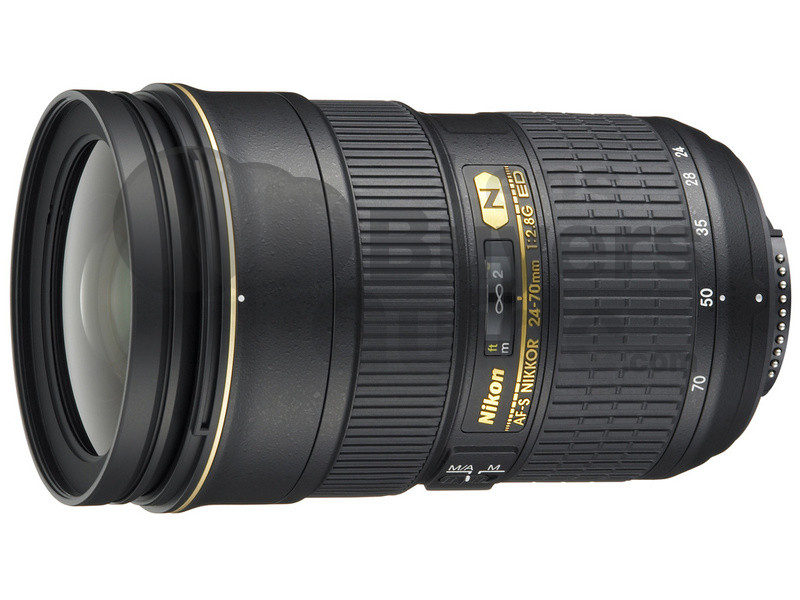
Nikkor 24-70 mm F2.8G ED AF-S


Full frame sized image

Lenses that create APS-C sized image are designed for digital only. They cannot be used on cameras that have image sensor larger than the APS-C format. These lenses are not suitable for film cameras either.


Ultrasonic AF

Lenses with ultrasonic focusing mechanism tend to be quiter and faster than traditionally focusing lenses.


One or more Low Dispersion lens element is used

Low Dispersion lens elements help to reduce chromatic aberration.


Not stabilized

Image stabilization helps to reduce blur caused by hand shake, especially at high focal length or in low light situations. Image stabilization can give 1 to 3 stop advantage over none stabilized lens, based on the reciprocal rule.


Metal mount

Cheaper lenses are usually equipped with plastic mount, while more expensive, professional lenses have metal mount. In general, metal mounts are more durable, and a good thing to have when lenses are changed a lot. When a camera is used mainly with one lens, the material of the lens mount is not that important.


Internal Focusing

Internally focusing lenses don't change their size while setting focus.


No Internal Zoom

Internally zooming lenses don't change their size while focal length is changing.


The front lens is fixed

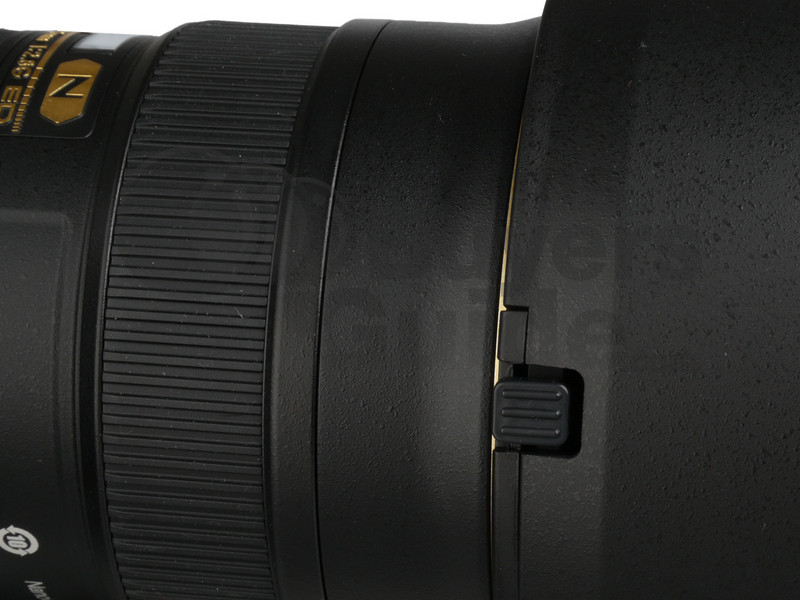
The fixed front lens is not rotating during zoom and/or focusing. This allows the photographer to use petal shaped lens hood. Fixed front lenses also make the use of polarization filters a lot easier.


Not Sealed

Weather sealed lenses are protected from dust and water. While they are not water proof, these lenses can be used in rain and other humid environments. Some sealings only provide protection against dust or water, not both. Sealing is only available when the lens is used on a similarly weather sealed camera body.


No drop-in filter support

Drop-in filters are used in those lenses where either the front lens is too large, or the field of view doesn't permit the use of traditional filters at the front of the lens. Usually bright tele and ultra-wide angle lenses support this filter type.

The AF-S NIKKOR 24-70mm f/2.8G ED is a highly practical and multi-talented lens that allows photographers to photograph anything from tight portraits to expansive landscapes with just one high-performance fast aperture lens.

Nikkor 24-70 mm F2.8G ED AF-S Specification

Available mount(s) Nikon F
Application(s) Portrait, Sports, Landscape, Wildlife, Architecture
Category(s) Standard zoom
Multiplier
Stabilizer no
Focal length 24 - 70 mm (2.9× zoom)
Lens construction 15 elements in 11 groups
Angle of view 35mm: 84-34,3°
digital: 61-22,83°
Number of blades 9
Maximum aperture wide: f/2.8 tele: f/2.8
Minimum aperture wide: f/22 tele: f/22
Minimum focusing distance 38 cm
Magnification N/A
Filter size 77 mm
Size ∅ 83 × 133 mm
Weight 900 g
Notes 3 ED, 3 aspherical and 1 Nano Crystal Coat-deposited lens elements
AF speed N/A
AF sound
Internal focusing yes
Internal zoom no
Fix front lens yes
Mount type metal
Weather sealed no
Drop in filter no
Ultrasonic AF yes
APS-C sized circle no
Low dispersion lens element yes
Hard case not included
Soft case CL-M3 (included)
Lens hood HB-40 (included)
Tripod adapter not included
Nikkor 24-70 mm F2.8G ED AF-S Specification

Nikkor 24-70 mm F2.8G ED AF-S Reviews

There are no reviews to display

Nikkor 24-70 mm F2.8G ED AF-S Owner Reviews

Most useful owner reviews from Amazon

One Lens for Vacations, Portraits and Fun

Apr 27, 2008

I know what you're thinking: Seventeen hundred bucks or more for a mere midrange zoom?

There is nothing "mere" about this zoom!

Wide open, Nikon's new workhorse is sharper than most prime lenses. That's right -- I shoot all day long at f/2.8 (I like resulting blurry backgrounds) and never, never lack for sharpness. Being able to shoot f/2.8 at night doesn't stink, either.

Colors are vibrant, the bokeh (out of focus areas) is creamy, and you'll see ghosts and flares *only* when shooting straight into the sun. And I've never seen an autofocus do its thing so quickly or with such accuracy. I'm catching a lot of shots I used to miss.

No lens is perfect. This one has exactly three drawbacks.

1. It's pretty darn big for a midrange, so sometimes I miss Nikon's compact 18-200mm zoom. And that's without the massive lens hood in place. Snapped on, a big lens gets even bigger.

2. The zoom ring is too close to the camera body. I've only been shooting with it for a few days, but I keep grabbing the manual focus ring by mistake. There's a learning curve here, and I'm not yet over it.

3. It's in short supply. Good luck finding this beast at the suggested retail price.

On my D300 however, it's as perfect as a giant, expensive hunk of glass can get. It takes all my standard 77mm filters, and its DX-effective 35-105mm (approximate) zoom range makes it a great "walk around" lens. It goes wide enough for most landscape shots, and zeroes right in on my two-year-old's face.

But mostly I can't get over the sharpness, the color, and the responsiveness of the autofocus. I probably paid too much for mine, but it was worth every penny.

Just about perfect! Contrasty, sharp, colorful, and versatile!

Feb 3, 2008

This is a magnificent piece of kit. The Nikon 24-70 F/2.8 is a professional -grade lens and shows this in every way. The build quality of this lens leaves nothing wanting--all metal construction, wonderful damping of the zoom ring--this is a beautiful instrument.

This is a full-frame lens, which means that it is suitable for FX Nikon cameras such as the new D3. However, this lens also performs wonderfully on the usual DX sensor for the other Nikon cameras such as the D200/300, D70s, D80, etc. When used on a DX camera, like all lenses, the focal length is increased by 50%. This is both good and bad. The "wide angle" end of the lens becomes 36mm rather than 24; on the other hand the 70mm zoom becomes 105mm--a very useful focal length. Overall, I love the range of this lens on a DX camera.

The image quality of this lens leaves nothing discernible to ask for. This is a razor-sharp lens at all apertures including wide open at F/2.8. Images on my D80 are colorful, contrasty, and did I say razor-sharp at all apertures? This lens is as good within its entire focal range as any prime lens I have seen, used, or heard of. Of course, the price of this lens reflects this, alas.

This is an AF-S lens, meaning that it contains an integral focusing motor (supersonic wave motor, or "SWM"). This, combined with the fact that this is an F/2.8 lens, causes it to focus lightening-fast. So this lens is great for action shots or low-light shots. Since this is an AF-S lens, it will autofocus on the D40/D60 series of Nikon bodies.

Some Nikon afficianados have complained that this lens does not have VR (Vibration Reduction) but VR is probably less important for a 24-70 focal range than for a longer zoom, and since this is an F/2.8 lens, it is usually feasible to increase the shutter speed of the shot to "freeze" the action.

A few points. The outer element of this lens extrudes, but not past the petal-configured supplied lens hood, which does a perfect job of protecting the front of the lens. Neat. One thing I am not crazy about is the relative placement of the manual focus ring and zoom ring. I sometimes confuse the two, and I think that given the fact that most people will use this lens in auto-focus mode rather than manual mode, Nikon might have placed the manual focus ring in a more out-of-the-way place. Not a big quibble.

This one is destined to be another Nikon legend!

Outstanding quality, as expected

Mar 16, 2008

The image quality from this lens is, as other reviews indicate, nothing short of spectacular. Having used its ancestor, the Nikon 28-70mm f/2.8, I am not surprised in the least. Despite specifications to the contrary, the 24-70mm feels lighter in my hands than the 28-70mm did, and if it is possible, somewhat more responsive. Perhaps the weight distribution is more even in the 24-70mm than it was in the previous iteration.

After using this lens for a few weeks, two things did surprise me:

1. I don't miss VR in the slightest. I was, to put it mildly, dismayed to find out that Nikon did not include VR in their latest evolution of their fixed-aperture standard zoom. I was, to put it mildly, pleased to see that I get proper exposures with 1/100s shutter speed or higher in all the situations where it matters to me. The configurable auto-ISO on the D300 is a life-saver in this respect; I expect this observation will only become more true as camera technology improves. I suspect Nikon planned this all along.

2. The difference between f/2.8 and f/4.5 is substantial. For the longest time, I kept using my trusty 18-70mm f/3.5-4.5 lens, because I felt sure that I wouldn't benefit very much from the extra 1/3 to 4/3 stops that the fixed f/2.8 lens has to offer. I was wrong.

I primarily use this lens indoors, and for basic portrait work. For these settings, it is exemplary; my only regret is that this lens may put my 50mm f/1.4 out of business. That would be a sad development.

Another area where this lens shines is quasi-macro work. With a reproduction ratio slightly better than 1:4, you get respectably close to small subjects, and have beautifully out-of-focus backgrounds at f/2.8 and 70mm. Shots of single flowers at close range against an interesting background, for example, turn out quite nicely.

I'm very much looking forward to using this lens for the next decade or two (or more). DX digital, FX digital, film-- whatever your game is, if you need a lens that covers this range, I don't think you will find any better than this for quite some time.

I got a defective one

Feb 22, 2008

This is obviously one of Nikons best lenses ever. However, the one I received had several metal flakes, shavings, flecks, specks, whatever you want to call them inside the lens behind the aperture diaphragm on one of the inner elements. I of course had to send the lens back because this may have gotten into the diaphragm and caused problems. In all my professional career I have never seen this happen with a Nikkor pro lens. I did have it happen once with one of my old 28-105 Nikkors from the film days, but never with one of the gold rimmed lenses (pro).
Keep an eye out for it in case it's a common problem.
That's the only reason for my low rating, to let people know about this one issue with my lens.

Now I have to wait till someone has them in stock again. Maybe I should have just sent it in for warranty repair, I would have it back from Nikon by now because I'm an NPS member.
Great lens but I got a sour one!

rock solid at a ridiculous premium

Jun 19, 2008

Performance wise, it's a 5 star. For the price, you get some nearly the performance for fraction of the price. As an example, the 35-70mm f/2.8 D.

Let's face it, if you got the money and or need something like this as a pro, this is it. For amateurs, it's hard to justify blowing $1700 for this puppy.

It's big, almost as big as the 80-200mm f/2.8 D telephoto zoom. It's built solid and focus fast, faster than the 80-200mm. It does wide angle at 24mm, which is terrific, and is the best Nikon got for wide to standard zoom. It doesn't have VR, so the breathing and weight lifting exercises come in handy. It also is as heavy as it looks; 2 more pounds to the body for a grand total of nearly 4 lbs before any other attachments. Nano-crystal coating? Sounds good to me.

If I were shooting portraits, the 35-70mm is lighter and focus fast enough for me and balances better. This thing belongs on a D3 or a D300 with a battery grip for proportion and balance.

Would I recommend it? Not for everyone given the price to performance. Is it a rock solid high performance lens? You bet.

Nikkor 24-70 mm F2.8G ED AF-S Sample Photos

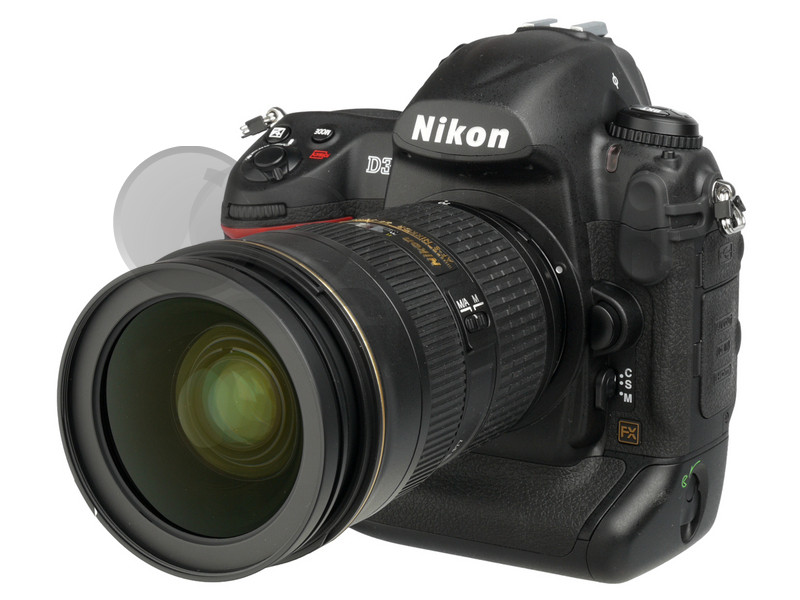
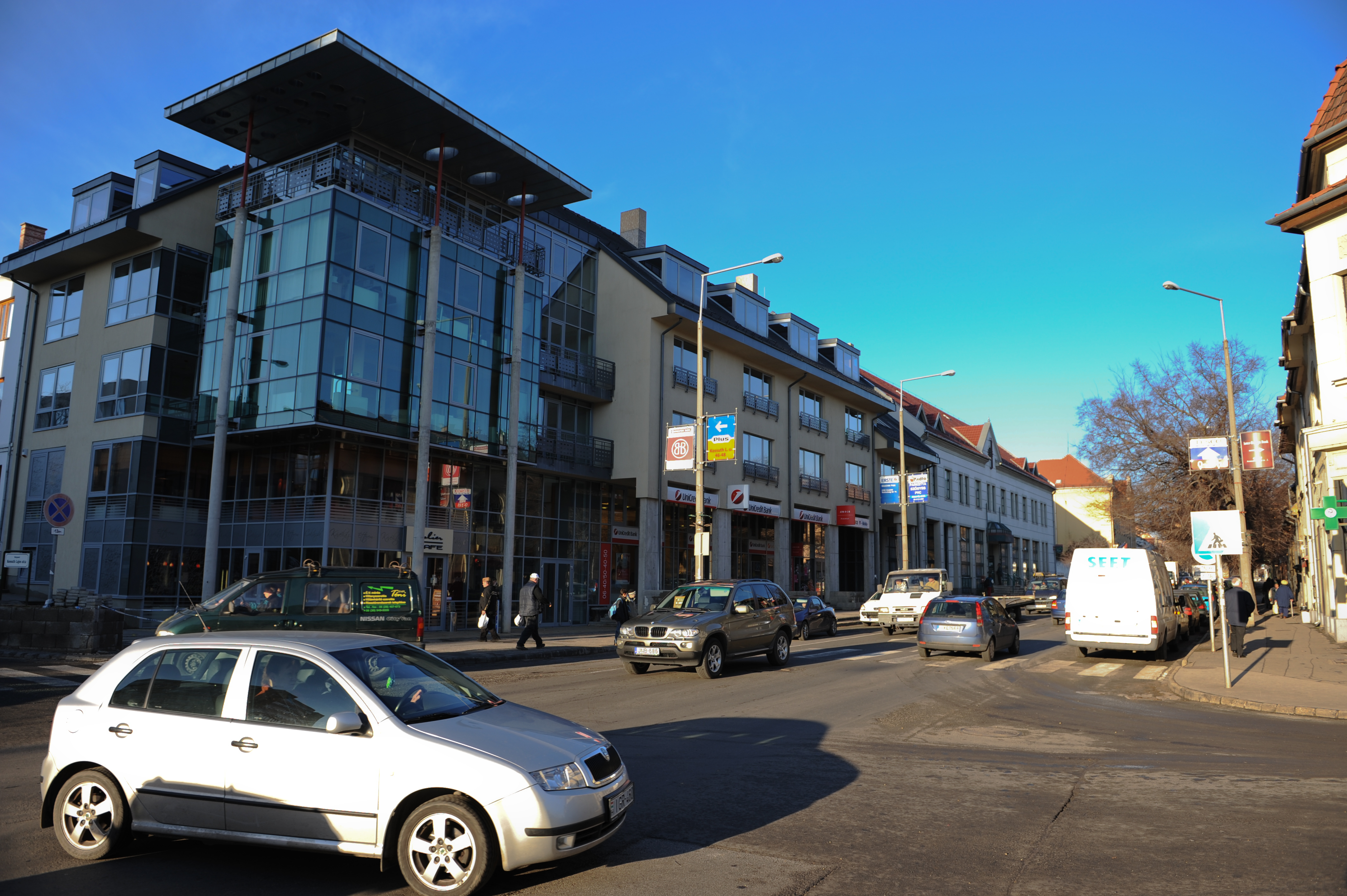
Nikon D3 + Nikkor 24-70mm f/2.8G ED AF-S

Nikkor 24-70 mm F2.8G ED AF-S Accessories

77 mm Filters

77 mm Polarizer Filters

77 mm UV Filters

77 mm Skylight Filters

77 mm Lens Caps

Copyright 2006 - 2008 © Pixinfo Ltd. | Website design | Logo design | Server hosting | Snapfish online fotókidolgozás