全影像大小可產生APS-C大小影像的鏡頭只屬數碼屬性,它們不可使用於比APS-C 格式更大的影像接收器,也不適用於菲林相機。 超聲波自動對焦一般來說,超聲波對焦鏡頭比傳統對焦鏡頭靜和快。 使用了一個或更多的低散光度鏡頭元素低散光度鏡頭元素能減低彩色的色差。 不穩定影像穩定器能減低手震時產生的模糊影像,特別在長焦距或陰暗情況下。根據倒數的定律,影像穩定化比無影像穩定鏡頭能有1到3個光圈優點。 金屬接腳平價鏡頭通常會使用塑膠接腳,而較昂貴的專業的鏡頭會使用金屬接腳。一般來說,金屬接腳會比較耐用的及當鏡頭改變很多。當相機主要使用一個鏡頭,接腳物料並不是很重要。 內置對焦內置對焦鏡頭不會因設定焦點而改變其大小。 無內置變焦內置變焦鏡頭不會因改變焦距而改變其大小。 固定前鏡頭固定前鏡頭在變焦及/或對焦時不會轉動,故可容許攝影師用花瓣狀遮光罩,固定前鏡頭能更容易利用極化濾鏡。 無天氣密封天氣密封鏡頭可防止塵埃及水份浸入。當鏡頭不是防水的,此類鏡頭可適用於下雨及朝湿環境。有些密封只可防水或防塵。天氣密封只適用於類似天氣密封相機內。 無插入濾鏡支援插入濾鏡使用於那些前鏡頭過大或視野不容許於鏡頭前傳統濾鏡的鏡頭。通常遠攝及超廣角鏡頭支援這類濾鏡。 |
|
| 可用的接環 | Nikon F |
| 應用 | 人像, 運動, 風景, 野外, 建築物 |
| 類目 | 標準變焦 |
| 倍增器 | 1× |
| 穩定器 | 否 |
| 焦距 | 24 - 70 mm (2.9× 變焦) |
| 鏡片組 | 11 群組含有15 元素 |
| 視角 |
35毫米: 84-34,3° 數碼: 61-22,83° |
| 葉片數目 | 9 |
| 最大光圈 | 廣角: f/2.8 遠攝: f/2.8 |
| 最小光圈 | 廣角: f/22 遠攝: f/22 |
| 最短焦距 | 38 cm |
| 放大 | 不適用 |
| 濾鏡大小 | 77 mm |
| 大小 | ∅ 83 × 133 mm |
| 重量 | 900 g |
| 記錄 |
|
| 自動對焦速度 | 不適用 |
| 自動對焦聲音 | |
| 內置對焦 | 是 |
| 內置變焦 | 否 |
| 固定前鏡頭 | 是 |
| 接駁類型 | 鐵 |
| 天氣密封 | 否 |
| 插入濾鏡 | 否 |
| 超聲波自動對焦 | 是 |
| APS-C大小的圈 | 否 |
| 低散光度鏡頭元素 | 是 |
| 硬機殼 | 不包括 |
| 軟機殼 | CL-M3 (包含) |
| 遮光罩 | HB-40 (包含) |
| 三腳架接合器 | 不包括 |
27 April 2008
I know what you're thinking: Seventeen hundred bucks or more for a mere midrange zoom?
There is nothing "mere" about this zoom!
Wide open, Nikon's new workhorse is sharper than most prime lenses. That's right -- I shoot all day long at f/2.8 (I like resulting blurry backgrounds) and never, never lack for sharpness. Being able to shoot f/2.8 at night doesn't stink, either.
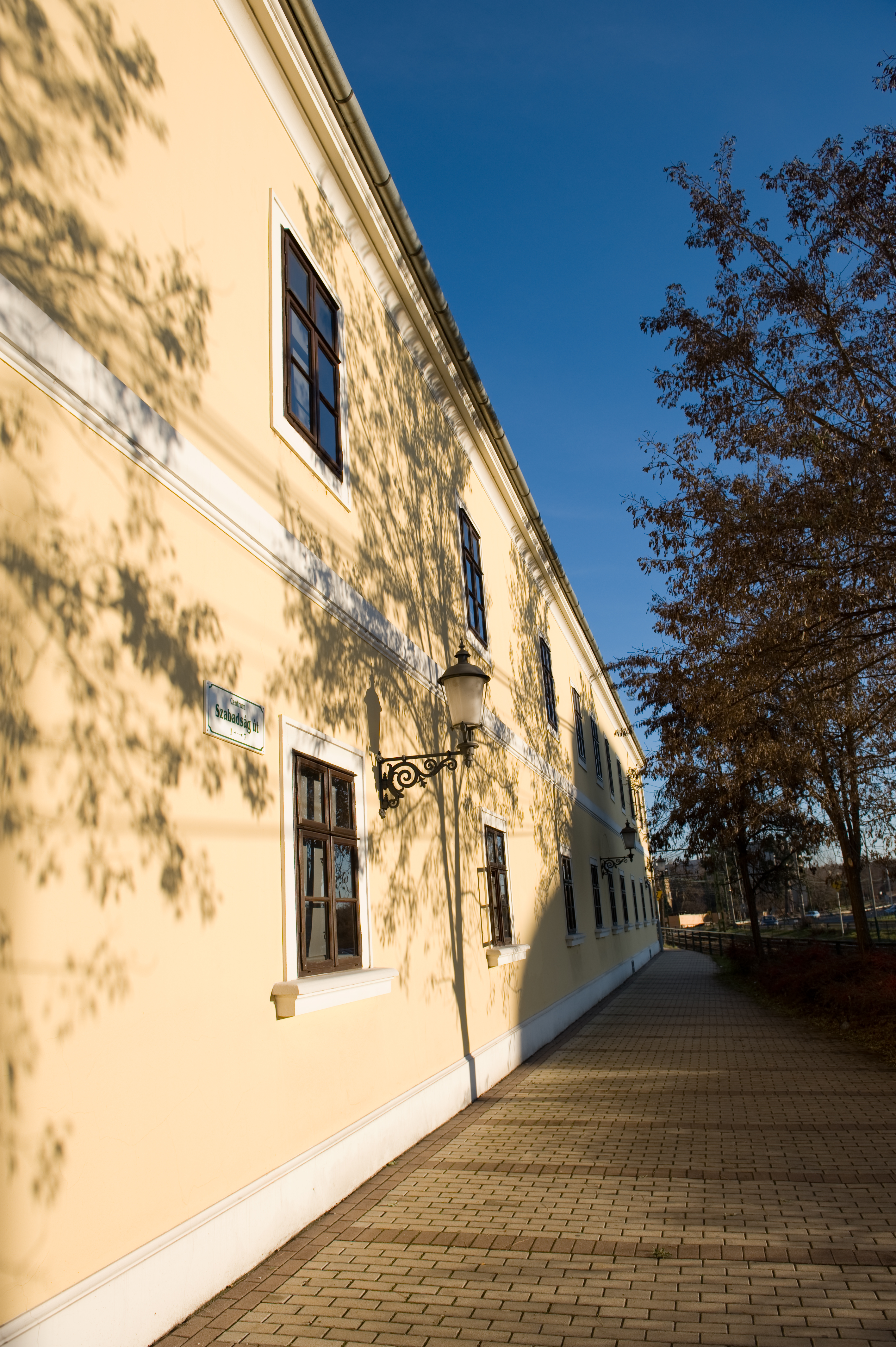
Colors are vibrant, the bokeh (out of focus areas) is creamy, and you'll see ghosts and flares *only* when shooting straight into the sun. And I've never seen an autofocus do its thing so quickly or with such accuracy. I'm catching a lot of shots I used to miss.
No lens is perfect. This one has exactly three drawbacks.
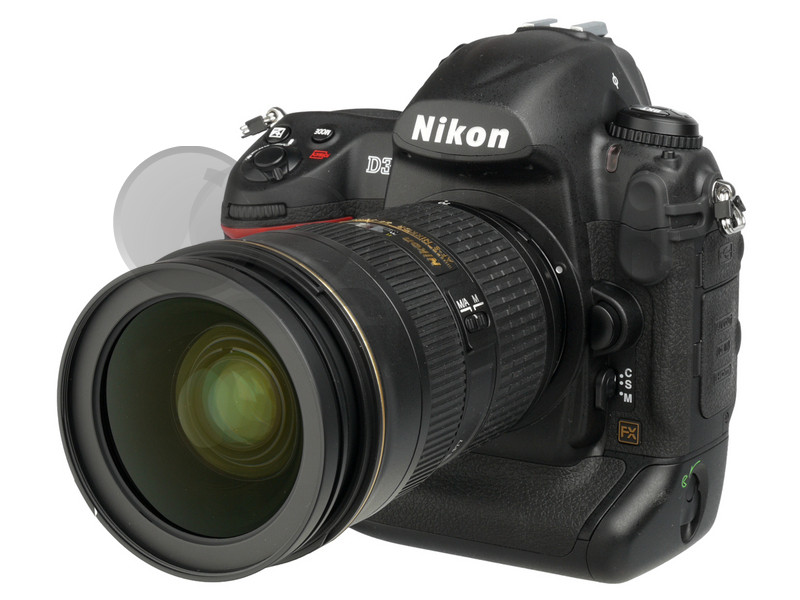
1. It's pretty darn big for a midrange, so sometimes I miss Nikon's compact 18-200mm zoom. And that's without the massive lens hood in place. Snapped on, a big lens gets even bigger.
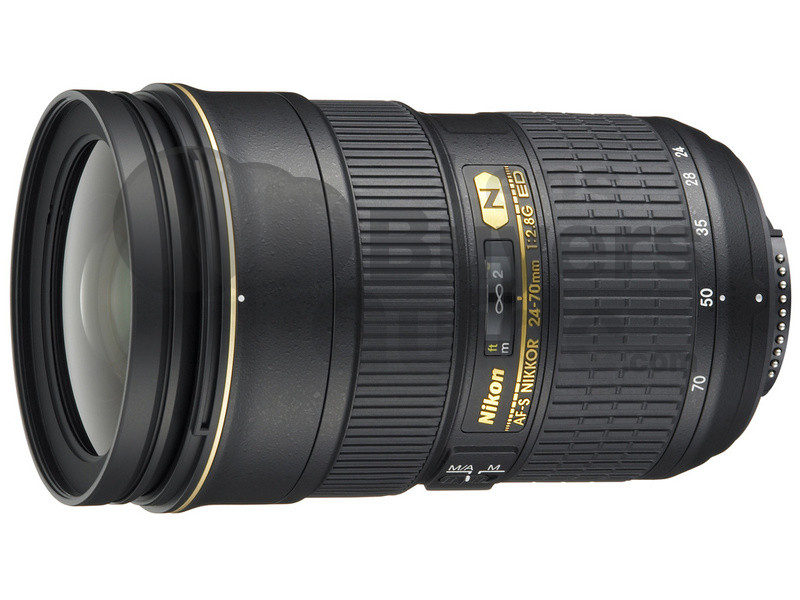
2. The zoom ring is too close to the camera body. I've only been shooting with it for a few days, but I keep grabbing the manual focus ring by mistake. There's a learning curve here, and I'm not yet over it.
3. It's in short supply. Good luck finding this beast at the suggested retail price.
On my D300 however, it's as perfect as a giant, expensive hunk of glass can get. It takes all my standard 77mm filters, and its DX-effective 35-105mm (approximate) zoom range makes it a great "walk around" lens. It goes wide enough for most landscape shots, and zeroes right in on my two-year-old's face.
But mostly I can't get over the sharpness, the color, and the responsiveness of the autofocus. I probably paid too much for mine, but it was worth every penny.
16 March 2008
The image quality from this lens is, as other reviews indicate, nothing short of spectacular. Having used its ancestor, the Nikon 28-70mm f/2.8, I am not surprised in the least. Despite specifications to the contrary, the 24-70mm feels lighter in my hands than the 28-70mm did, and if it is possible, somewhat more responsive. Perhaps the weight distribution is more even in the 24-70mm than it was in the previous iteration.
After using this lens for a few weeks, two things did surprise me:
1. I don't miss VR in the slightest. I was, to put it mildly, dismayed to find out that Nikon did not include VR in their latest evolution of their fixed-aperture standard zoom. I was, to put it mildly, pleased to see that I get proper exposures with 1/100s shutter speed or higher in all the situations where it matters to me. The configurable auto-ISO on the D300 is a life-saver in this respect; I expect this observation will only become more true as camera technology improves. I suspect Nikon planned this all along.
2. The difference between f/2.8 and f/4.5 is substantial. For the longest time, I kept using my trusty 18-70mm f/3.5-4.5 lens, because I felt sure that I wouldn't benefit very much from the extra 1/3 to 4/3 stops that the fixed f/2.8 lens has to offer. I was wrong.
I primarily use this lens indoors, and for basic portrait work. For these settings, it is exemplary; my only regret is that this lens may put my 50mm f/1.4 out of business. That would be a sad development.
Another area where this lens shines is quasi-macro work. With a reproduction ratio slightly better than 1:4, you get respectably close to small subjects, and have beautifully out-of-focus backgrounds at f/2.8 and 70mm. Shots of single flowers at close range against an interesting background, for example, turn out quite nicely.
I'm very much looking forward to using this lens for the next decade or two (or more). DX digital, FX digital, film-- whatever your game is, if you need a lens that covers this range, I don't think you will find any better than this for quite some time.
3 February 2008
This is a magnificent piece of kit. The Nikon 24-70 F/2.8 is a professional -grade lens and shows this in every way. The build quality of this lens leaves nothing wanting--all metal construction, wonderful damping of the zoom ring--this is a beautiful instrument.
This is a full-frame lens, which means that it is suitable for FX Nikon cameras such as the new D3. However, this lens also performs wonderfully on the usual DX sensor for the other Nikon cameras such as the D200/300, D70s, D80, etc. When used on a DX camera, like all lenses, the focal length is increased by 50%. This is both good and bad. The "wide angle" end of the lens becomes 36mm rather than 24; on the other hand the 70mm zoom becomes 105mm--a very useful focal length. Overall, I love the range of this lens on a DX camera.
The image quality of this lens leaves nothing discernible to ask for. This is a razor-sharp lens at all apertures including wide open at F/2.8. Images on my D80 are colorful, contrasty, and did I say razor-sharp at all apertures? This lens is as good within its entire focal range as any prime lens I have seen, used, or heard of. Of course, the price of this lens reflects this, alas.
This is an AF-S lens, meaning that it contains an integral focusing motor (supersonic wave motor, or "SWM"). This, combined with the fact that this is an F/2.8 lens, causes it to focus lightening-fast. So this lens is great for action shots or low-light shots. Since this is an AF-S lens, it will autofocus on the D40/D60 series of Nikon bodies.
Some Nikon afficianados have complained that this lens does not have VR (Vibration Reduction) but VR is probably less important for a 24-70 focal range than for a longer zoom, and since this is an F/2.8 lens, it is usually feasible to increase the shutter speed of the shot to "freeze" the action.
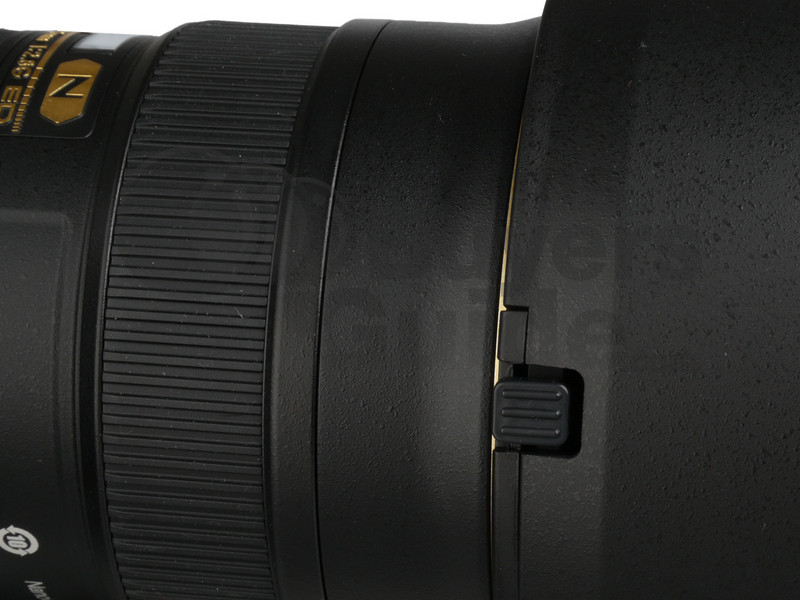
A few points. The outer element of this lens extrudes, but not past the petal-configured supplied lens hood, which does a perfect job of protecting the front of the lens. Neat. One thing I am not crazy about is the relative placement of the manual focus ring and zoom ring. I sometimes confuse the two, and I think that given the fact that most people will use this lens in auto-focus mode rather than manual mode, Nikon might have placed the manual focus ring in a more out-of-the-way place. Not a big quibble.
This one is destined to be another Nikon legend!
19 June 2008
Performance wise, it's a 5 star. For the price, you get some nearly the performance for fraction of the price. As an example, the 35-70mm f/2.8 D.
Let's face it, if you got the money and or need something like this as a pro, this is it. For amateurs, it's hard to justify blowing $1700 for this puppy.
It's big, almost as big as the 80-200mm f/2.8 D telephoto zoom. It's built solid and focus fast, faster than the 80-200mm. It does wide angle at 24mm, which is terrific, and is the best Nikon got for wide to standard zoom. It doesn't have VR, so the breathing and weight lifting exercises come in handy. It also is as heavy as it looks; 2 more pounds to the body for a grand total of nearly 4 lbs before any other attachments. Nano-crystal coating? Sounds good to me.
If I were shooting portraits, the 35-70mm is lighter and focus fast enough for me and balances better. This thing belongs on a D3 or a D300 with a battery grip for proportion and balance.
Would I recommend it? Not for everyone given the price to performance. Is it a rock solid high performance lens? You bet.
30 January 2008
Great lense but DO NOT buy it from Cameta Camera who is trying sell $1,700 list price product for $1,800 and call it 13% off. No, it is an overcharge by 10%. As of today (Jan 30, 2008), RitzCamera.com is selling it for under $1700 and it is available. B&H, Adorama, all reputable retailer have it listed for under $1700. Shame on you Cameta Camera for misleading customers by quaoting false list price.