
Objektive finden
Samsung D 10-17mm f/3.5-4.5
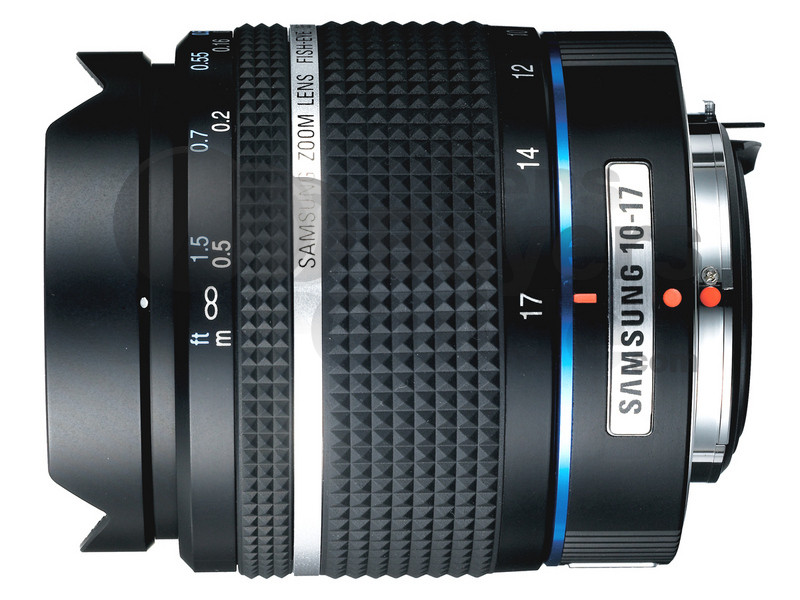 |
APS-C grosses projektiertes BildLenses that create APS-C sized image are designed for digital only. They cannot be used on cameras that have image sensor larger than the APS-C format. These lenses are not suitable for film cameras either. Kein Ultraschall AFObjektive mit Ultraschall-Fokuseinstellung sind meistens schneller als Objektive mit normaler Fokuseinstellung. No stepping motor AFLenses with stepping motor focusing mechanism are better for contrast based focusing, and are quiter and faster than traditionally focusing lenses. Kein Linsenelement mit niedriger Dispersion ist eingebautLinsenelement mit niedriger Dispersion helfen kromatische Aberration zu minimieren. Nicht stabiliziertImage stabilization helps to reduce blur caused by hand shake, especially at high focal length or in low light situations. Image stabilization can give 1 to 3 stop advantage over none stabilized lens, based on the reciprocal rule. |
Samsung D 10-17mm f/3.5-4.5 Spezifikationen
| Geführte Bajonetten | Pentax K |
| Verwändungsbereiche | Nahfoto, Panorama, Spezielle Effekte |
| Produktgruppen | Weitwinkel Zoom, Fischauge |
| Multiplizierer | 1.5× |
| Stabilizierer | Nein |
| Brennweite | 10 - 17 mm (1,7× Zoom) |
| Objektivaufbau | 10 Elemente in 8 Gruppen |
| Winkelgrösse |
35mm: N/A Digital: 180-100° |
| Lamellenzahl | 6 |
| Grösste Blendenöffnung | Weitwinkel: f/3,5 Tele: f/4,5 |
| Kleinste Blendenöffnung | Weitwinkel: f/22 Tele: f/32 |
| Minimum Fokusdistanz | 14 cm |
| Vergrösserung | 0,39× |
| Filtergrösse | N/A |
| Grösse | ∅ 68 × 71.5 mm |
| Gewicht | 320 g |
| Kommente |
|
| AF Geschwindigkeit | N/A |
| AF-Ton | |
| Interne Fokuseinstellung | N/A |
| Interner Zoom | N/A |
| Fix Frontlinse | N/A |
| Bajonett Typ | N/A |
| Wetterfest | N/A |
| Einschiebbares Filter | N/A |
| Ultraschall AF | Nein |
| Stepping motor AF | Nein |
| APS-C grosses projektiertes Bild | Ja |
| Linsenelement mit niedriger Dispersion | Nein |
| Hartes Etui | N/A |
| Weiches Etui | N/A |
| Gegenlichtblende | N/A |
| Standadapter | N/A |
Samsung D 10-17mm f/3.5-4.5 Testergebnisse
Other reviews
Samsung D 10-17mm f/3.5-4.5 in the news
- Tamron SP AF60mm f/2.0 Di-II Macro
- Nikkor AF-S DX 85mm f/3.5G ED Micro
- Carl Zeiss Distagon T* 35mm f/2.0 ZF
- Sony SAL2875 28-75mm f/2.8 SAM
- Carl Zeiss Distagon T* 28mm f/2 with EF mount
- Tamron SP AF17-50mm f/2.8 XR Di II VC LD Aspherical
- Carl Zeiss Distagon T* 2,8/21 for EF mount
- Carl Zeiss Distagon T* 3,5/18 ZE
- SIGMA 70-300mm F4-5.6 DG OS
- Nikkor AF-S 16-35mm f/4 G ED VR