Objektívkereső

Tippek:
Írjon legalább 2 karaktert
Próbálja meg így szűkíteni a keresést: pl. 70 300 is
Ha hasznosnak találja ezt az oldalt, akkor vásárolja meg objektívjeit és kiegészítőit partnereinktől. Köszönjük a támogatását.

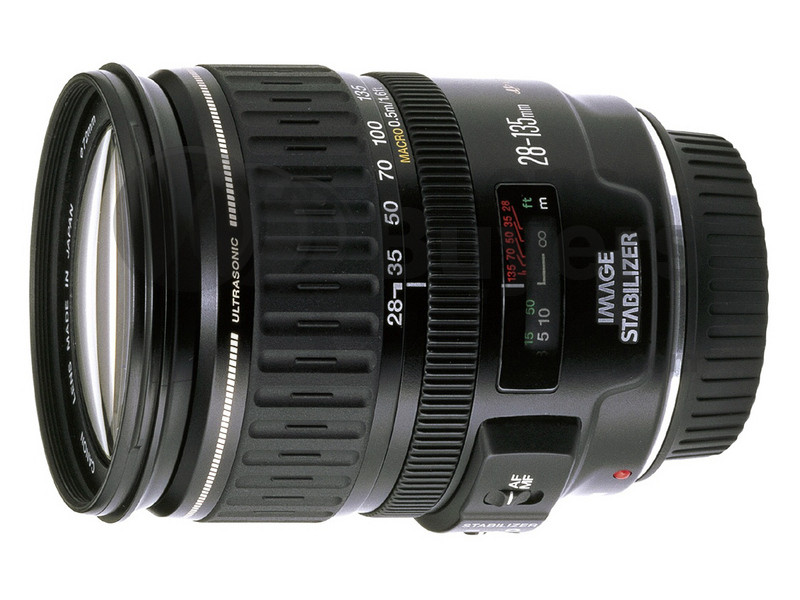
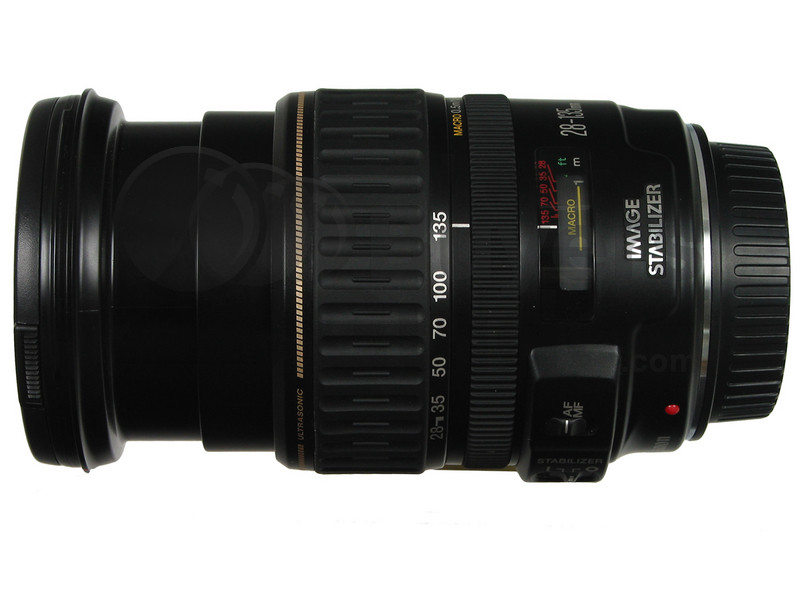
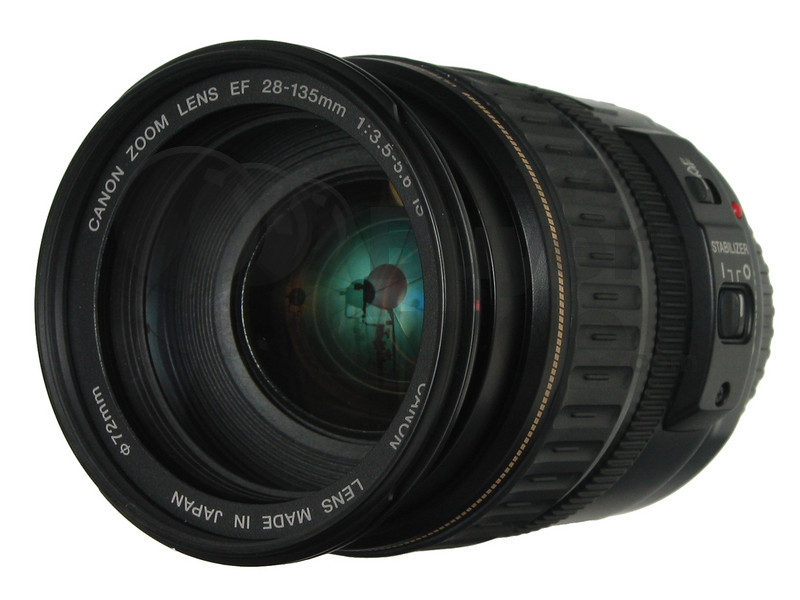
Canon EF 28-135mm f/3.5-5.6 IS USM


Teljes méretű vetített kép

Az APS-C méretű képet vetítő objektíveket kimondottan a digitális fényképezőgépekhez fejlesztették, ezért nem használhatók filmes gépeken, vagy olyan digitális fényképezőgépeken, amelyekben az APS-C méretűnél nagyobb érzékelő található.


Ultrahangos AF

Az ultrahangos automatikus élességállítással szerelt objektívek általában halkabbak és gyorsabbak, mint a tradicionálisan működő objektívek.


Nincs benne alacsony szórású lencsetag

Az alacsony szórású lencsetagok segítenek csökkenteni a kromatikus aberrációt.


Beépített képstabilizátor

A képstabilizátor segít csökkenteni a kéz remegéséből adódó elmosódásokat. A stabilizátor hatása elsősorban nagy gyújtótávolságnál és gyenge megvilágításnál érezhető. A képstabilizátor 1-3 fényértéknyi előnyt biztosít a nem stabilizált objektívekhez képest.


Fém bajonett

Az olcsóbb objektívek általában műanyag, míg a drágábbak fém bajonettel készülnek. Általában a fém bajonettek tartósabbak, így gyakori objektívcserénék ez a szerencsésebb. Ha egy fényképezőgépet főleg egy objektívvel használunk, akkor a bajonett anyaga nem annyira lényeges.


Belső élességállítású

A belső élességállítású objektívek mérete az élességállítás során nem változik.


Nem belső zoomos

A belső zoomos objektívek mérete a gyújtótávolság állításakor (zoomoláskor) nem változik.


A front lencse fix

A fix frontlencse az élesség és/vagy a gyújtótávolság állításakor nem fordul el. Ez lehetővé teszi, hogy a fotós szirom alakú napellenzőt használjon. A fix frontlencse megjönnyíti a polarizációs szűrők használatát is.


Nem időjárásálló

Az időjárásálló objektívek védettek a víz és a por ellen. Ugyan nem vízállóak, de esőben és más nedves, párás környezetben is jól használhatók. Egyes szigetelések csak a víz vagy csak a por ellen védenek, nem mindkettő ellen. A szigetelés csak akkor működik, ha az objektív egy hasonló módon szigetelt vázon van.


Nincs becsúsztatható szűrő

A becsúsztatható szűrőket olyan objektíveknél alkalmazzák, amelyek frontlencséje túl nagy, illetve amelyek látószöge túl nagy ahhoz, hogy hagyományos szűrőket lehessen rájuk tenni. Általában a nagy fényerejű tele, illetve az ultra-nagy látószögű objektíveknél fordul elő ez a megoldás.

Képstabilizátorral és nagy zoom aránnyal rendelkező alapobjektív. Bekapcsolt képstabilizátorral rossz fényviszonyok között vaku és állvány nélkül is éles, valósághű felvételek készíthetők. Nagyon jól használható olyan helyeken, ahol tiltják a vakuzást. Az objektív gyűrűs USM motort alkalmaz a gyors, hangtalan automatikus, illetve a folyamatos kézi élességállítás során.

Canon EF 28-135mm f/3.5-5.6 IS USM Specifikáció

Elérhető bajonett(ek) Canon EF
Felhasználási terület(ek) Portré, Tájkép, Épület
Kategóriák Standard zoom
Szorzó
Stabilizátor igen
Gyújtótávolság 28 - 135 mm (4,8× zoom)
Objektív felépítése 16 lencsetag 12 csoportban
Látószög 35mm: 75-18°
digitális: nincs adat
Lamellák száma 6
Legnagyobb blende nagy látószög: f/3,5 tele: f/5,6
Legkisebb blende nagy látószög: f/22 tele: f/36
Legkisebb tárgytávolság 50 cm
Nagyítás 0,19×
Szűrőmenet 72 mm
Méret ∅ 78.4 × 96.8 mm
Tömeg 540 g
Megjegyzések Beépített mechanikus folyamatos kézi élességállítás. Nagyítás: 0,19x arány 135 mm
AF sebesség nincs adat
AF hang
Belső élességállítás igen
Belső zoom nem
Fix frontlencse igen
Bajonett típusa fém
Időjárásálló nem
Becsúsztatható szűrők nem
Ultrahangos AF igen
APS-C méretű vetített kép nem
Alacsony szórású lencsetag nem
Kemény tok nincs adat
Puha tok LP1116 (nem tartozék)
Napellenző EW-78BII (nem tartozék)
nyomtatható napellenző
Állvány adapter nincs adat
Canon EF 28-135mm f/3.5-5.6 IS USM Specifikáció

Canon EF 28-135mm f/3.5-5.6 IS USM Tesztek

Canon EF 28-135mm f/3.5-5.6 IS USM a hírekben

Other reviews

Canon EF 28-135mm f/3.5-5.6 IS USM Olvasói tesztek

Leghasznosabb olvasói vélemények az Amazonról

a great general-purpose lense

2004. július 17.

I bought this lens four years ago and have shot around 6,000 photos with it (4000 digital, 2000 35mm). Autofocus is very fast and quiet, which is typical of the Canon USM lenses. I would not recommend a Canon lens that does not have the ultrasonic motor (USM) focusing. Optics are sharp throughout the focusing range.

The lens is fairly heavy and after a few months of use, you will likely find that the weight of the glass is enough to make the lens telescope out when it's around your neck. If you want a compact lens that will let you take great pictures in a wide range of settings, this is probably the best lens you could get for a Canon camera. If you're a pro, you'll probably have a backpack full of lenses and you're not reading this anyway, so I'm not talking to you. If you want something you can sling over your shoulder and not think about when you take the kids to Disney World, get a cheaper, lighter lens.

The Image Stabilizer (IS) makes the lens a lot more expensive (some lenses are offered with and without it), so you should know what you're paying for. Some notes about the Image Stabilizer:

- The image stabilizer itself is basically a spinning lens element (piece of glass) that acts as a gyroscope. When the lens moves slightly, such as camera shake caused by your pulse, the gyroscopic element stays put while the other elements move. Because the gyroscopic element is no longer in line with the other elements, it effectively bends the light just enough to compensate for the lens moving.

- Having the IS feature does not mean that you can take crisp photos with a 1/20 sec exposure while jumping on a trampoline. What it means is that you can often get away with not carrying a tripod in normal lighting, and in low light when your photos would be very blurry (assuming you're not using really fast film), the IS will make the images significantly less blurry. An obvious corollary is that you can avoid using a flash in many situations when a flash is undesirable or prohibited.

- The rule of thumb to get crisp photos without image stabilization is that your shutter speed should not be longer than 1 over your focal length. So if you are taking a picture zoomed in at 135mm, your shutter speed needs to be 1/135 sec or faster, and since no camera I know of has a 1/135 setting, that means going up to 1/160 sec (on cameras with stops in 1/3 increments) or faster. The image stabilizer means that you can go 2 f-stops slower than you normally could using the rule I just explained. So if you're shooting at 135mm and you have the IS switched on, you can shoot at 1/40 sec instead of 1/160 sec. That means four times as much light goes past the shutter, or that you can get the same quality results with 1/4 of the ambient light you would normally need.

- There are some times when you SHOULD NOT use the IS feature. You should definitely not use it if you are in a car, on a roller coaster, if you are walking, or in any other situation where the camera is moving or vibrating a lot. You will get blurrier than normal images because the gyroscopic element is constantly moving all over the place, trying to prevent the image from moving. Only have IS switched on when you are using the camera in a normal, stationary, handheld manner. You should also not use IS when you are using a tripod, or when you have the camera resting on a vibration-less surface for an image. The reason is that the gyroscopic element will be spinning even though it's not needed, and while this isn't really bad, the motion could decrease photo quality (I've never noticed this, but this is what Canon claims), and it is unnecessarily using battery power.

- Finally, not all of Canon's IS lenses use the same IS technology; many of the more expensive and newer lenses are better, but it was hard enough for me to come up with what this lens cost--it'll be awhile before I can rationalize three times as much for an upgrade.

One last note about third-party lenses, in case you're thinking about it. I know the price may be compelling but there genuinely does seem to be major quality differences, and while all Canon EOS lenses work will all Canon EOS cameras, no matter how many years apart they are in design, it has happened several times that even the best of the third party lenses (Sigma, some others) do not function properly with new Canon cameras. I happily buy knock-offs with other things, but not with lenses, flashes, or other camera components that actually communicate with my camera.

Excellent Walkabout Lens

2003. június 20.

While I considered purchasing a Canon 10D, I also started looking for a good first lens. Most of the reviewers and Canonites on the various forums suggested this lens as a good starting point.

The 28-135mm IS USM Zoom is the one I use all the time now on the Canon 10D, and that will be the case until I get over the sticker shock of the 10D/28--135mm combo and start adding other lenses to my kit.

In the meantime, this lens gets the job done very well. It gives you good range for a variety of of shots, from portraits to telephotos. There is even a macro mode, which gives you the opportunity to do close-ups--not really a true macro, but okay for shots of flowers, your kitty cat's face, etc. It is the flexibility of this lens that makes it so appealing if all you have is just one lens. And remember that if you mount this lens on a digital camera, like the 10D, the range is actually extended by a factor of 1.6.

The USM focuses fast, and the Image Stabilization (IS) really works. In fact, I've been spoiled by it, and IS is now a must for any of the longer lenses I might purchase in the future.

The IS system "locks" on target so that camera shake is eliminated or at least seriously minimized. This means fewer shots ruined by camera shake, and the IS system allows the user to shoot handheld at slower shutter speeds. This isn't just advertising hype. It works.

The image quality is quite good. I get good color saturation, contrast, and sharpness. After tweaking some shots in Photoshop, I was able to turn out some excellent 13x19 inch prints.

As others have pointed out, if you are just starting out with a Canon DSLR or SLR and want one good general purpose lens, this is it.

As of August 2008 I have sold this lens because I have moved on to Canon "L" glass, but the EF 28-135 is still a great lens to start with if you are just beginning to learn photography.

THE Consumer-Grade Canon Lens to Get

2005. május 30.

Dollar-for-dollar, this is the best consumer-grade Canon lens available. The focal-length makes it a great walk-around lens. The onboard Image Stabilization allow for crisp zoom shots without a tripod. If your hands shake a lot, this lens will help overcome that.

On the flip side, I found the Macro option provides a really startling level of detail up close. I also found the combination of the f3.5 and Image Stabilization to be of great use in low-light, indoor shooting where flash is prohibited. It's a fairly fast-focusing lens, too.

Even though I have upgraded to an L-series lens, the 28-135 is still a personal favorite. Considering it is 1/3 the price of an L-series lens, I cannot find a single fault with it. Anyone looking for a general-purpose lens for under $500 to compliment their Canon Digital Rebel, Rebel XT, 10D or 20D has found it here.

Excellent lens, but its life is limited

2007. március 29.

This lens has been my workhorse for the past two years. I have dragged this lens through the rain forests of the Amazon, backpacked with it in Europe and hiked with it in New Zealand. The lens locks into focus very quickly and the image stabilization works quite well. When I first got the lens, I played with turning off the IS and then taking the same photo with the IS and I found that with the IS I could get the same quality photo at a slower shutter speed if need be.

However, that all being said, this lens does suffer from some problems. A friend of mine and my sister also have this lens and two of our lenses arrived out of the box feeling quite loose. While holding the camera body with one hand and the end of the lens with the other, you could move the end of the lens about an alarming amount. I am not sure if other owners have this same problem or if it is just normal. Or maybe the looseness has just gotten worse over the past two years due to use.

The biggest problem with this lens is dust in the lens. Google this lens +dust and see how many people out there are complaining that this lens sucks dust into the body due to the extending piston design. If I hold this lens upside down after it spends some time in my camera bag, I can see dust all over the inside of the lens. I am not taking photos with a lens that I know produces spots and may be pumping the dust into my SLR body. After only two years, I am now forced with the choice of returning the lens to Canon to be cleaned or writing off the lens. Canon can not tell me how much the cleaning will cost until I send it to them. However, I will have to pay $40 for their time making the estimate if I decide that the repairs are too costly.

Despite the problems, unless you have the money for an L lens, get this lens because it is fantastic. Based on my budget at the time, I would not hesitate to get this lens again despite the problems. But, if you want a lens that will last longer and is much better, spend the extra money on an L.

28-135mm IS as good as they say it is.

2005. december 31.

Finding unbiased, reasonable, reviews of camera lenses can be more difficult than one might imagine. A large percentage of the reviewers deem anything that does not live up to the quality of the highly esteemed "L" class of Canon lenses to be, frankly, inferior.

I almost didn't buy this lens because so many members of a forum that I frequent bashed this lens and recommended the 24-105L as the only really "good" choice in the focal range I wanted. Fortunately for me good sense pevailed and I bought the 28-135 anyway. The fact that the 24-105L was three times the price ($1200) certainly weighed heavily on my decision.

SO GLAD I DID.

This lens is well built, has a very usable focal range and (at least my copy) is RAZOR sharp. I expected good quality of a lens this price, but I was not at all prepared for the stunningly sharp images that it renders. Color and contrast are very good. The other good "walkaround" lens in this price point is the 17-85mm. I tend to prefer a longer focal length and the 28-135 qualified me for Canon's generous triple rebates so the choice was clear. F3.5 is fairly fast and the IS does allow hand holding in lighting conditions that would otherwise necessitate a tripod, but for very low lighting you may want to try the 50mm F1.8 prime (They're only $80, buy one).

So if you are hesitating to buy the 28-135mm for any reason please don't listen to the "L" snobs, it's a great great lens.

Canon EF 28-135mm f/3.5-5.6 IS USM Minta fotók

Canon EF 28-135mm f/3.5-5.6 IS USM Kiegészítők

Napellenzők a Canon EF 28-135mm f/3.5-5.6 IS USM objektívre

72 mm Szűrők

72 mm Polár szűrők

72 mm UV szűrők

72 mm Skylight szűrők

72 mm Objektívsapkák

Copyright 2006 - 2010 © Pixinfo Kft. | Weboldal dizájn | Logó dizájn | Szerver hoszting | Snapfish online fotókidolgozás