Full frame sized imageLenses that create APS-C sized image are designed for digital only. They cannot be used on cameras that have image sensor larger than the APS-C format. These lenses are not suitable for film cameras either. No Ultrasonic AFLenses with ultrasonic focusing mechanism tend to be quiter and faster than traditionally focusing lenses. No Low Dispersion lens element is usedLow Dispersion lens elements help to reduce chromatic aberration. Not stabilizedImage stabilization helps to reduce blur caused by hand shake, especially at high focal length or in low light situations. Image stabilization can give 1 to 3 stop advantage over none stabilized lens, based on the reciprocal rule. Metal mountCheaper lenses are usually equipped with plastic mount, while more expensive, professional lenses have metal mount. In general, metal mounts are more durable, and a good thing to have when lenses are changed a lot. When a camera is used mainly with one lens, the material of the lens mount is not that important. No Internal FocusingInternally focusing lenses don't change their size while setting focus. The front lens is fixedThe fixed front lens is not rotating during zoom and/or focusing. This allows the photographer to use petal shaped lens hood. Fixed front lenses also make the use of polarization filters a lot easier. No drop-in filter supportDrop-in filters are used in those lenses where either the front lens is too large, or the field of view doesn't permit the use of traditional filters at the front of the lens. Usually bright tele and ultra-wide angle lenses support this filter type. |
|
|
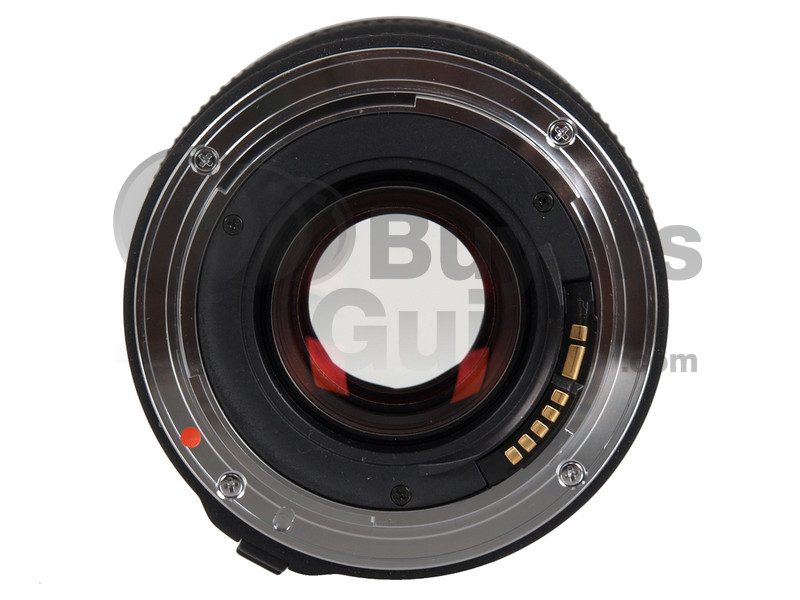
A medium telephoto macro lens with high image quality. The performance is especially suitable for digital singe-lens reflex cameras. The primary caues for ghosts and flares are eliminated by the lens power arrangement, lens construciton and application of leading-edge coating technology of this lens. As a screw-type hood is used, circular polarizing filters can be used easily. An aperture of F45 for a large depth of field is also provided (F32 for Nikon and Pentax).
|
| Available mount(s) | Canon EF, Nikon F, Pentax K, Sony / Minolta A, FourThirds, Sigma |
| Application(s) | Portrait, Closeup |
| Category(s) | Telephoto prime, Macro |
| Multiplier | 1× |
| Stabilizer | no |
| Focal length | 105 mm (prime) |
| Lens construction | 11 elements in 10 groups |
| Angle of view |
35mm: 23.3° digital: 13.5° |
| Number of blades | 8 |
| Maximum aperture | f/2.8 |
| Minimum aperture | f/45 |
| Minimum focusing distance | 31.3 cm |
| Magnification | 1× |
| Filter size | 58 mm |
| Size | ∅ 74 × 97.5 mm |
| Weight | 460 g |
| Notes |
|
| AF speed | 1.6 sec. (from close up to infinity) |
| AF sound | |
| Internal focusing | no |
| Internal zoom | N/A |
| Fix front lens | yes |
| Mount type | metal |
| Weather sealed | N/A |
| Drop in filter | no |
| Ultrasonic AF | no |
| APS-C sized circle | no |
| Low dispersion lens element | no |
| Hard case | N/A |
| Soft case | N/A |
| Lens hood |
LH825-04 (not included) printable lens hood |
| Tripod adapter | N/A |
Nov 7, 2005
When I first started looking for a mid-level macro lens, a few weeks ago, I was naturally drawn first to the Canon 60mm, as I have already have 2 Canon bodies.
But then I started looking around, reading reviews (mostly on Fred Miranda's site), and comparing prices. The more research I did, the more appealing this lens became. And finally, I decided to go with it.
Here's why:
- The price is similar to the Canon 60mm.
- I already own a Sigma EX-series lens (17-35mm), and really like it. I like the matte finish, and the glass is excellent.
- For some reason I cannot fathom, Canon doesn't include lens hoods with any of the mid-range lenses I looked at. Sigma does.
- The greater focal length means I can stay farther from the subject - minimum focus distance is about 30cm (12in). This is almost always a benefit.
This lens isn't perfect, however, and here's a few caveats you may want to consider before making a purchase:
- In low light (ie, most macro photography), this lens likes to hunt. Which can be a slow process considering its length when fully extended. Personally, I don't mind manual focus all that much, so this doesn't bother me.
- This is a not an HSM (Sigma's version of USM) lens. It is motor-driven. This might bother you, but I barely even notice it.
- Switching to/from manual/autofocus mode is a 2 step process. Beside the switch on the side of the barrel, the focus ring requires a push-pull motion which is sometimes a bit tricky. With a little practice, this becomes less and less of an issue - and if you leave it on manual most of the time (as I do), you seldom have to worry about it.
- The lens hood is a screw-in, not a twist- or clip-on model. This is, however, offset by the rather deep recession of the glass in the lens tube. (If you want to use the lens hood and leave it on, a 77mm lens cap will fit it.)
Despite these (in my opinion, very minor) problems, I'm very happy with this lens, and would definitely recommend to anyone looking for a mid-level macro lens
May 15, 2006
I've been using this lens for about 3 months now on a Canon EOS-350D and the Canon 5D. It has supurb optics. At f2.8, it is sharp. From f3.0 it takes off and stays sharp up to about f14. The focus mechanism is a little different from most other lenses, but actually I've grown to like it. With a push-pull lock at the end of the lens for manual-auto focus, you can put this thing in manual mode two different ways. If you're focusing in, pull the mechanism and you don't have to worry about the camera trying to change focus and you don't have to take your hand off the lens to find the manual button. Really cool actually, just a little different at first. It is light enough that weight has never been an issue, though it does extend out pretty far when focusing. Focus speed is not as fast and there is a little more motor noise, but this too is never an issue as all my close work is manual focus. As a telephoto, it works very well, but the autofocus speed comes into play here. It will hunt in some conditions as a telephoto, but it is pretty accurate.
Save some money and take great SHARP shots with this lens. Highly recommended!
Apr 27, 2008
Originally I didn't want to stray from Nikon products, but Sigma definitely has my attention. This is an excellent lens in both build quality and function. It works flawlessly on my Nikon D40, metering perfectly and in addition, even though it's manual focus on my camera, it is spot on with the auto-focus indicator light (lower left corner of view finder). I highly recommend this lens to anyone who is looking to get into macro! Don't be scared if you're a Nikon D40 user, I was at first, and now I'm hooked on this lens! Do yourself a favor and buy one!
Feb 8, 2007
Of all my Four-Thirds compatible lenses this has become a favorite. The Sigma is sharp, reasonably compact and features an actual manual focus mode. Yes, the 50-200mm Zuiko covers this range and is just as sharp, but this lens is much smaller and lighter than the Olympus lens and is, of course, a macro lens that focuses much closer than the Zuiko 50-200mm.
Despite being optimized for macro photography, this lens works quite well for general photography and has a bokeh that is a bit more pleasing than many of the admirably sharp Zuiko lenses. In macro operation the lens often gives a greater distance from the subject than the Zuiko 50mm macro lens does, but this lens is not (as far as I can tell) able to mount the Olympus ring flash for macro work so I use it strictly for outdoors and ambient light macro work (Edit: I have since purchased the Olympus twin flash and it works very well with this lens via an easily obtained step ring adapter.)
The build quality of the lens is not up to the level of the better Zuiko lenses and it is not a weather sealed lens but it is certainly of a higher quality than the Olympus kit lenses that normally ship with cameras like the E-410/510. It's also a higher quality lens than the inexpensive Sigma zoom lenses that have been available for Olympus and other Four-Thirds applications for some time now. I would say that it has a nice feel to it both in heft and in operation.
Due to optical designs that I do not pretend to understand the front element of this lens is remarkably deeply recessed into the lens housing. In fact, it's so deeply recessed that I don't feel the need to use the supplied screw on sun shade (which is a poor design in my opinion) nor do I feel the need to use a clear filter in order to protect the front element (it would be difficult to bang it on anything given how far from the front of the lens it is). One might view this as a money saver as well as a convenience but that's a very subjective opinion I do admit.
Finally, the lens features a fully manual focus mode that works very well but unlike the 'fly by wire' Olympus lenses that many are familiar with this lens requires that you throw a switch on the side of the lens housing in order to disengage the auto-focus motors. This is not terribly convenient, however with practice one certainly can train themselves to operate the switch without taking one's eye from the viewfinder.
To sum it up, I did not expect great things from this lens given that some of the Sigma lenses in the Four-Thirds mount have been a disappointment but I was pleasantly surprised by this lens. It is sharp at maximum aperture, it is moderately priced, it is an excellent macro lens, and it is a fine medium telephoto lens on top of it all. I can highly recommend this lens as a handy addition to any Four-Thirds DSLR camera kit provided weather & dust sealing is not required.
Jan 14, 2008
I debated between this and the 105 Nikkor but at $ 350 versus $750, I decided to try the Sigma and return it if it was not satisfactory. The build seems good with a very solid feel and, while the autofucus is a bit slower than the AF-s Nikkors, it is fine for all but the macro shots which need manual focus anyway. Comparing sharpness at f8, it is about as sharp as my 18-135 at the center and much, much sharper as you move from the center. Overall, I'm very happy I saved the $450.
Nov 7, 2005
When I first started looking for a mid-level macro lens, a few weeks ago, I was naturally drawn first to the Canon 60mm, as I have already have 2 Canon bodies.
But then I started looking around, reading reviews (mostly on Fred Miranda's site), and comparing prices. The more research I did, the more appealing this lens became. And finally, I decided to go with it.
Here's why:
- The price is similar to the Canon 60mm.
- I already own a Sigma EX-series lens (17-35mm), and really like it. I like the matte finish, and the glass is excellent.
- For some reason I cannot fathom, Canon doesn't include lens hoods with any of the mid-range lenses I looked at. Sigma does.
- The greater focal length means I can stay farther from the subject - minimum focus distance is about 30cm (12in). This is almost always a benefit.
This lens isn't perfect, however, and here's a few caveats you may want to consider before making a purchase:
- In low light (ie, most macro photography), this lens likes to hunt. Which can be a slow process considering its length when fully extended. Personally, I don't mind manual focus all that much, so this doesn't bother me.
- This is a not an HSM (Sigma's version of USM) lens. It is motor-driven. This might bother you, but I barely even notice it.
- Switching to/from manual/autofocus mode is a 2 step process. Beside the switch on the side of the barrel, the focus ring requires a push-pull motion which is sometimes a bit tricky. With a little practice, this becomes less and less of an issue - and if you leave it on manual most of the time (as I do), you seldom have to worry about it.
- The lens hood is a screw-in, not a twist- or clip-on model. This is, however, offset by the rather deep recession of the glass in the lens tube. (If you want to use the lens hood and leave it on, a 77mm lens cap will fit it.)
Despite these (in my opinion, very minor) problems, I'm very happy with this lens, and would definitely recommend to anyone looking for a mid-level macro lens
May 15, 2006
I've been using this lens for about 3 months now on a Canon EOS-350D and the Canon 5D. It has supurb optics. At f2.8, it is sharp. From f3.0 it takes off and stays sharp up to about f14. The focus mechanism is a little different from most other lenses, but actually I've grown to like it. With a push-pull lock at the end of the lens for manual-auto focus, you can put this thing in manual mode two different ways. If you're focusing in, pull the mechanism and you don't have to worry about the camera trying to change focus and you don't have to take your hand off the lens to find the manual button. Really cool actually, just a little different at first. It is light enough that weight has never been an issue, though it does extend out pretty far when focusing. Focus speed is not as fast and there is a little more motor noise, but this too is never an issue as all my close work is manual focus. As a telephoto, it works very well, but the autofocus speed comes into play here. It will hunt in some conditions as a telephoto, but it is pretty accurate.
Save some money and take great SHARP shots with this lens. Highly recommended!
Apr 27, 2008
Originally I didn't want to stray from Nikon products, but Sigma definitely has my attention. This is an excellent lens in both build quality and function. It works flawlessly on my Nikon D40, metering perfectly and in addition, even though it's manual focus on my camera, it is spot on with the auto-focus indicator light (lower left corner of view finder). I highly recommend this lens to anyone who is looking to get into macro! Don't be scared if you're a Nikon D40 user, I was at first, and now I'm hooked on this lens! Do yourself a favor and buy one!
Feb 8, 2007
Of all my Four-Thirds compatible lenses this has become a favorite. The Sigma is sharp, reasonably compact and features an actual manual focus mode. Yes, the 50-200mm Zuiko covers this range and is just as sharp, but this lens is much smaller and lighter than the Olympus lens and is, of course, a macro lens that focuses much closer than the Zuiko 50-200mm.
Despite being optimized for macro photography, this lens works quite well for general photography and has a bokeh that is a bit more pleasing than many of the admirably sharp Zuiko lenses. In macro operation the lens often gives a greater distance from the subject than the Zuiko 50mm macro lens does, but this lens is not (as far as I can tell) able to mount the Olympus ring flash for macro work so I use it strictly for outdoors and ambient light macro work (Edit: I have since purchased the Olympus twin flash and it works very well with this lens via an easily obtained step ring adapter.)
The build quality of the lens is not up to the level of the better Zuiko lenses and it is not a weather sealed lens but it is certainly of a higher quality than the Olympus kit lenses that normally ship with cameras like the E-410/510. It's also a higher quality lens than the inexpensive Sigma zoom lenses that have been available for Olympus and other Four-Thirds applications for some time now. I would say that it has a nice feel to it both in heft and in operation.
Due to optical designs that I do not pretend to understand the front element of this lens is remarkably deeply recessed into the lens housing. In fact, it's so deeply recessed that I don't feel the need to use the supplied screw on sun shade (which is a poor design in my opinion) nor do I feel the need to use a clear filter in order to protect the front element (it would be difficult to bang it on anything given how far from the front of the lens it is). One might view this as a money saver as well as a convenience but that's a very subjective opinion I do admit.
Finally, the lens features a fully manual focus mode that works very well but unlike the 'fly by wire' Olympus lenses that many are familiar with this lens requires that you throw a switch on the side of the lens housing in order to disengage the auto-focus motors. This is not terribly convenient, however with practice one certainly can train themselves to operate the switch without taking one's eye from the viewfinder.
To sum it up, I did not expect great things from this lens given that some of the Sigma lenses in the Four-Thirds mount have been a disappointment but I was pleasantly surprised by this lens. It is sharp at maximum aperture, it is moderately priced, it is an excellent macro lens, and it is a fine medium telephoto lens on top of it all. I can highly recommend this lens as a handy addition to any Four-Thirds DSLR camera kit provided weather & dust sealing is not required.
Jan 14, 2008
I debated between this and the 105 Nikkor but at $ 350 versus $750, I decided to try the Sigma and return it if it was not satisfactory. The build seems good with a very solid feel and, while the autofucus is a bit slower than the AF-s Nikkors, it is fine for all but the macro shots which need manual focus anyway. Comparing sharpness at f8, it is about as sharp as my 18-135 at the center and much, much sharper as you move from the center. Overall, I'm very happy I saved the $450.
Nov 7, 2005
When I first started looking for a mid-level macro lens, a few weeks ago, I was naturally drawn first to the Canon 60mm, as I have already have 2 Canon bodies.
But then I started looking around, reading reviews (mostly on Fred Miranda's site), and comparing prices. The more research I did, the more appealing this lens became. And finally, I decided to go with it.
Here's why:
- The price is similar to the Canon 60mm.
- I already own a Sigma EX-series lens (17-35mm), and really like it. I like the matte finish, and the glass is excellent.
- For some reason I cannot fathom, Canon doesn't include lens hoods with any of the mid-range lenses I looked at. Sigma does.
- The greater focal length means I can stay farther from the subject - minimum focus distance is about 30cm (12in). This is almost always a benefit.
This lens isn't perfect, however, and here's a few caveats you may want to consider before making a purchase:
- In low light (ie, most macro photography), this lens likes to hunt. Which can be a slow process considering its length when fully extended. Personally, I don't mind manual focus all that much, so this doesn't bother me.
- This is a not an HSM (Sigma's version of USM) lens. It is motor-driven. This might bother you, but I barely even notice it.
- Switching to/from manual/autofocus mode is a 2 step process. Beside the switch on the side of the barrel, the focus ring requires a push-pull motion which is sometimes a bit tricky. With a little practice, this becomes less and less of an issue - and if you leave it on manual most of the time (as I do), you seldom have to worry about it.
- The lens hood is a screw-in, not a twist- or clip-on model. This is, however, offset by the rather deep recession of the glass in the lens tube. (If you want to use the lens hood and leave it on, a 77mm lens cap will fit it.)
Despite these (in my opinion, very minor) problems, I'm very happy with this lens, and would definitely recommend to anyone looking for a mid-level macro lens
May 15, 2006
I've been using this lens for about 3 months now on a Canon EOS-350D and the Canon 5D. It has supurb optics. At f2.8, it is sharp. From f3.0 it takes off and stays sharp up to about f14. The focus mechanism is a little different from most other lenses, but actually I've grown to like it. With a push-pull lock at the end of the lens for manual-auto focus, you can put this thing in manual mode two different ways. If you're focusing in, pull the mechanism and you don't have to worry about the camera trying to change focus and you don't have to take your hand off the lens to find the manual button. Really cool actually, just a little different at first. It is light enough that weight has never been an issue, though it does extend out pretty far when focusing. Focus speed is not as fast and there is a little more motor noise, but this too is never an issue as all my close work is manual focus. As a telephoto, it works very well, but the autofocus speed comes into play here. It will hunt in some conditions as a telephoto, but it is pretty accurate.
Save some money and take great SHARP shots with this lens. Highly recommended!
Apr 27, 2008
Originally I didn't want to stray from Nikon products, but Sigma definitely has my attention. This is an excellent lens in both build quality and function. It works flawlessly on my Nikon D40, metering perfectly and in addition, even though it's manual focus on my camera, it is spot on with the auto-focus indicator light (lower left corner of view finder). I highly recommend this lens to anyone who is looking to get into macro! Don't be scared if you're a Nikon D40 user, I was at first, and now I'm hooked on this lens! Do yourself a favor and buy one!
Feb 8, 2007
Of all my Four-Thirds compatible lenses this has become a favorite. The Sigma is sharp, reasonably compact and features an actual manual focus mode. Yes, the 50-200mm Zuiko covers this range and is just as sharp, but this lens is much smaller and lighter than the Olympus lens and is, of course, a macro lens that focuses much closer than the Zuiko 50-200mm.
Despite being optimized for macro photography, this lens works quite well for general photography and has a bokeh that is a bit more pleasing than many of the admirably sharp Zuiko lenses. In macro operation the lens often gives a greater distance from the subject than the Zuiko 50mm macro lens does, but this lens is not (as far as I can tell) able to mount the Olympus ring flash for macro work so I use it strictly for outdoors and ambient light macro work (Edit: I have since purchased the Olympus twin flash and it works very well with this lens via an easily obtained step ring adapter.)
The build quality of the lens is not up to the level of the better Zuiko lenses and it is not a weather sealed lens but it is certainly of a higher quality than the Olympus kit lenses that normally ship with cameras like the E-410/510. It's also a higher quality lens than the inexpensive Sigma zoom lenses that have been available for Olympus and other Four-Thirds applications for some time now. I would say that it has a nice feel to it both in heft and in operation.
Due to optical designs that I do not pretend to understand the front element of this lens is remarkably deeply recessed into the lens housing. In fact, it's so deeply recessed that I don't feel the need to use the supplied screw on sun shade (which is a poor design in my opinion) nor do I feel the need to use a clear filter in order to protect the front element (it would be difficult to bang it on anything given how far from the front of the lens it is). One might view this as a money saver as well as a convenience but that's a very subjective opinion I do admit.
Finally, the lens features a fully manual focus mode that works very well but unlike the 'fly by wire' Olympus lenses that many are familiar with this lens requires that you throw a switch on the side of the lens housing in order to disengage the auto-focus motors. This is not terribly convenient, however with practice one certainly can train themselves to operate the switch without taking one's eye from the viewfinder.
To sum it up, I did not expect great things from this lens given that some of the Sigma lenses in the Four-Thirds mount have been a disappointment but I was pleasantly surprised by this lens. It is sharp at maximum aperture, it is moderately priced, it is an excellent macro lens, and it is a fine medium telephoto lens on top of it all. I can highly recommend this lens as a handy addition to any Four-Thirds DSLR camera kit provided weather & dust sealing is not required.
Jan 14, 2008
I debated between this and the 105 Nikkor but at $ 350 versus $750, I decided to try the Sigma and return it if it was not satisfactory. The build seems good with a very solid feel and, while the autofucus is a bit slower than the AF-s Nikkors, it is fine for all but the macro shots which need manual focus anyway. Comparing sharpness at f8, it is about as sharp as my 18-135 at the center and much, much sharper as you move from the center. Overall, I'm very happy I saved the $450.
Nov 7, 2005
When I first started looking for a mid-level macro lens, a few weeks ago, I was naturally drawn first to the Canon 60mm, as I have already have 2 Canon bodies.
But then I started looking around, reading reviews (mostly on Fred Miranda's site), and comparing prices. The more research I did, the more appealing this lens became. And finally, I decided to go with it.
Here's why:
- The price is similar to the Canon 60mm.
- I already own a Sigma EX-series lens (17-35mm), and really like it. I like the matte finish, and the glass is excellent.
- For some reason I cannot fathom, Canon doesn't include lens hoods with any of the mid-range lenses I looked at. Sigma does.
- The greater focal length means I can stay farther from the subject - minimum focus distance is about 30cm (12in). This is almost always a benefit.
This lens isn't perfect, however, and here's a few caveats you may want to consider before making a purchase:
- In low light (ie, most macro photography), this lens likes to hunt. Which can be a slow process considering its length when fully extended. Personally, I don't mind manual focus all that much, so this doesn't bother me.
- This is a not an HSM (Sigma's version of USM) lens. It is motor-driven. This might bother you, but I barely even notice it.
- Switching to/from manual/autofocus mode is a 2 step process. Beside the switch on the side of the barrel, the focus ring requires a push-pull motion which is sometimes a bit tricky. With a little practice, this becomes less and less of an issue - and if you leave it on manual most of the time (as I do), you seldom have to worry about it.
- The lens hood is a screw-in, not a twist- or clip-on model. This is, however, offset by the rather deep recession of the glass in the lens tube. (If you want to use the lens hood and leave it on, a 77mm lens cap will fit it.)
Despite these (in my opinion, very minor) problems, I'm very happy with this lens, and would definitely recommend to anyone looking for a mid-level macro lens
May 15, 2006
I've been using this lens for about 3 months now on a Canon EOS-350D and the Canon 5D. It has supurb optics. At f2.8, it is sharp. From f3.0 it takes off and stays sharp up to about f14. The focus mechanism is a little different from most other lenses, but actually I've grown to like it. With a push-pull lock at the end of the lens for manual-auto focus, you can put this thing in manual mode two different ways. If you're focusing in, pull the mechanism and you don't have to worry about the camera trying to change focus and you don't have to take your hand off the lens to find the manual button. Really cool actually, just a little different at first. It is light enough that weight has never been an issue, though it does extend out pretty far when focusing. Focus speed is not as fast and there is a little more motor noise, but this too is never an issue as all my close work is manual focus. As a telephoto, it works very well, but the autofocus speed comes into play here. It will hunt in some conditions as a telephoto, but it is pretty accurate.
Save some money and take great SHARP shots with this lens. Highly recommended!
Apr 27, 2008
Originally I didn't want to stray from Nikon products, but Sigma definitely has my attention. This is an excellent lens in both build quality and function. It works flawlessly on my Nikon D40, metering perfectly and in addition, even though it's manual focus on my camera, it is spot on with the auto-focus indicator light (lower left corner of view finder). I highly recommend this lens to anyone who is looking to get into macro! Don't be scared if you're a Nikon D40 user, I was at first, and now I'm hooked on this lens! Do yourself a favor and buy one!
Feb 8, 2007
Of all my Four-Thirds compatible lenses this has become a favorite. The Sigma is sharp, reasonably compact and features an actual manual focus mode. Yes, the 50-200mm Zuiko covers this range and is just as sharp, but this lens is much smaller and lighter than the Olympus lens and is, of course, a macro lens that focuses much closer than the Zuiko 50-200mm.
Despite being optimized for macro photography, this lens works quite well for general photography and has a bokeh that is a bit more pleasing than many of the admirably sharp Zuiko lenses. In macro operation the lens often gives a greater distance from the subject than the Zuiko 50mm macro lens does, but this lens is not (as far as I can tell) able to mount the Olympus ring flash for macro work so I use it strictly for outdoors and ambient light macro work (Edit: I have since purchased the Olympus twin flash and it works very well with this lens via an easily obtained step ring adapter.)
The build quality of the lens is not up to the level of the better Zuiko lenses and it is not a weather sealed lens but it is certainly of a higher quality than the Olympus kit lenses that normally ship with cameras like the E-410/510. It's also a higher quality lens than the inexpensive Sigma zoom lenses that have been available for Olympus and other Four-Thirds applications for some time now. I would say that it has a nice feel to it both in heft and in operation.
Due to optical designs that I do not pretend to understand the front element of this lens is remarkably deeply recessed into the lens housing. In fact, it's so deeply recessed that I don't feel the need to use the supplied screw on sun shade (which is a poor design in my opinion) nor do I feel the need to use a clear filter in order to protect the front element (it would be difficult to bang it on anything given how far from the front of the lens it is). One might view this as a money saver as well as a convenience but that's a very subjective opinion I do admit.
Finally, the lens features a fully manual focus mode that works very well but unlike the 'fly by wire' Olympus lenses that many are familiar with this lens requires that you throw a switch on the side of the lens housing in order to disengage the auto-focus motors. This is not terribly convenient, however with practice one certainly can train themselves to operate the switch without taking one's eye from the viewfinder.
To sum it up, I did not expect great things from this lens given that some of the Sigma lenses in the Four-Thirds mount have been a disappointment but I was pleasantly surprised by this lens. It is sharp at maximum aperture, it is moderately priced, it is an excellent macro lens, and it is a fine medium telephoto lens on top of it all. I can highly recommend this lens as a handy addition to any Four-Thirds DSLR camera kit provided weather & dust sealing is not required.
Jan 14, 2008
I debated between this and the 105 Nikkor but at $ 350 versus $750, I decided to try the Sigma and return it if it was not satisfactory. The build seems good with a very solid feel and, while the autofucus is a bit slower than the AF-s Nikkors, it is fine for all but the macro shots which need manual focus anyway. Comparing sharpness at f8, it is about as sharp as my 18-135 at the center and much, much sharper as you move from the center. Overall, I'm very happy I saved the $450.
Nov 7, 2005
When I first started looking for a mid-level macro lens, a few weeks ago, I was naturally drawn first to the Canon 60mm, as I have already have 2 Canon bodies.
But then I started looking around, reading reviews (mostly on Fred Miranda's site), and comparing prices. The more research I did, the more appealing this lens became. And finally, I decided to go with it.
Here's why:
- The price is similar to the Canon 60mm.
- I already own a Sigma EX-series lens (17-35mm), and really like it. I like the matte finish, and the glass is excellent.
- For some reason I cannot fathom, Canon doesn't include lens hoods with any of the mid-range lenses I looked at. Sigma does.
- The greater focal length means I can stay farther from the subject - minimum focus distance is about 30cm (12in). This is almost always a benefit.
This lens isn't perfect, however, and here's a few caveats you may want to consider before making a purchase:
- In low light (ie, most macro photography), this lens likes to hunt. Which can be a slow process considering its length when fully extended. Personally, I don't mind manual focus all that much, so this doesn't bother me.
- This is a not an HSM (Sigma's version of USM) lens. It is motor-driven. This might bother you, but I barely even notice it.
- Switching to/from manual/autofocus mode is a 2 step process. Beside the switch on the side of the barrel, the focus ring requires a push-pull motion which is sometimes a bit tricky. With a little practice, this becomes less and less of an issue - and if you leave it on manual most of the time (as I do), you seldom have to worry about it.
- The lens hood is a screw-in, not a twist- or clip-on model. This is, however, offset by the rather deep recession of the glass in the lens tube. (If you want to use the lens hood and leave it on, a 77mm lens cap will fit it.)
Despite these (in my opinion, very minor) problems, I'm very happy with this lens, and would definitely recommend to anyone looking for a mid-level macro lens
May 15, 2006
I've been using this lens for about 3 months now on a Canon EOS-350D and the Canon 5D. It has supurb optics. At f2.8, it is sharp. From f3.0 it takes off and stays sharp up to about f14. The focus mechanism is a little different from most other lenses, but actually I've grown to like it. With a push-pull lock at the end of the lens for manual-auto focus, you can put this thing in manual mode two different ways. If you're focusing in, pull the mechanism and you don't have to worry about the camera trying to change focus and you don't have to take your hand off the lens to find the manual button. Really cool actually, just a little different at first. It is light enough that weight has never been an issue, though it does extend out pretty far when focusing. Focus speed is not as fast and there is a little more motor noise, but this too is never an issue as all my close work is manual focus. As a telephoto, it works very well, but the autofocus speed comes into play here. It will hunt in some conditions as a telephoto, but it is pretty accurate.
Save some money and take great SHARP shots with this lens. Highly recommended!
Apr 27, 2008
Originally I didn't want to stray from Nikon products, but Sigma definitely has my attention. This is an excellent lens in both build quality and function. It works flawlessly on my Nikon D40, metering perfectly and in addition, even though it's manual focus on my camera, it is spot on with the auto-focus indicator light (lower left corner of view finder). I highly recommend this lens to anyone who is looking to get into macro! Don't be scared if you're a Nikon D40 user, I was at first, and now I'm hooked on this lens! Do yourself a favor and buy one!
Feb 8, 2007
Of all my Four-Thirds compatible lenses this has become a favorite. The Sigma is sharp, reasonably compact and features an actual manual focus mode. Yes, the 50-200mm Zuiko covers this range and is just as sharp, but this lens is much smaller and lighter than the Olympus lens and is, of course, a macro lens that focuses much closer than the Zuiko 50-200mm.
Despite being optimized for macro photography, this lens works quite well for general photography and has a bokeh that is a bit more pleasing than many of the admirably sharp Zuiko lenses. In macro operation the lens often gives a greater distance from the subject than the Zuiko 50mm macro lens does, but this lens is not (as far as I can tell) able to mount the Olympus ring flash for macro work so I use it strictly for outdoors and ambient light macro work (Edit: I have since purchased the Olympus twin flash and it works very well with this lens via an easily obtained step ring adapter.)
The build quality of the lens is not up to the level of the better Zuiko lenses and it is not a weather sealed lens but it is certainly of a higher quality than the Olympus kit lenses that normally ship with cameras like the E-410/510. It's also a higher quality lens than the inexpensive Sigma zoom lenses that have been available for Olympus and other Four-Thirds applications for some time now. I would say that it has a nice feel to it both in heft and in operation.
Due to optical designs that I do not pretend to understand the front element of this lens is remarkably deeply recessed into the lens housing. In fact, it's so deeply recessed that I don't feel the need to use the supplied screw on sun shade (which is a poor design in my opinion) nor do I feel the need to use a clear filter in order to protect the front element (it would be difficult to bang it on anything given how far from the front of the lens it is). One might view this as a money saver as well as a convenience but that's a very subjective opinion I do admit.
Finally, the lens features a fully manual focus mode that works very well but unlike the 'fly by wire' Olympus lenses that many are familiar with this lens requires that you throw a switch on the side of the lens housing in order to disengage the auto-focus motors. This is not terribly convenient, however with practice one certainly can train themselves to operate the switch without taking one's eye from the viewfinder.
To sum it up, I did not expect great things from this lens given that some of the Sigma lenses in the Four-Thirds mount have been a disappointment but I was pleasantly surprised by this lens. It is sharp at maximum aperture, it is moderately priced, it is an excellent macro lens, and it is a fine medium telephoto lens on top of it all. I can highly recommend this lens as a handy addition to any Four-Thirds DSLR camera kit provided weather & dust sealing is not required.
Jan 14, 2008
I debated between this and the 105 Nikkor but at $ 350 versus $750, I decided to try the Sigma and return it if it was not satisfactory. The build seems good with a very solid feel and, while the autofucus is a bit slower than the AF-s Nikkors, it is fine for all but the macro shots which need manual focus anyway. Comparing sharpness at f8, it is about as sharp as my 18-135 at the center and much, much sharper as you move from the center. Overall, I'm very happy I saved the $450.
Nov 7, 2005
When I first started looking for a mid-level macro lens, a few weeks ago, I was naturally drawn first to the Canon 60mm, as I have already have 2 Canon bodies.
But then I started looking around, reading reviews (mostly on Fred Miranda's site), and comparing prices. The more research I did, the more appealing this lens became. And finally, I decided to go with it.
Here's why:
- The price is similar to the Canon 60mm.
- I already own a Sigma EX-series lens (17-35mm), and really like it. I like the matte finish, and the glass is excellent.
- For some reason I cannot fathom, Canon doesn't include lens hoods with any of the mid-range lenses I looked at. Sigma does.
- The greater focal length means I can stay farther from the subject - minimum focus distance is about 30cm (12in). This is almost always a benefit.
This lens isn't perfect, however, and here's a few caveats you may want to consider before making a purchase:
- In low light (ie, most macro photography), this lens likes to hunt. Which can be a slow process considering its length when fully extended. Personally, I don't mind manual focus all that much, so this doesn't bother me.
- This is a not an HSM (Sigma's version of USM) lens. It is motor-driven. This might bother you, but I barely even notice it.
- Switching to/from manual/autofocus mode is a 2 step process. Beside the switch on the side of the barrel, the focus ring requires a push-pull motion which is sometimes a bit tricky. With a little practice, this becomes less and less of an issue - and if you leave it on manual most of the time (as I do), you seldom have to worry about it.
- The lens hood is a screw-in, not a twist- or clip-on model. This is, however, offset by the rather deep recession of the glass in the lens tube. (If you want to use the lens hood and leave it on, a 77mm lens cap will fit it.)
Despite these (in my opinion, very minor) problems, I'm very happy with this lens, and would definitely recommend to anyone looking for a mid-level macro lens
May 15, 2006
I've been using this lens for about 3 months now on a Canon EOS-350D and the Canon 5D. It has supurb optics. At f2.8, it is sharp. From f3.0 it takes off and stays sharp up to about f14. The focus mechanism is a little different from most other lenses, but actually I've grown to like it. With a push-pull lock at the end of the lens for manual-auto focus, you can put this thing in manual mode two different ways. If you're focusing in, pull the mechanism and you don't have to worry about the camera trying to change focus and you don't have to take your hand off the lens to find the manual button. Really cool actually, just a little different at first. It is light enough that weight has never been an issue, though it does extend out pretty far when focusing. Focus speed is not as fast and there is a little more motor noise, but this too is never an issue as all my close work is manual focus. As a telephoto, it works very well, but the autofocus speed comes into play here. It will hunt in some conditions as a telephoto, but it is pretty accurate.
Save some money and take great SHARP shots with this lens. Highly recommended!
Apr 27, 2008
Originally I didn't want to stray from Nikon products, but Sigma definitely has my attention. This is an excellent lens in both build quality and function. It works flawlessly on my Nikon D40, metering perfectly and in addition, even though it's manual focus on my camera, it is spot on with the auto-focus indicator light (lower left corner of view finder). I highly recommend this lens to anyone who is looking to get into macro! Don't be scared if you're a Nikon D40 user, I was at first, and now I'm hooked on this lens! Do yourself a favor and buy one!
Feb 8, 2007
Of all my Four-Thirds compatible lenses this has become a favorite. The Sigma is sharp, reasonably compact and features an actual manual focus mode. Yes, the 50-200mm Zuiko covers this range and is just as sharp, but this lens is much smaller and lighter than the Olympus lens and is, of course, a macro lens that focuses much closer than the Zuiko 50-200mm.
Despite being optimized for macro photography, this lens works quite well for general photography and has a bokeh that is a bit more pleasing than many of the admirably sharp Zuiko lenses. In macro operation the lens often gives a greater distance from the subject than the Zuiko 50mm macro lens does, but this lens is not (as far as I can tell) able to mount the Olympus ring flash for macro work so I use it strictly for outdoors and ambient light macro work (Edit: I have since purchased the Olympus twin flash and it works very well with this lens via an easily obtained step ring adapter.)
The build quality of the lens is not up to the level of the better Zuiko lenses and it is not a weather sealed lens but it is certainly of a higher quality than the Olympus kit lenses that normally ship with cameras like the E-410/510. It's also a higher quality lens than the inexpensive Sigma zoom lenses that have been available for Olympus and other Four-Thirds applications for some time now. I would say that it has a nice feel to it both in heft and in operation.
Due to optical designs that I do not pretend to understand the front element of this lens is remarkably deeply recessed into the lens housing. In fact, it's so deeply recessed that I don't feel the need to use the supplied screw on sun shade (which is a poor design in my opinion) nor do I feel the need to use a clear filter in order to protect the front element (it would be difficult to bang it on anything given how far from the front of the lens it is). One might view this as a money saver as well as a convenience but that's a very subjective opinion I do admit.
Finally, the lens features a fully manual focus mode that works very well but unlike the 'fly by wire' Olympus lenses that many are familiar with this lens requires that you throw a switch on the side of the lens housing in order to disengage the auto-focus motors. This is not terribly convenient, however with practice one certainly can train themselves to operate the switch without taking one's eye from the viewfinder.
To sum it up, I did not expect great things from this lens given that some of the Sigma lenses in the Four-Thirds mount have been a disappointment but I was pleasantly surprised by this lens. It is sharp at maximum aperture, it is moderately priced, it is an excellent macro lens, and it is a fine medium telephoto lens on top of it all. I can highly recommend this lens as a handy addition to any Four-Thirds DSLR camera kit provided weather & dust sealing is not required.
Jan 14, 2008
I debated between this and the 105 Nikkor but at $ 350 versus $750, I decided to try the Sigma and return it if it was not satisfactory. The build seems good with a very solid feel and, while the autofucus is a bit slower than the AF-s Nikkors, it is fine for all but the macro shots which need manual focus anyway. Comparing sharpness at f8, it is about as sharp as my 18-135 at the center and much, much sharper as you move from the center. Overall, I'm very happy I saved the $450.