Lens finder

Hints:
Write at least 2 characters
Try to narrow the search by typing the following: e.g. 70 300 is
If you find the content of this site useful, please purchase your lenses and accessories from our partners through this site. Thank you for your support!
$339.95
Buy now

Nikkor 50mm f/1.4D AF

Nikkor 50mm f/1.4D AF lens
 

Full frame sized image

Lenses that create APS-C sized image are designed for digital only. They cannot be used on cameras that have image sensor larger than the APS-C format. These lenses are not suitable for film cameras either.


No Ultrasonic AF

Lenses with ultrasonic focusing mechanism tend to be quiter and faster than traditionally focusing lenses.


No Low Dispersion lens element is used

Low Dispersion lens elements help to reduce chromatic aberration.


Not stabilized

Image stabilization helps to reduce blur caused by hand shake, especially at high focal length or in low light situations. Image stabilization can give 1 to 3 stop advantage over none stabilized lens, based on the reciprocal rule.


Metal mount

Cheaper lenses are usually equipped with plastic mount, while more expensive, professional lenses have metal mount. In general, metal mounts are more durable, and a good thing to have when lenses are changed a lot. When a camera is used mainly with one lens, the material of the lens mount is not that important.


No Internal Focusing

Internally focusing lenses don't change their size while setting focus.


The front lens is fixed

The fixed front lens is not rotating during zoom and/or focusing. This allows the photographer to use petal shaped lens hood. Fixed front lenses also make the use of polarization filters a lot easier.


No drop-in filter support

Drop-in filters are used in those lenses where either the front lens is too large, or the field of view doesn't permit the use of traditional filters at the front of the lens. Usually bright tele and ultra-wide angle lenses support this filter type.

Hihg-speed normal lens, great for travel and for shooting full-length portraits in available light. Distortion-free images wiht superb resolution and color rendition. Provides high-contrast images even at maximum aperture.

Nikkor 50mm f/1.4D AF Specification

Available mount(s) Nikon F
Application(s) Portrait, Landscape, Architecture
Category(s) Standard prime
Multiplier
Stabilizer no
Focal length 50 mm (prime)
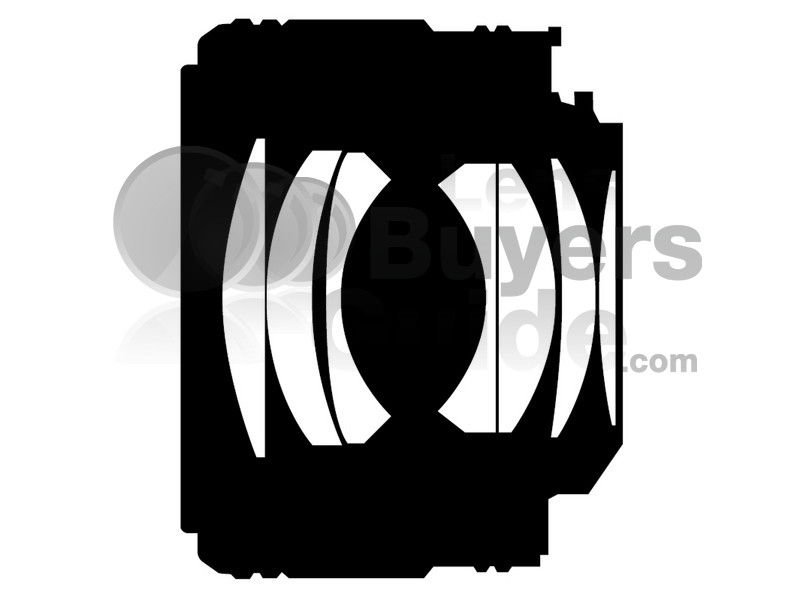
Lens construction 7 elements in 6 groups
Angle of view 35mm: 46°
digital: 31.5°
Number of blades 7
Maximum aperture f/1.4
Minimum aperture f/16
Minimum focusing distance 45 cm
Magnification 0.15×
Filter size 52 mm
Size ∅ 64.5 × 42.5 mm
Weight 230 g
Notes
AF speed N/A
AF sound
Internal focusing no
Internal zoom N/A
Fix front lens yes
Mount type metal
Weather sealed N/A
Drop in filter no
Ultrasonic AF no
APS-C sized circle no
Low dispersion lens element no
Hard case N/A
Soft case CL-30S (not included)
Lens hood HR-2 (not included)
printable lens hood
Tripod adapter N/A
Nikkor 50mm f/1.4D AF Specification

Nikkor 50mm f/1.4D AF Reviews

Other reviews

Nikkor 50mm f/1.4D AF Owner Reviews

Most useful owner reviews from Amazon

One of the best lens for portrait and low light photography

Oct 11, 2006

I don't even know where to start. This lens produces sharp pictures and great color and contrast. This lens is perfect for low light and/or action/sport photography (as this lens is famous for being one of the fastest lens together with its brother 50mm f/1.8). This lens is also perfect for portrait and other general purposes (macro etc). This is definitely a very versatile lens.

However, I think you should really consider buying the f/1.8 first before thinking to buy this f/1.4 lens (mainly because it is more than twice the price of the f1/8 and most of the time the f/1.8 version is fast enough in my opinion). Some examples where the faster f/1.4 lens might make a difference: low light wedding/concert or indoor sports photography (where the light is often low from the camera perspective) such as hockey, track and field, skating, gymnastic, basketball etc.

As much as I want to encourage everyone to buy this lens right away, let me mention some of the limitation that you would see (which I think will be helpful to go over before deciding to buy this lens):

First, being a prime lens, you will need to move your feet a lot to compose your picture. If you are used to zoom lens, don't underestimate this limitation. It takes me a while to get used to it, and sometime I still find people looking at me wondering why I am moving forward and backwards. the good news is that most of the time, they don't think I'm weird, but they are actually wondering if I'm a professional photographer.

Secondly, the focal range of 50mm, which is considered the normal lens and great for portrait lens. but on many DSLRs which is not full frame (unless you have a full frame Nikon DSLR like the D700 or D3, then 50mm is 50mm), this lens become a 75mm equivalent which is in the border of a short tele lens. I actually like the 75mm equivalent though I often have to move backwards when taking picture of a group of people.

Sharpness increases as you stop down to f/2. I actually prefer to use the widest most of the time and the results are still nice. Personally (when shooting low light action/sport), I'd rather use f/1.4 aperture settings than stopped down (e.g to f/2.8) and compensate with higher ISO setting which often gives me grainy picture. But if your object is not moving (static) then it is better to stop down to f/2 or more.

If you are wondering whether you should get a fast lens or a lens with VR (Vibration Reduction), here's my take: In overall, VR does help a lot (as it will reduce camera shake) and will produce better/sharper picture than equivalent lens without VR (especially if the object is static). If the object is moving (sports/action) then VR feature alone might not help (depending on how fast the object is moving and how much light is available), and a fast lens often end up being a far better solution, even without VR feature as it will allow much faster shutter speed to freeze motion. Using tripod (and a remote) will substitute for the need of VR feature. In general I would recommend getting a fast lens with VR feature (and usually it is expensive) such as the 70-200 f/2.8 VR, but if one can only get for one or the other, then find out what do you want to use the lens for and then use the guideline mentioned here.

If you are wondering whether you will get the benefit of buying f/1.4 lens over a f/1.8 lens, just remember that the f/1.4 lens is about 60% faster than f/1.8 at its widest aperture setting. With this information, you can decide if the additional speed will justify the additional cost. The bokeh is nicer as well in f/1.4 lens but I think speed is usually the main factor in deciding whether to get the more expensive f/1.4 lens.

Here are the summary of pros and cons for this Nikon 50mm f/1.4D AF lens:

Pros:
1. Very fast (f/1.4)
2. Very sharp pictures (especially when stopped down to f/2 or more. very sharp at f/2.8)
3. Great for sport/action photography
4. Great for indoor and low light situation
5. Great for portrait
6. Bokeh is almost as good as many expensive Nikon tele-lens
7. Fast autofocus
8. Perfect for wedding photography (or no-flash event). However, or try the 17-35mm f/2.8 or 28-70mm f/2.8 lens)
9. 75mm equivalent which can be considered a short tele lens (I actually like the fact that it's 75mm equivalent vs 50mm in DSLR. if you need more zoom, you can get the Nikon 85mm f/1.8, or the 70-200mm f/2.8 VR). If you have full frame DSLR(like the D3 or D700), then this #9 pros is not applicable.
10. Sharper than its 50mm f/1.8 sibling (at equivalent aperture)

Cons:
1. Being prime lens, you need to move your feet a lot to adjust/compose
2. Some distortion at widest aperture
3. Plasticy build (though it has metal moount and internal part seems to be from metal)
4. Autofocus is not the most silent but very reasonable
5. 75mm equivalent with 1.5x multiplier on non full frame DSLR (many people find this is an odd range for normal lens. I actually like it). If you have full frame DSLR(like the D3 or D700), then this #5 cons is not applicable.
6. Autofocus does not work with D40, D40x and D60. The newer 50mm f/1.4G AF-S lens will autofocus with those cameras.

Bottom line: This lens is so versatile that I think everyone should own (either the 50mm f/1.4 or the 50mm f/1.8) in addition to all the lenses that they already have. Being a very fast lens, it enables me to take pictures in low light (sport/action photography) that I otherwise wouldn't be able to do.

Again, I would recommend everyone to get this lens (or the 50mm f/1.8). In some ways I can say that this lens will make you a better photographer.

Happy Photographing!

Sidarta Tanu

*Very* fast, but consider the f/1.8

Nov 30, 2004

I've been using this lens extensively with my D70. It lets me shoot without a flash in low-light situations where other photographers are complaining about not even being able to focus. I'm often able to even turn off the autofocus light, which allows for very natural pictures: the subject isn't hit with an anti-redeye flash or focusing beam, so they don't flinch and change expression. It produces excellent portraits, with the background artistically blurred.

Are there shots that I've gotten with this lens that I couldn't have gotten with the ($99) 50/1.8? Yes, a few. Most of them were from weddings (indoor, flash inappropriate, motion), or at night with no light sources within 20ft. For the vast majority of my pictures, though, the slower lens would have been more than adequate (even in dim light, I'm often shooting at f/2-f/4). If I had to choose between the two today, I'd probably get the cheaper lens.

Nikon 50mm f/1.8D AF is better on D50/D70/D200 DSLR's

Jul 4, 2006

I owned both the 50mm f/1.8 and 50mm f/1.4 lens. I also own a Nikon D70s and D200. I took test shots to compare the sharpness of these two lenses. The 50mm at f/1.4 is very very soft. The pictures at f/1.4 look like you are looking through a sheer veil. A dreamy look for sure, but not at all pleasing. At an aperture of f/1.8 the 50mm f/1.8 is still sharper than the 50mm f/1.4 at f/1.8. It isn't until the 50mm f/1.4 is at f/2.8 that the two lenses have similar sharpness. At no aperture was the 50mm f/1.4 better than the 50mm f/1.8. Why spend so much more money for the 50mm f/1.4, when it is so soft at f/1.4 as to be useless and does not match the sharpness of the 50mm f/1.8? Softness at f/1.4 will also affect the ability of your camera to autofocus correctly because the lens autofocuses with its widest aperture. If the autofocus sees a soft image, you'll have problems getting a focus lock. The 50mm f/1.8 works like magic on the D50/D70/D200 cameras. Trust me.

Classic and fast lens, great for film bodies

Feb 8, 2005

The legendary Nikkor 50mm f/1.4 D lens is *the* normal lens to get for a film Nikon body. You just can't get faster than this, plus its superb optics has impressed photographers since 1962. (The D version came about in the 90s.) If you have a film body, this is pretty much a must-have.

Unfortunately for us digital shooters, the 50mm translates into a focal length of 75mm, beyond the normal focal range. While this is not bad for portraiture -- a little bit of telephoto often flatters the subject -- if you (like me) wanted a real normal lens, this is not it. You'd have to make do with the 35mm f/2 D lens, which is of course one full stop slower.

Just what I needed.

Jun 15, 2007

If you are looking at this then you have probably looked at the 50mm f/1.8 lens as well--for one third the price of this one. That lens is a great value to be sure, but don't buy the hype about the f/1.8 being enough. I shoot indoors a lot and can't always use a flash, and I don't like using flashes anyway.

Much more often than not, my camera automatically goes straight to f/1.4 when in autofocus mode shooting indoors. That being the case, then obviously the f/1.8 would not be quite fast enough. It might seem like a small difference to some, but small differences in lighting can make or break a picture.

Let me also just say that it is not doing this lens justice to merely say that you can shoot without a flash with this lens. It is better than that. I am not a fan of flashes. This is just a personal preference of course, but I think flashes add a certain staged look to pictures, and also they tend to give that "flash-y" look to the picture where everything is saturated in brilliant light. With this lens, it is better than having a flash because the lighting is full, bright, and adequate without looking like there is a spotlight on everyone. I wish I could show you guys the pictures this thing takes indoors in low light without a flash. It is really amazing. Even one of my friends who knows nothing about this stuff commented on how amazing the pictures looked--in a lighting sense--knowing that a flash was not used.

In addition, I am several situations where flashes would be distracting or annoying to other people in the room. People tend to get more nervous when they see a $400 flash going off every minute or two in the corner of their eye because they think you might zero in on them next. With this lens, and not having to use a flash because it is so fast, I can be much more in "stealth" mode and much more likely to get a great unscripted and natural photo. Again this is just a personal preference of mine based on the types of situations I find myself in. if I was big into outdoor photography, I doubt any of this would matter much.

This is a high quality, ultra-fast lens that in my opinion is a must if you do a lot of indoor photography and portrait work like I do, and especially if like me you hate flash photography.

Nikkor 50mm f/1.4D AF Sample Photos

Nikkor 50mm f/1.4D AF Accessories

52 mm Filters

52 mm Polarizer Filters

52 mm UV Filters

52 mm Skylight Filters

52 mm Lens Caps

Copyright 2006 - 2009 © Pixinfo Ltd. | Website design | Logo design | Server hosting | Snapfish online fotókidolgozás