Vyhledávání objektivů

Nápověda:
Napište alespoň 2 znaky
Zkuste zúžit vyhledávání zadáním následujícího: např. 70 300 je
Pokud se vám zdá obsah těchto stránek užitečný, prosím kupujte objektivy a příslušenství právě prostřednictvím tohoto webu! Děkujeme vám za vaší podporu.

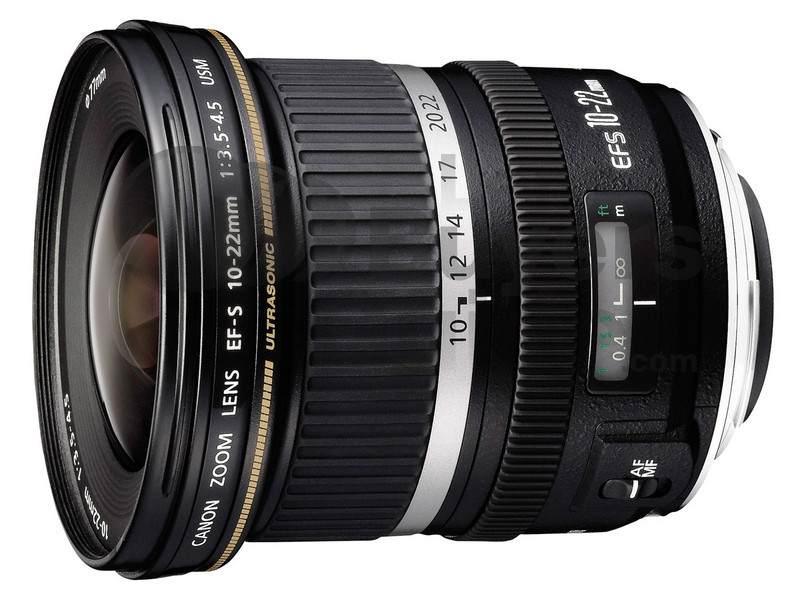
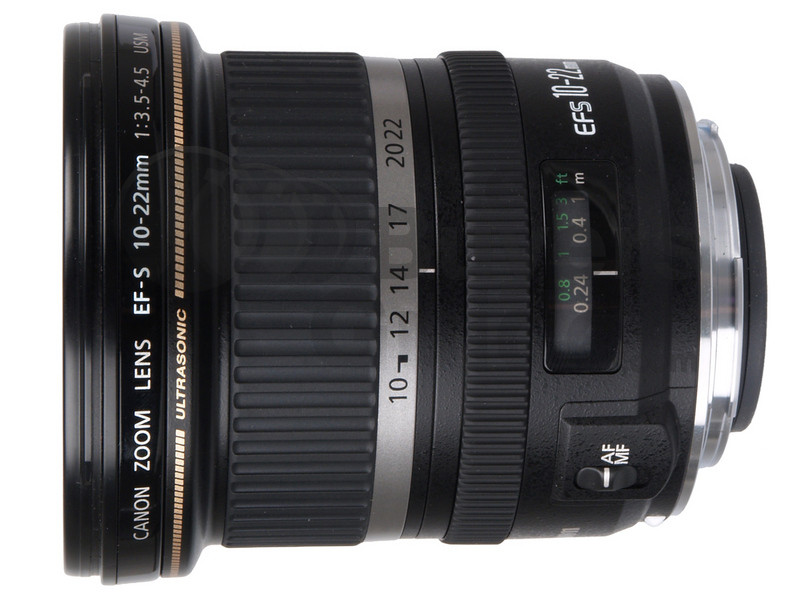
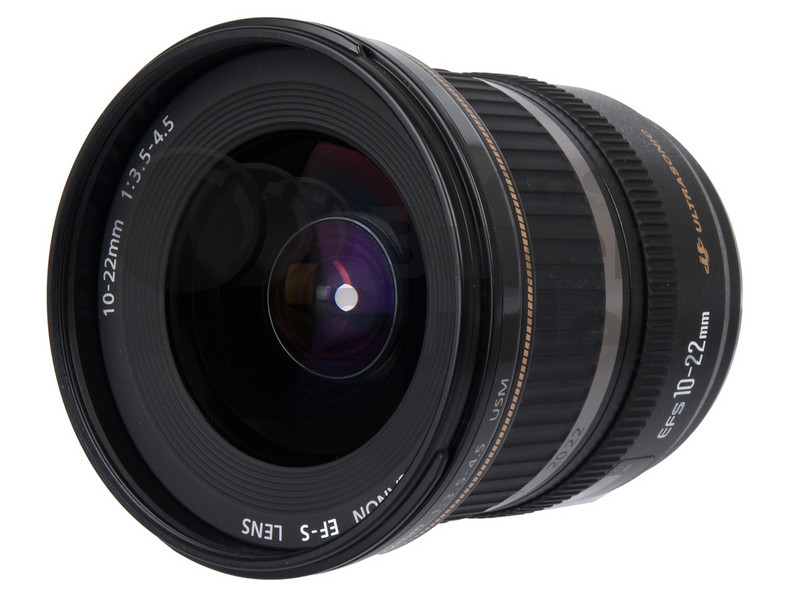
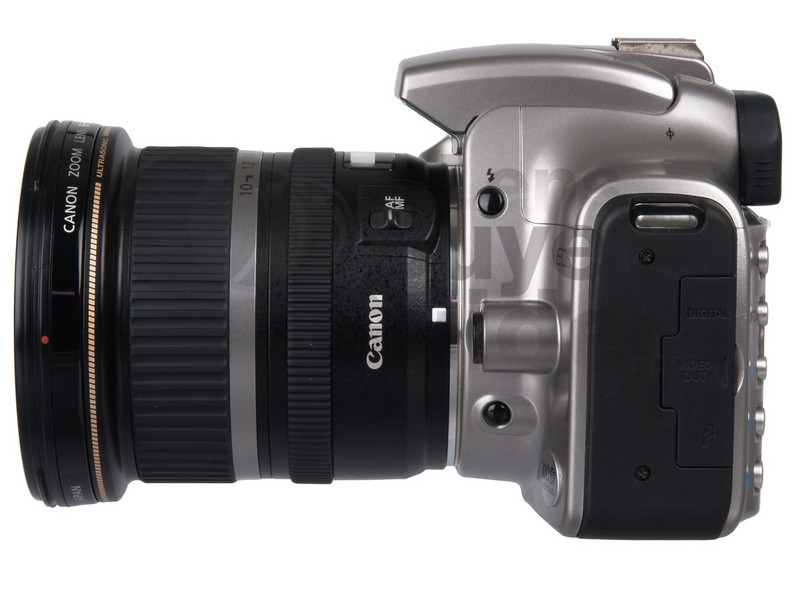
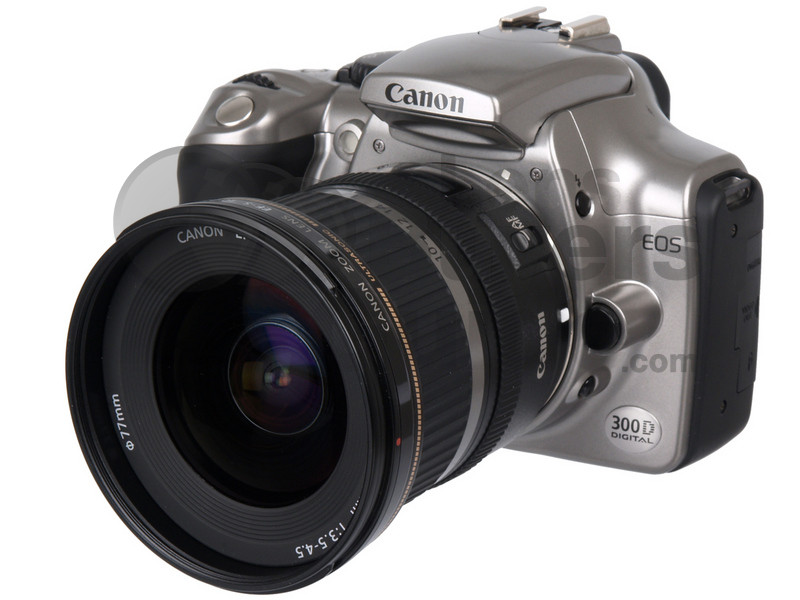
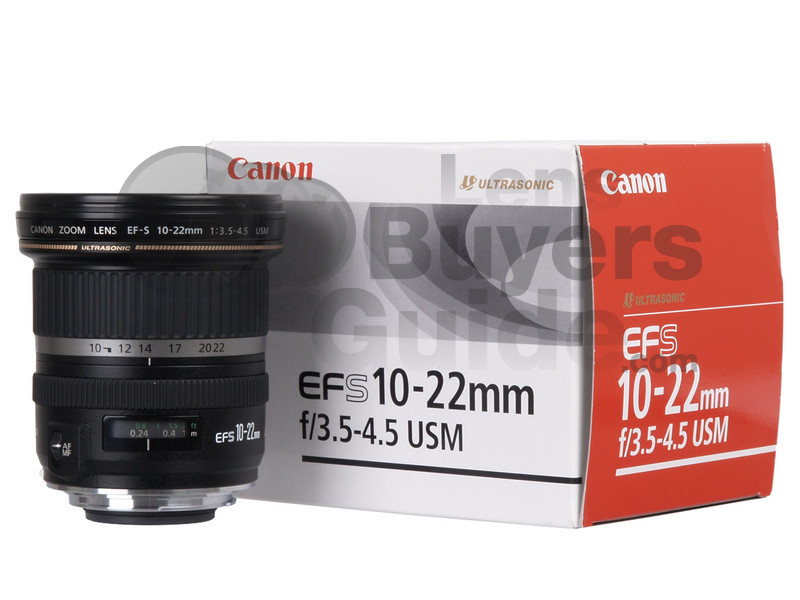
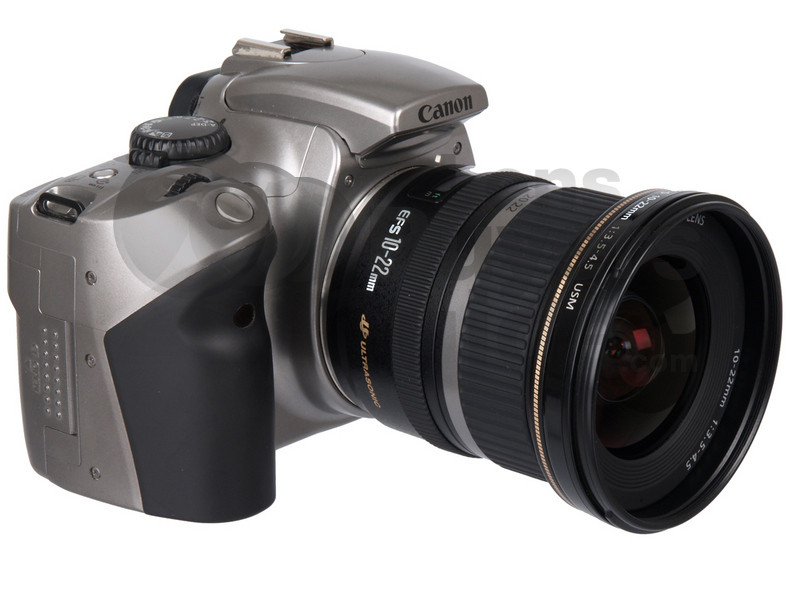
Canon EF-S 10-22mm f/3.5-4.5 USM


Obrázek velikosti APS-C

Lenses that create APS-C sized image are designed for digital only. They cannot be used on cameras that have image sensor larger than the APS-C format. These lenses are not suitable for film cameras either.


Ultrasonic AF

Objektivy s mechanismem zaostření ultrasonic jsou zpravidla tišší a přitom rychlejší než objektivy s běžným systémem zaostření.


Je použita jedna nebo více čoček s nízkým rozptylem

Čočky s nízkým rozptylem redukují chromatickou aberaci.


Bez stabilizátoru

Image stabilization helps to reduce blur caused by hand shake, especially at high focal length or in low light situations. Image stabilization can give 1 to 3 stop advantage over none stabilized lens, based on the reciprocal rule.


Montáž v kovu

Levnější objektivy mají zpravidla plastové tělo, zatímco ty dražší, profesionální objektivy mají tělo kovové. Obecně platí, že kovové objektivy déle vydrží a to se vám vrátí především v okamžiku kdy objektivy často měníte. Pokud je kamera převážně používána pouze s jedním objektivem, pak není použitý materiál zas tak důležitý.


Integrované zaostřování

Objektivy s integrovaným zaostřováním nemění při ostření svoji velikost.


Bez integrovaného zoomu

Objektivy s integrovaným zoomováním nemění svoji velikost, mění se pouze ohnisková vzdálenost.


The front lens is fixed

The fixed front lens is not rotating during zoom and/or focusing. This allows the photographer to use petal shaped lens hood. Fixed front lenses also make the use of polarization filters a lot easier.


Bez těsného uzávěru

Objektivy s ochranou proti počasí jsou chráněny proti prachu a vodě. I když nejsou zcela vodotěsné, můžete je používat v dešti a za vlhkého počasí. Některé uzávěry poskytují ochranu proti prachu či vodě, ale ne oběma. Ochrana je účinná pouze tehdy, pokud je objektiv použit na odpovídajícím zařízení disponujícím touto ochranou také.


Bez podpory přídavných filtrů

Přídavné filtry se používají na těch objektivech, u kterých jsou čelní čočky buď příliš velké, nebo není podporováno použití tradičních filtrů vpředu na objektivu. Tento typ filtrů zpravidla podporují teleobjektivy a objektivy s ultra-širokým úhlem.

Canon EF-S 10-22mm f/3.5-4.5 USM Specifikace

Dostupní výrobci Canon EF-S
Aplikace Krajina, Interiér, Architektura
Kategorie Širokoúhlý zoom
Násobič 1.5×
Stabilizátor ne
Délka ohniska 10 - 22 mm (2,20× zoom)
Konstrukce objektivu 13 položek v 10 skupinách
Úhel záběru 35mm: N/A
digitální: 107.5-63.5°
Počet lamel 6
Maximální clona široký: f/3,5 teleobjektiv: f/4,5
Minimální clona široký: f/22 teleobjektiv: f/27
Minimální zaostřovací vzdálenost 24 cm
Zvětšení 0,17×
Rozměr filtru 77 mm
Rozměry ∅ 83.5 × 89.8 mm
Váha 385 g
Poznámky
Rychlost AF N/A
Zvuk AF
Integrované zaostřování ano
Integrovaný zoom ne
Připevnění předních čoček ano
Typ montáže kov
Ochrana proti počasí ne
Přídavný filtr ne
Ultrasonic AF ano
Kruh velikosti APS-C ano
Nízký rozptyl čoček ano
Pevný kryt N/A
Měkký kryt LZ1319 (není obsažen)
Ochranný kryt objektivů EW-83E (není obsažen)
potisk víčka objektivu
Adaptér na stativ N/A
Canon EF-S 10-22mm f/3.5-4.5 USM Specifikace

Canon EF-S 10-22mm f/3.5-4.5 USM Recenze

Other reviews

Canon EF-S 10-22mm f/3.5-4.5 USM Recenze majitelů

Nejužitečnější uživatelské recenze z Amazon

Very good lens, but expensive

28. March 2005

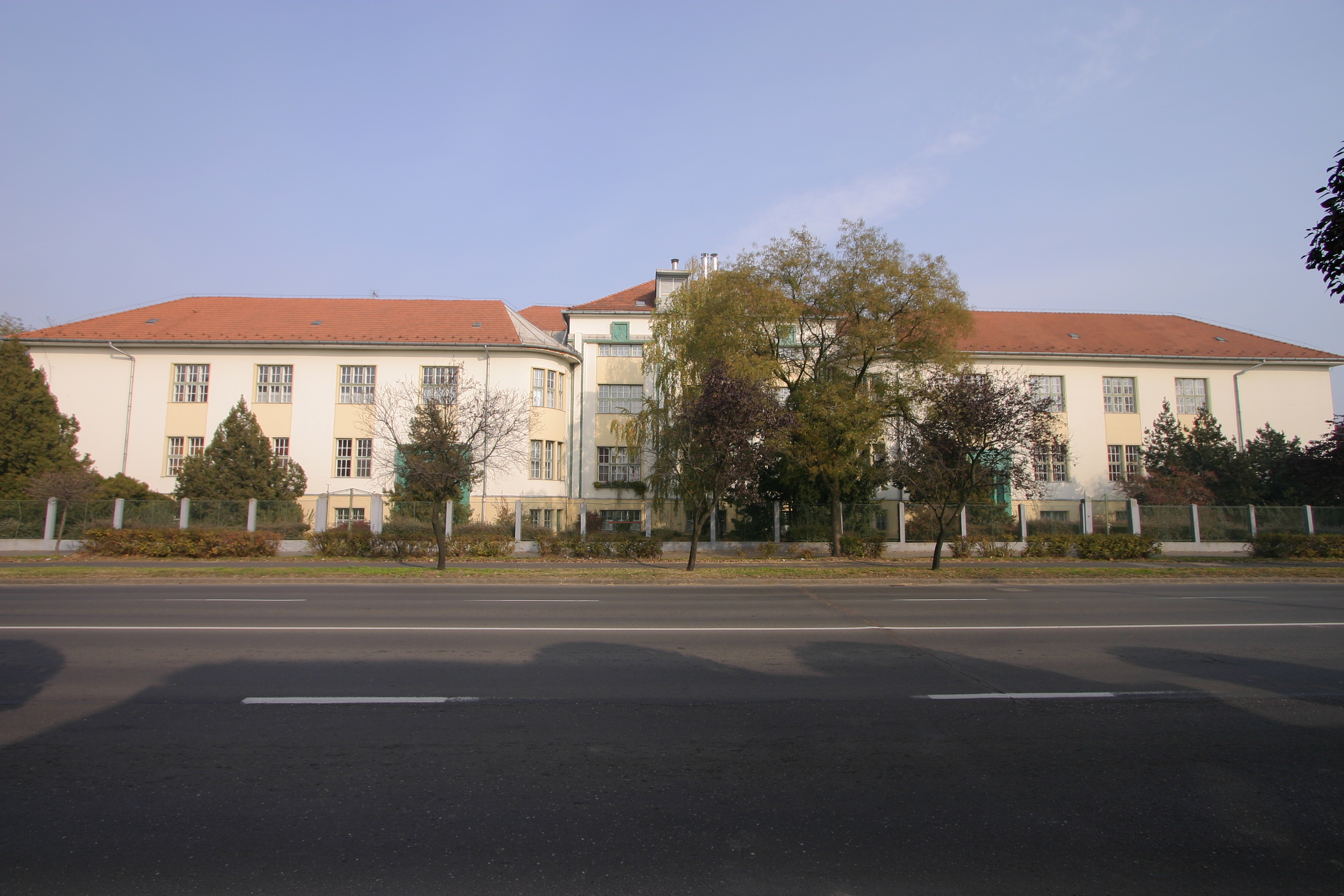
I am very impressed with this lens. I didn't realize just how wide-angle this lens was. At 10mm, I can stand just a few feet in front of a 13-story building, and get the whole thing in the picture, from the entrance to the top of the building.

As with all very-wide lenses, you have to be careful that you don't have people at the edges of the frame or too close to the lens, or they will appear very distorted when taking pictures at 10mm. Also note that a wide angle lens is not easy to use at first to create compelling images, as it's very easy to include too much clutter in your compositions.

PROS
- optical quality is excellent (deserves an "L" lens designation)
- uses the higher quality ring-type USM focusing
- minimum focusing distance is very close
- surprisingly lightweight
- very flare-resistant even without hood
- the only option for EOS digital cameras (Rebel, Rebel XT, 20D) to get true wide angle shots due to the smaller APS-C sensor in those cameras.

CONS
- It's expensive! But at least it is cheaper than a year ago.
- The lens is a little soft in the corners at 10mm, but is very sharp at 12mm and up.
- Canon has not formally committed to how long they will continue to make cameras and lenses using the EF-S system.
- The lens currently only works on the lower-end dSLR cameras -- the 10D, 1D, 1Ds, and 5D cameras cannot use this lens.
- The hood is not included with this lens, but it's such as ugly hood and the lens doesn't have flare problems, so I don't really think it is necessary anyway.

In 5 years when you upgrade your camera, there is a possibility that it will not support this lens. This depends on what direction Canon goes in making camera sensors:
1) continue to make cameras that use the smaller APS-C sensor, and keep improving its density to support more and more resolution. This will help keep the dSLR cameras smaller and lighter, and will necessitate making EF-S lenses the standard.
2) make the sensors match the size of a frame of 35mm film. And at the same time increase the density to yield even more resolution. Right now sensors this big are very expensive to produce.

I now think that #2 is more likely to happen. All the other lenses out there are built for a 35mm-film-sized sensor, and now that Canon has released another full-frame camera (5D) at a lower price, I'm betting that in another few years the APS-C sensor will be practically obsolete. A 5D body and 16-35 or 17-40 lens will give you better results than a 20D with this lens, but the difference in price between the two setups is a few thousand dollars right now.

The 10-22 is an excellent lens, but it will probably not hold its value as well as the Canon 16-35 and 17-40 lenses. A slightly more affordable alternative is the Sigma 10-20mm, which sounds like it nearly equals the optical quality of this lens.

The answer to the crop sensor problem.

20. November 2006

My take on this lens is that it is an "L" quality optic in a fine, non "L" package. There is nothing else on the market to compete with it (nothing at all), and it produces supurb images. It isn't an f/2.8 lens, but it is close enough for most uses. The competition from Tamron is a full stop slower, not as sharp, and is awful in dim light compared to the Canon 10-22 lens (sorry, Tamron fans, but the Tamron lens isn't even playing in the same ballpark).

I use this lens on a 30D body, and I always keep it on hand if I'm doing any indoor, or tight group photography. It is the perfect solution to the perennial problem of not having enough room to capture all the kids at a birthday party in one shot because your back is up against a wall. This lens will just about get your toes into the picture at the widest setting, yet delivers tack sharp, colorful, and contrasty images. The auto focus is spot on, silent, and fast. It is a must have lens for the active amateur, or any pro using a 1.6 crop factor camera. You simply can't beat this lens with anything available on the market today.

That beng said, do not try to convince yourself that this will make a good "walkaround" lens. It isn't. Even at max length, it is far too short to live on your camera as a standard lens. You need this lens, even if you don't know it yet, but it should not be your first lens, as it will only be used 15 to 20 percent of the time. At those times, it's performance simply cannot be equaled by any other zoom lens on a 1.6 crop factor camera. You will be amazed by the quality of this lens. It rivals the performance of modern prime lenses, presents a bright viewfinder image, and delivers the goods in tight situations.

This is not a casual assessment, nor a Canon "feel good" moment on my part. I developed my first B&W contact prints in 1964, in my own darkroom at the age of 9 (my parents were concerned:)), and have been an avid photographer ever since. Small, medium, and large format cameras and lenses have passed through my hands over the years, and Canon has become my favorite small format brand. Still, Canon builds some trash lenses that should be avoided. The 10-22 USM is not one of them :).

Before you go out and buy this lens, you should already own the EF-S 17-55mm IS f/2.8 lens. That is the king of 1.6 crop factor standard lenses, and includes the awesome Canon IS feature. It will end up being mounted on your camera 80% of the time, and keep you smiling after every shoot. Get that lens first. Then, get the 10-22mm lens. Then, let your imagination run wild, and plan on serious telephoto lenses for the future. Trust me or not, the two lenses mentioned above will provide you with photographic tools that will astound you. Get them in your kit as soon as you can afford them.

A little warning about either lens.... Some here will argue the point, but with either lens, get a GOOD quality UV filter that is multi-coated on both sides, and built extra thin to avoid vignetting at wide lens settings. A good filter will cost a little less than one hundred Dollars, and can cost up to one hundred forty Dollars. The minimum brand would be Hoya Pro 1 multi coated filters, and the ante goes up from there.

Everything else is garbage, including the Canon "sharp cut" filter that costs less than fifty bucks. No kidding, no conjecture. If you use cheap filters, you will never see what your lens can really do. Ever. No doubt that many will respond with claims that their twenty Dollar filter works just fine, but they simply don't know any better, and have never used their expensive equipment to it's full potential. It's akin to a Chevy owner passing judgement on a Mercedes Benz. The Chevy might feel real good, but until you own the Mercedes, you just have no clue.

Bottom line.... Make sure that the quality of your filters exceed the quality of your lenses. Yes, at a hundred bucks a pop for a 77mm filter, it hurts, but you will never regret it. Also, Amazon does not stock lens hoods for all non L Canon lenses. The price is stupid high for those hoods, but they make a night and day difference in in picture quality. Whenever you order a non L Canon lens, find a web seller who has the hood in stock, and get it right now. Again, you will never regret owning it.

That's it for my review/rant. Buy this lens. Buy the 17-55 IS f/2,8 first. Buy the lens hoods for both. Toss any "kit" lenses that came with the camera in the trash bin (where they belong), and be very happy.

The best lens I own

30. March 2005

I have had this lens for several months now and let me start out by saying WOW. I looked at the lens in the store along with the Sigma 12-24 and I was in total awe of what I saw though the view finder with the Canon 10-22. This is an ultra wide angle lens that is incredible. I went home and thought about where I would use this lens and determined that I would use it quite a bit. I went ahead and bought the lens and I continue to be more impressed with it every time I use it. I have used the lens for both close-up (which can give you some very interesting distortion shots)and wide angle shots with great success.

The 10-22mm is equivalent to 16-35mm field of view using a canon 20D which is not a full frame sensor. With a minimum focal distance of .24m (about 9.5 inches) you can get very close to objects and still get alot of focal width in the photo. There is incredible clarity in the lens. The photos I have taken are very clear with only a slight hint of softening at the corners at 10mm; everything else is sharp after that. There is a little barrel distortion at 10mm but everything else up to 22mm is nice. I have not gotten any light flare in my photos. The Ultrasonic motor is very quiet. The depth of field is outstanding. A slim UV filter helps prevent some slight vignetting at 10mm. With a maximum aperture that ranges from f/3.5 to f/4.5, the Canon EF-S 10-22mm f/3.5-4.5 USM Lens is a medium speed lens. I would recommend using a tripod if you are at all unsure about your ability to hold the camera still for action shots with this lens. The lens it's self is fairly light weight. If you are going to use filters the lens requires 77mm.

The lens can produce some interesting distortion shots if you are taking close-ups and are not perpendicular to the object. For close-up shots with out distortion it is best to be perpendicular to the object.

Inside the lens housing there are three aspherical lens elements and a Super UD element that produce clear vibrant shots. The lens it's self sturdily built and comfortable to handle.

A lens worth buying a digital slr for

2. September 2005

I've been more or less addicted to wide angle photography for the last 20 years or thereabouts. Unfortunately, ultra wide angle shooters have been left out of reasonably accessible digital slr photography until very recently. Now there are several viable name brand options available, namely the Canon 10-22mm f3.5-4.5 reviewed here, the Nikon 12-24mm f4, and the Zuiko 7-14mm f4. Because of the 3 different crop factors involved, these lenses end up being pretty close in (35mm equivalent) effective range; 16-35 for the Canon, 18-36 for the Nikon, and 14-28 for the Olympus. Many will caution against purchasing these lenses since they cannot cover the full frame 24x36 format, and cannot even be mounted on a regular body. In the Olympus' case, it doesn't matter since the company has staked its fortunes on the smaller 4/3rds sensor format, and has opened it up to other manufacturers such as Fuji and Panasonic. With the Nikon and Canon, you are taking a leap of faith that the companies will continue to produce 1.5 and 1.6 crop factor sensors into the future so that you will be able to take your crop-only lenses to upgraded digital bodies down the line. To my mind, Olympus has already demonstrated the desirable technical characteristics of a smaller sensor format, so there is good reason to believe that smaller than full frame sensors are here to stay. By extending the glass beyond the mount and into the body, and/or covering a smaller circle, Canon and Nikon are providing those same technical benefits to users of their smaller sensor cameras, namely sharp, extra wide angle in a compact package. Besides which, I'm much more concerned with the photos I couldn't take if I stayed away from the product, than I am with its unknown future upgrade path.

While the Olympus lens and 4/3rds system was intriguing, I felt that the 7-14mm wasn't worth more than double the price of the Canon for 2 extra mm at the wide end. It's also double the weight - making it impractical for use as an everyday lens, and negating the advantages of the E-1 body. So, I was pretty much down to the Canon or the Nikon (or the always available Waitsomemore).

At this point, I should say I'm platform agnostic. In the 80's I happily used Minolta equipment. In the 90's I bought some Nikon gear to use their 15mm prime lens. Basically, if it suits my purposes, I don't care what the label is.

Back to the lenses. The Nikon is more expensive and less wide, but it does have the continuous maximum apeture throughout the range. The Canon is wider, a tad lighter, and a tiny amount faster at the wide end. Both appear to be excellent choices, but I could not consider them independently of the cameras they would be mated to. Since I did not already own a digital body, it also came down to a decision between the Canon 20d & Nikon D70s. Here, the Canon wins for me on quality of sensor and a host of other details.

In practice, the lens is a joy to use. It's sharp. The zoom allows it to be as wide as you need it, which is an improvement over my previous favorite Minolta 20mm 2.8, though it does lack the depth of field scales which the Minolta has. The zoom also allows for keeping the lens mounted without switching as often, and that's important for keeping out dust. It's a very solidly built, quality instrument. Focus is fast if you're into that sort of thing, and nearly silent with the ultrasonic motor. The lens does not extend in length for zooming or focusing, though the front elements do move slightly inside the barrel. Mated to the 20d it's a tool that exceeds my previous film cameras in just about every way imaginable. I'm finally free to make the ultrawide photos that I want to make in the digital domain and the initial results have been outstanding.

If you're into ultrawide and want to go digital, the 20d with 10-22 is a fantastic setup. If you've already gone digital and want to try wide angle, (assuming your camera can use ef-s lenses) this is a true bargain - you get a 16mm, 20mm, 24mm, 28mm, and 35mm all rolled into one. It makes me positively giddy. Thank you, Canon!

What can I say? Very soft.

2. September 2007

I can hear the comments already. "You must have gotten a bad one" etc. I grant you, one cannot expect perfection (or even consistent quality?) for $675. And I have no doubt that the Sigma ultra wide zoom is even worse. But based on the comments I read I wasn't prepared for the results this lens produces.

I'm not going to boast about how long I've been taking photos. But for the benefit of those who are new to this stuff let me summarize. There are no bad macro lenses (not even Sigma). There are virtually no bad telephoto lenses. There aren't even many bad telephoto zooms anymore. Not surprisingly, Canon's L lenses in these categories are excellent and so are most of their non-L lenses and everybody else's lenses too. Low dispersion, aspherics, apochromatic correction--these days, everybody's got 'em.

But just as there are no bad 80-200mm lenses, there are no really exceptional wide angle zooms. Read the comments on Canon's $1600, 16-35 L lens. Its OK but neither the original or the new "improved" model is spectacular. These lenses always have barrel distortion at the wide end, soft corners and vignetting. Some of this has to do with ultra-wides being used with digital sensors but the fact remains.

OK, so I decided to go digital. Since the 5D didn't even have a dust removal feature I decided to get a couple Rebels. Picture quality from the Rebels is very similar to the 20D/30D and I'm not going to hammer nails with them so Rebels are fine.

If you want any sort of wide angle with a Rebel or 20D/30D/40D, the 10-22 lens is pretty much it. Besides, Canon's 20, 24, 28 are nothing special so why not get the zoom and if need be, use software like DxO to correct any lens flaws. That was the plan but this lens just isn't sharp enough at the edges or in the corners. It reminded me of a Spiratone/Sun 24-40mm zoom I had many years ago. It was revolutionary, super convenient and very poor.

I guess it depends what you are looking for. If you are a real estate agent needing an adjustable wide angle for interiors and your images are for the web this lens would be fabulous. It focuses very fast and its silent. For a Canon lens its pretty small and light. But make a crisp 8x10 print from an image taken at the 10mm setting? I don't see how.

I know everybody raves about this lens. That's why I bought it. I figured, in all those reviews there had to be somebody who knew what really good image quality was. There were so few negative comments, I figured I'd take a chance. Maybe I got a bad one but when something is this far off the mark I think I'll pass.

GOOD NEWS - I'm delighted (and surprised) to report the Tokina 12-24 lens is really quite good. No, you can't use it wide open and it barrels a bit, but at f/8 its downright sharp, right to the corners(!) I know its not a Canon lens but give it a try. Paint a red ring on it if you have to, but try it.

Canon EF-S 10-22mm f/3.5-4.5 USM Příslušenství

Krytky objektivů pro Canon EF-S 10-22mm f/3.5-4.5 USM

77 mm Filtry

77 mm Filtry polarizátoru

77 mm UV filtry

77 mm Světelné filtry

77 mm Krytky objektivů

Copyright 2006 - 2009 © Pixinfo spol. s r.o. | Design stránek | Design loga | Hostující server | Snapfish online fotókidolgozás